It’s Spiranthes season! These local native orchids are part of a species complex known to interbreed, so who knows what “species” they are. you can just stick with their common name, ladies’ tresses. I found these in bloom, days apart, at a lakefront dune ecosystem in South Shore neighborhood, and a vacant post-industrial lot in Vet’s Park neighborhood. which are which? You can find hundreds and hundreds in bloom on the South Side of Chicago and the South Suburbs – if you know where to look.
…brought to you by your local natural area OR vacant post-industrial flydumping slag parcel.
I love Northwest Indiana and the Indiana Dunes. It was my first anchor to the Calumet. I’ve had lots of proto-CRAC adventures to Cowles Bog, spending days laying on the beach, watching bugs and primary succession, and making short nature films in the woods and on the trails. At that place, surrounded by explicit monuments to industry and progress, there was no way to avoid the truth that all nature is and has been affected by humans.
In July 2026, we continued our exploration of Woodlake Dunes Savanna, part of the parcel of INDU, in the eastern most part of Gary. We’ve driven past it hundred of times and though just half a mile from Hwy 12/Dunes Highway, the screen of dead trees and Phragmites along with a moat, always seemed to preclude a “quick look.”
Once off the highway, a modest neighborhood is surrounded by a landscape that is obviously cared for. The lack of flydumping, trash, and invasive species make the view on the north side of the street a green tableau, with prickly pear cactus in the front yard.
It was a glorious day when we did visit: sunny and not too hot or humid. A treat for July!
I look forward to learning and sharing more about the history of this site, and of the incredible high quality dunes, swales, savannas, pannes, blowouts, wet prairies, and ephemeral ponds that are in Gary, Indiana! Don’t sleep on nature in the Region!
—
We started in a sand prairie as we approached dune ridges and oak openings.
In the woodland, we found a lot of round friends and a few squiggly ones.
These back dune complexes, a few miles south of Lake Michigan, are old, and have mature ecosystems – oak savanna in stable areas. Where repeated disturbance from lightning, storms, land management activities, and hydrological change occurs, blowouts, wet prairie, pannes, and other oak openings yield vibrant communities of grasses, allies, and forbs.
Sometimes the hydrology changes in those wet areas, and baby trees fill in those openings. People have gathered here before – if only to dispose of things that are now historical treasures.
We traversed a beautiful wet prairie on the way back to the car.
Today we adventured to a new spot, that, like lots of interesting things, unintuitively, is literally next to the highway; the greenspace is behind one of the nondescript impenetrable sound barriers that I ponder while driving along the Borman Expressway.
Once part of the Little Calumet River, the oxbow is cut off from the river for the most part, and are now small lakes, great for fishing any time of year. Three ice fishers were out today!
I love a boardwalk! What was incredible about this one was it was walled, and filled in by Phragmites, from every angle. It is an absolutely monoculture, save for a few shrubs that would require a machete to get to. There is something beautiful about the complete seclusion, a wall of dry vegetation, lightly swaying in the wind, framing the corners of the maze.
Signs of life: A woodpecker amongst the reeds; fruiting moss; a bird nest yearning for new residents.
Atop the levee, looking south-southeast on the Little Calumet River.
I recently had a conversation with a colleague about what the heck a transect is. In ecology, it’s just an experimental tool, to help orient you to the landscape. Literally, it’s a line with known geographical coordinates. Gradients of various types are often revealed along a transect, through repeated sampling or experimental plots.
Urbanists like to talk about transects, especially in the context of the typology of the city. The transect articulates transitions between zones, with the idea that there are concentric circles of economic activities as you move out from the central city, from dense urban core, to sparse rural farmhouses.
At Big Marsh, we are using the transect on Mars to look at how vegetation and soil characteristics vary along this transect, and over time. Part of our slow science research.
But what does this actually look like? It’s trivial for me to imagine, but not so for others. Here’s a collection of images I found that may help to visualize it.
The transect goes from northish to southish on the east side of Big Marsh Park, across what’s affectionately called Mars, because of the unearthly iron-red slag. The transect is about 600m.
We set up a plot every 25m and record plant species and coverage twice a year. At the paired plots every 50m, there’s an additional plot on the opposite site of the marker, that was cleared of all plant material when plots were set up in 2020.
Paired plots at 50m, looking north.
Paired plots at 350, looking north.
What’s the point of clearing plots? We want to see if there is a trend in the species that are able to persist on “bare ground,” and if there is a predictable order in which species make themselves at home in the plot, or a process called “ecological succession.”
Paired plots at 200m, looking west.
My favorite plot, full of Nostoc, at 350m, looking northwest.
By surveying the plants every year, we will see how community composition changes over time. We’ve collected six years of data, so stay tuned for a publication in the next decade!
August and September at slag sites like Marian Byrnes are vibrant and full of special plants like ladies’ tresses orchids and Eleocharis geniculata, a rare spikerush.
Only a few years ago this place was dominated by fascinating but unruly spontaneous vegetation. Removal of invasive species, and a light touch on selective plant additions with intentional focus on vegetation that already are known to persist in slag habitats, lets this park lean into its spontaneous origins as a riotous garden.
In recent years, I’ve visited Sand Ridge more often in the early spring, to locally see skunk cabbages and ephemerals. On this day in July, it’s rainy and overgrown with the amorphous green of a late summer urban woodland.
In the rain, the amorphous green belies the competition in front of us: just out of frame,
the hedge bindweed vine is twisting up Phragmites, taking down and smothering this towering invasive plant. Living the vine life is just about spreading out and getting as much leaf area in sun as fast as possible. Think kudzu, bindweed, invasive Fallopia.
I’ve been visiting the same fen orchids at Sand Ridge for a few years now in different seasons. Note to self – remember that late-July is likely too late to see them in flower!
The swamp mallow are just starting to flower. In another few weeks, either side of the boardwalk will be profusely fuchsia!
An assortment of other plant friends (and enemies!) on the trail:
This place is a unique kind of urban infrastructure. Van Vlissingen Park has been owned by the Chicago Park District since 2011. When we first started visiting, it was an overgrown, impenetrable, Phragmites-filled mess, like many public lands around Chicago in the 80s through early 2000s.
And the “habitat restoration” isn’t back to some pre-colonial time; this is no remnant habitat here. It’s a spontaneous ecosystem that moved in on a bed of slag and construction waste and has been strengthened and structured by the Park District.
This is how urban restoration works.
Some of the waste continues to erupt from layers of soil; bricks and building materials form vignettes highlighting the ever present human input into these urban ecosystems.
Now that it’s Marian R. Byrnes Natural Area, the beautiful slag barrens – prairie and wetland – are showcased with a boardwalk, alongside a luxurious woodland path through cottonwoods and young oaks, and an overlook at the far north side.
Alisma inflorescences from last year, and new vegetative growth
an honor for another explorer of underappreciated ecosystems to make his mark here!
with the water level down across the site, you can see balled up Nostoc, slowly dehydrating
slag to the left, woodland path to the right!a now-classic image of a high quality slag prairie!
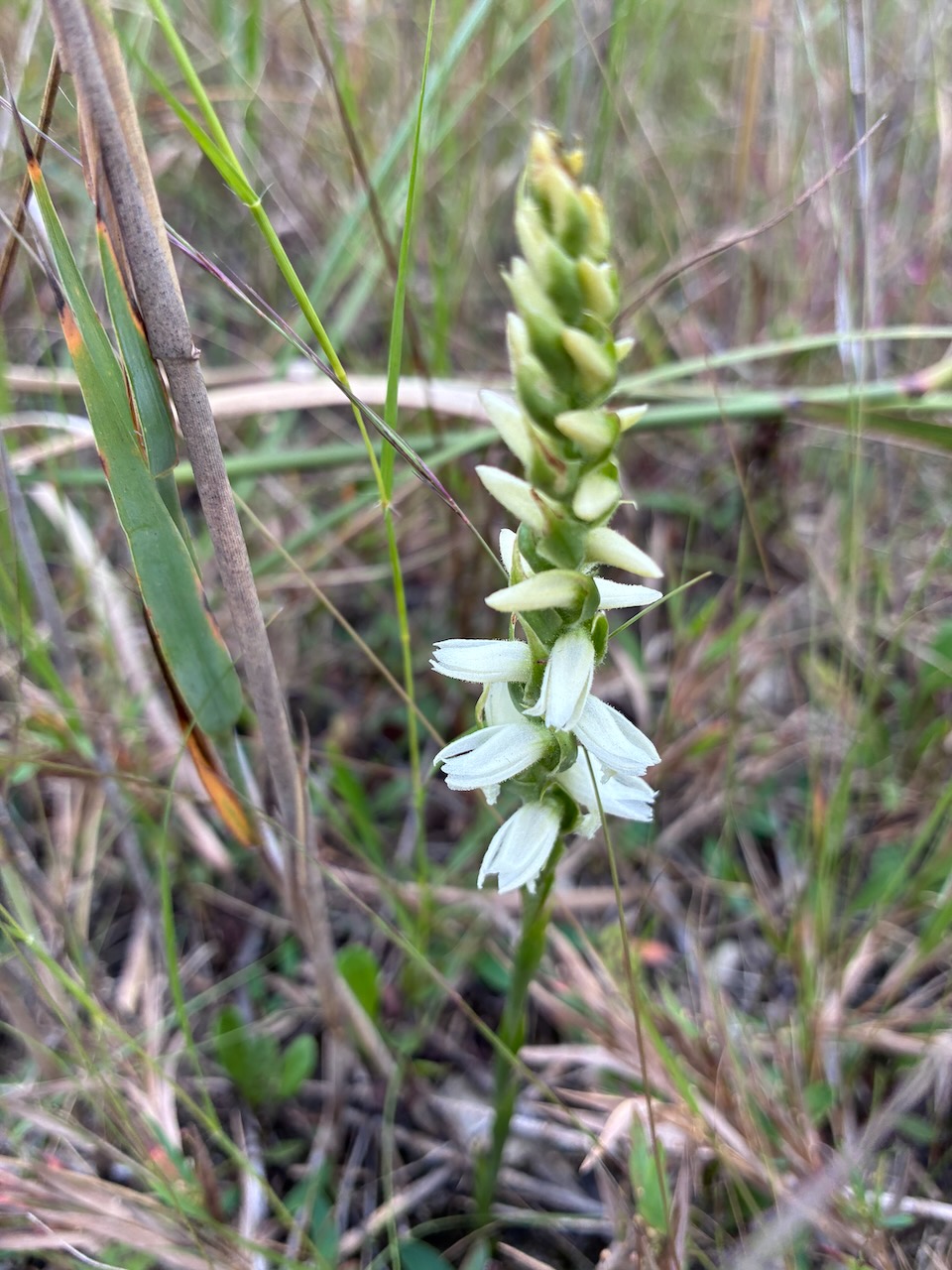
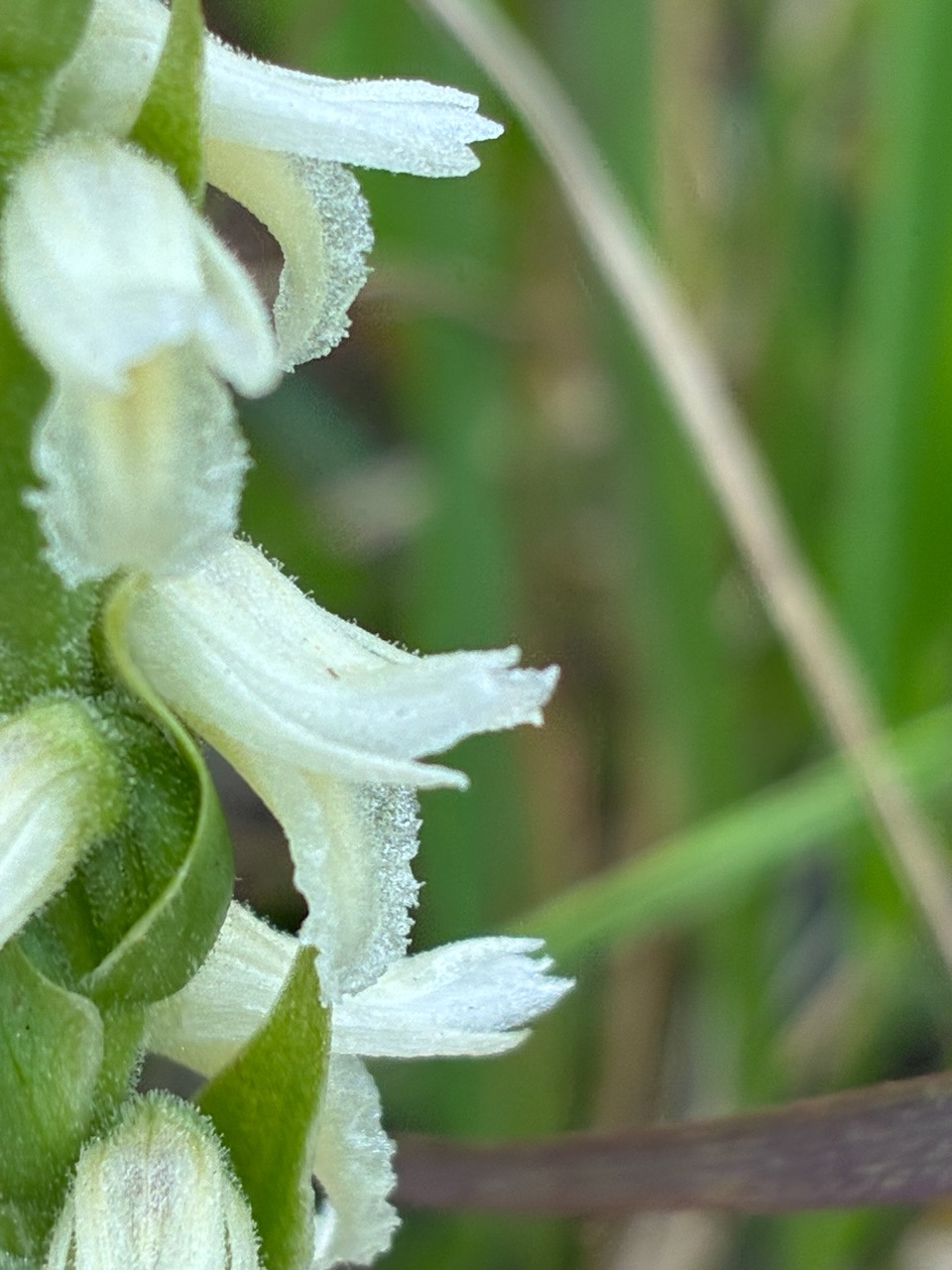
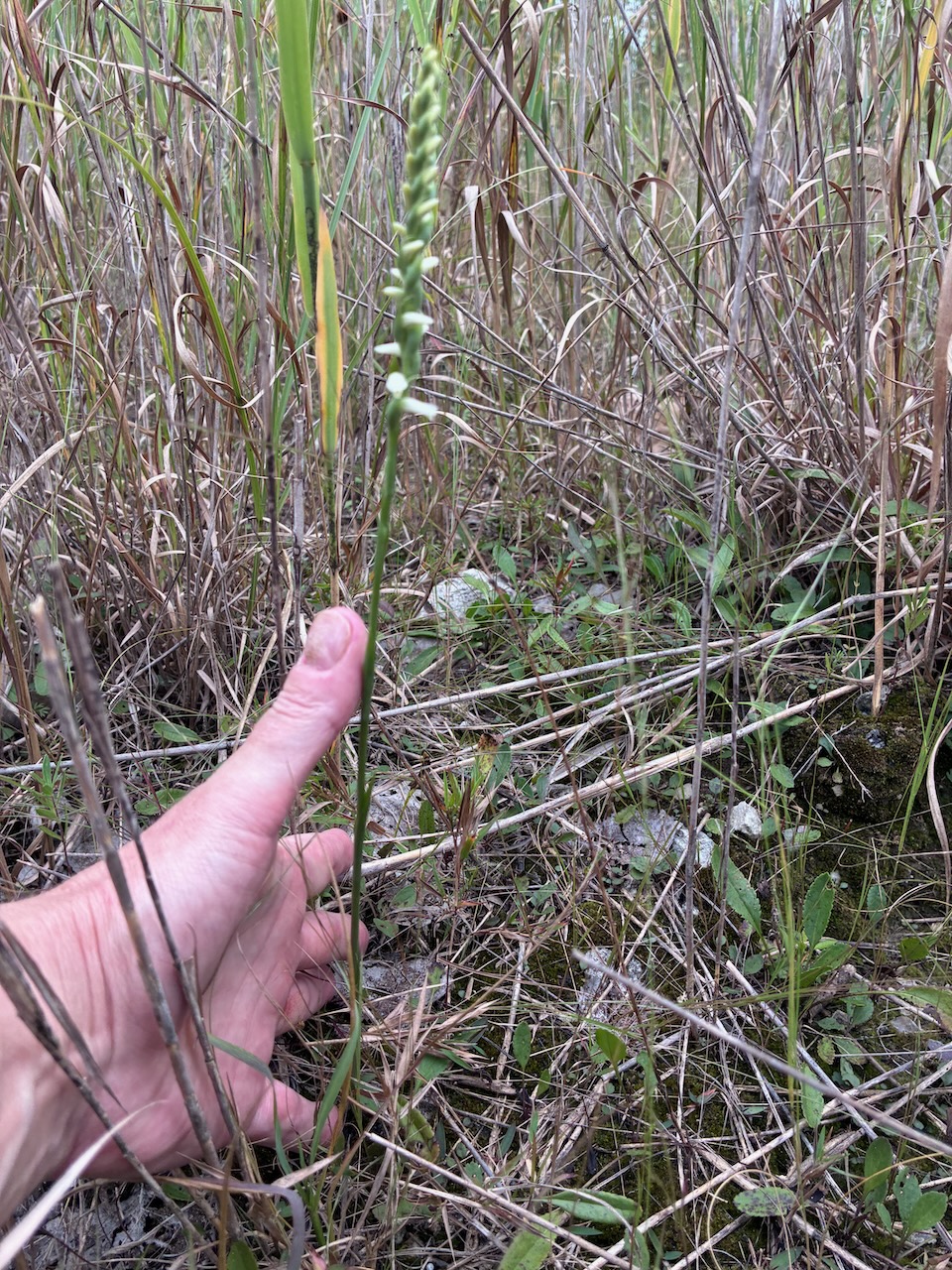
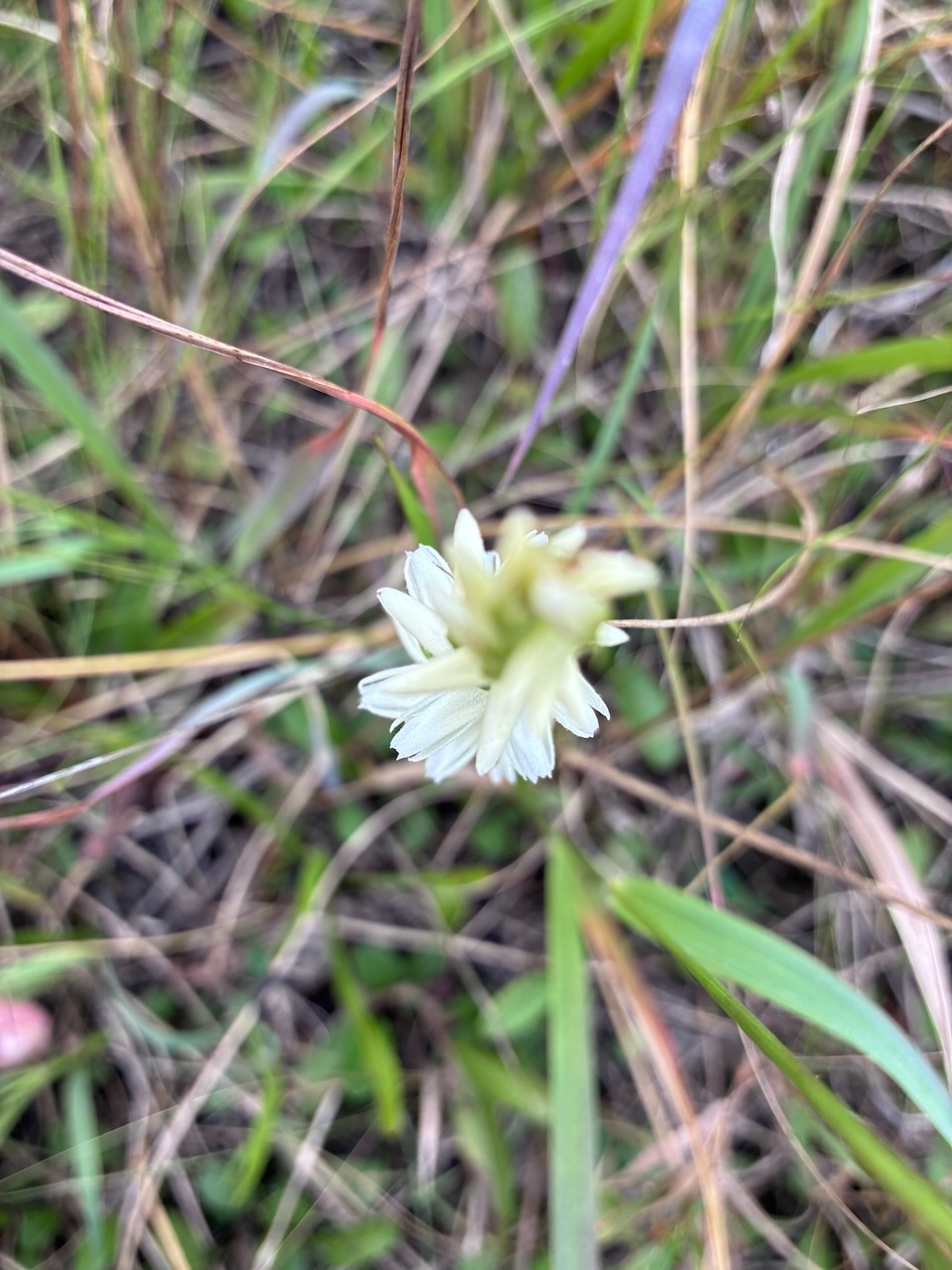
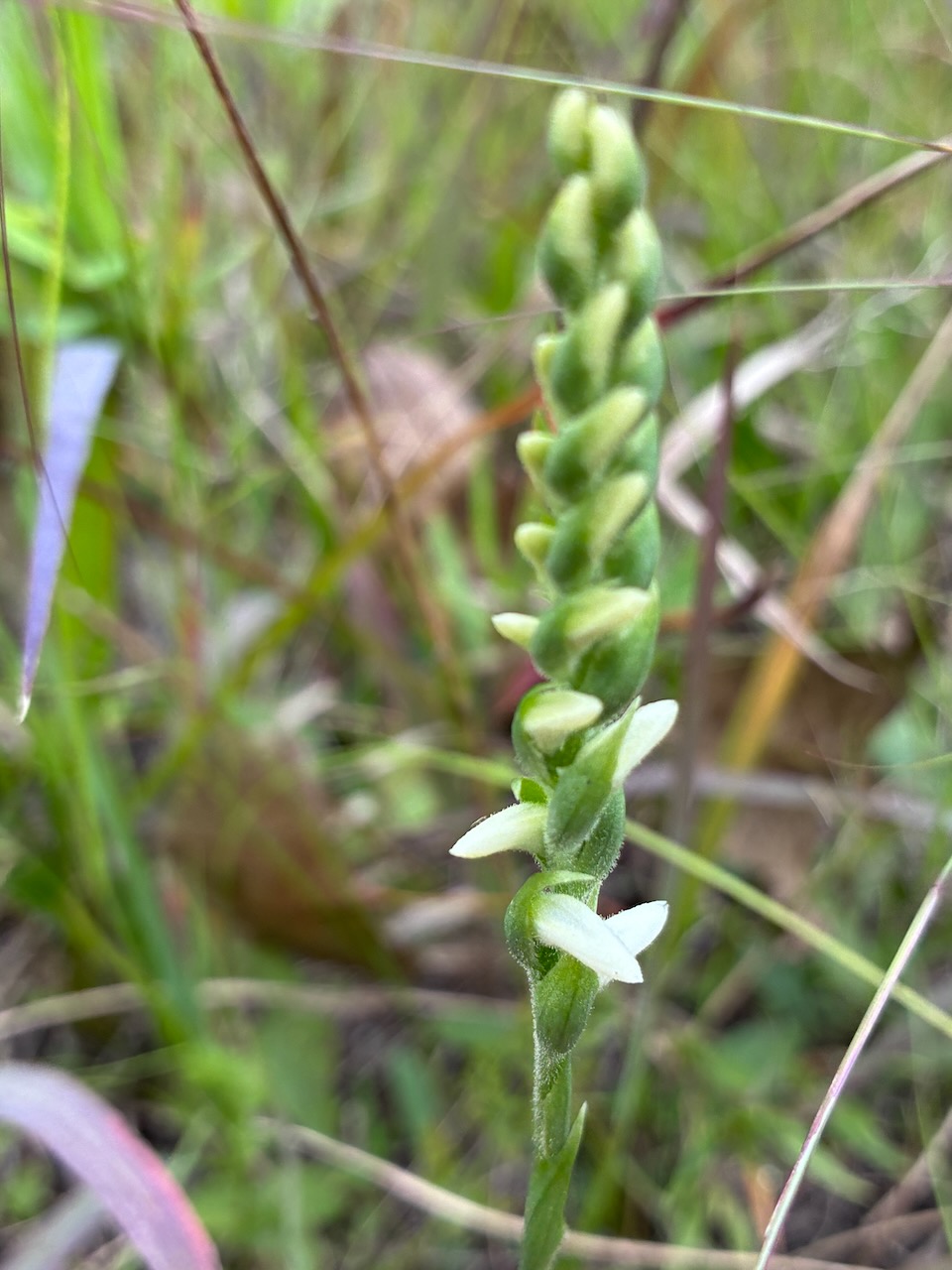
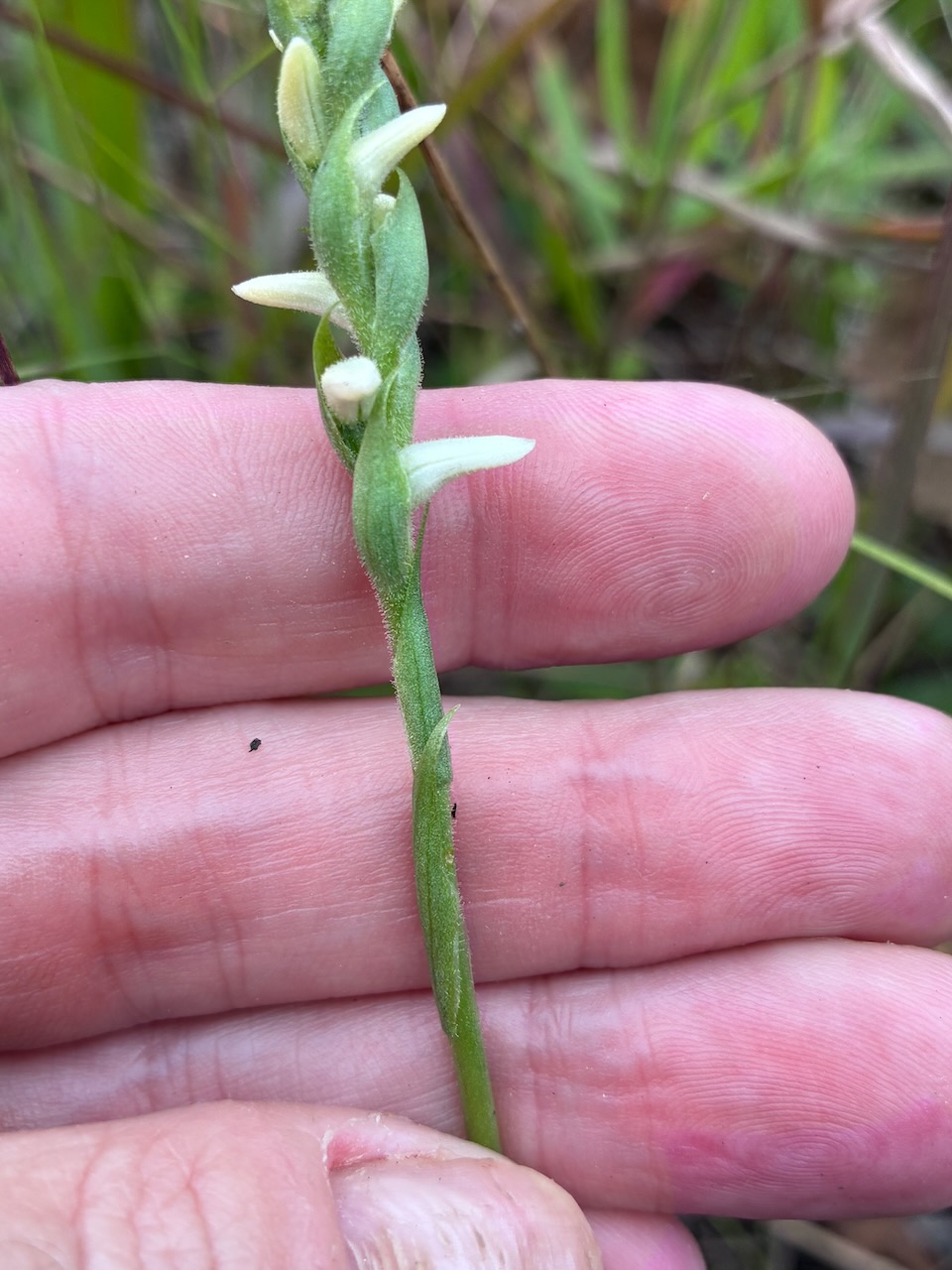
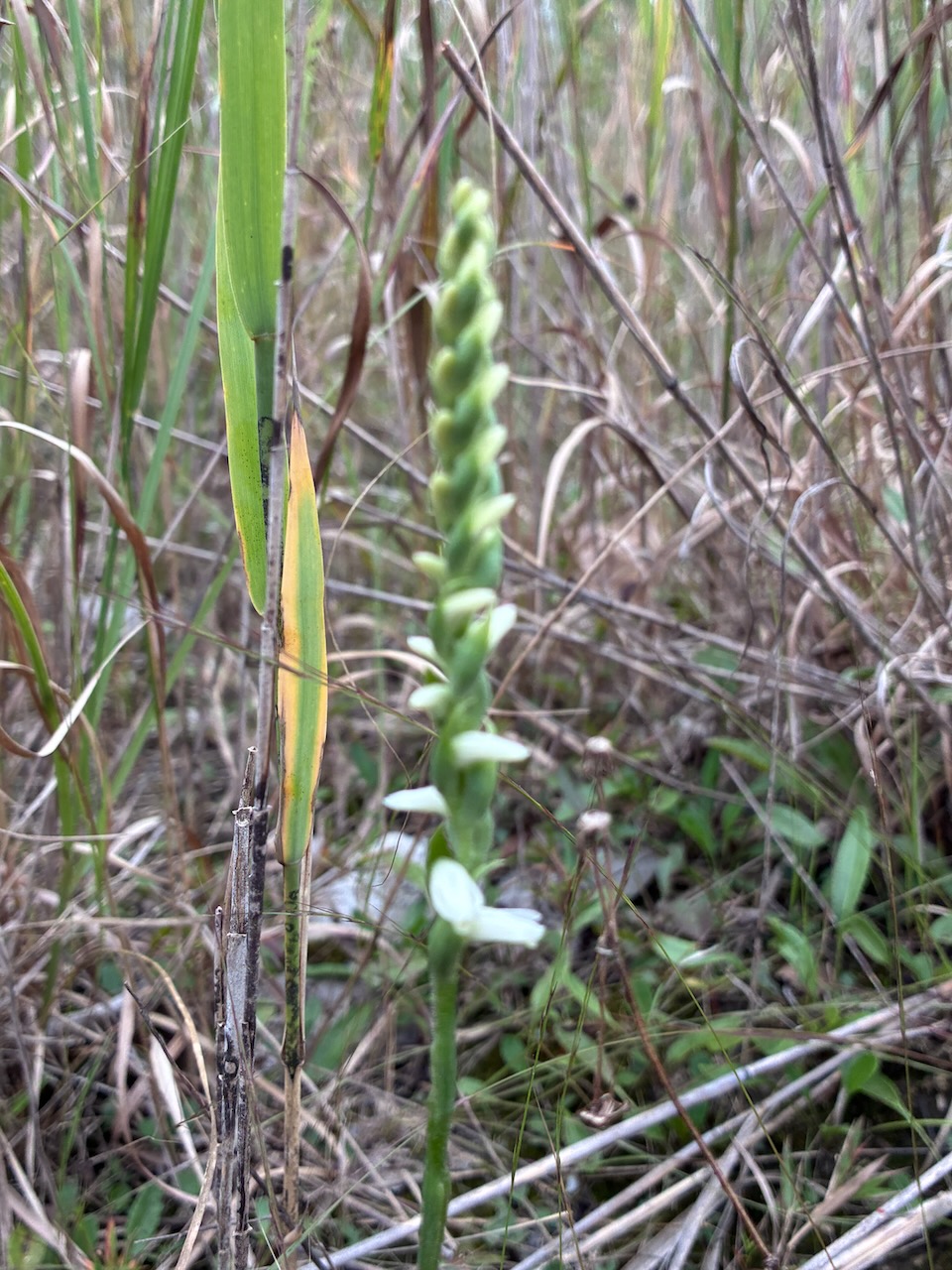
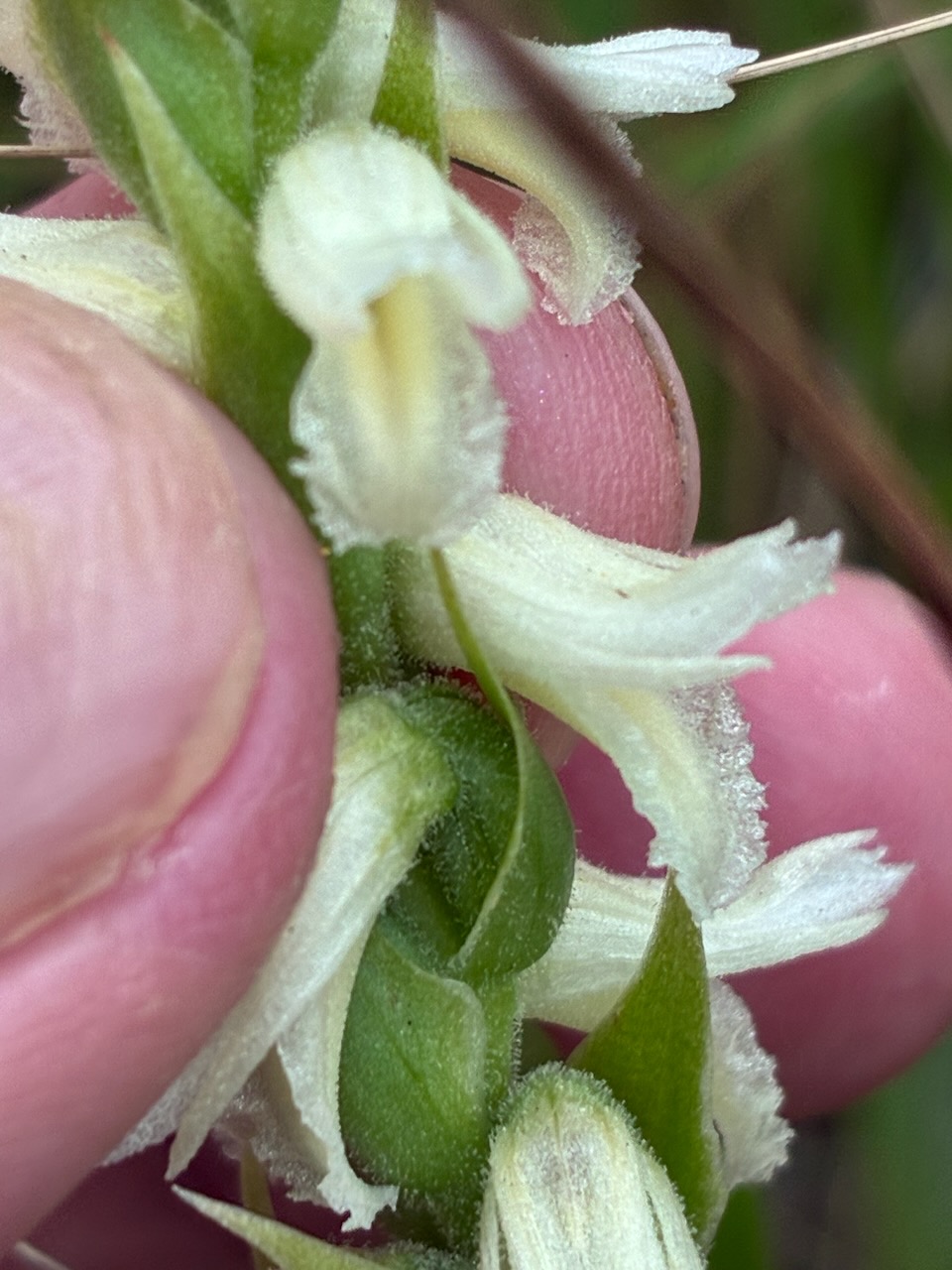
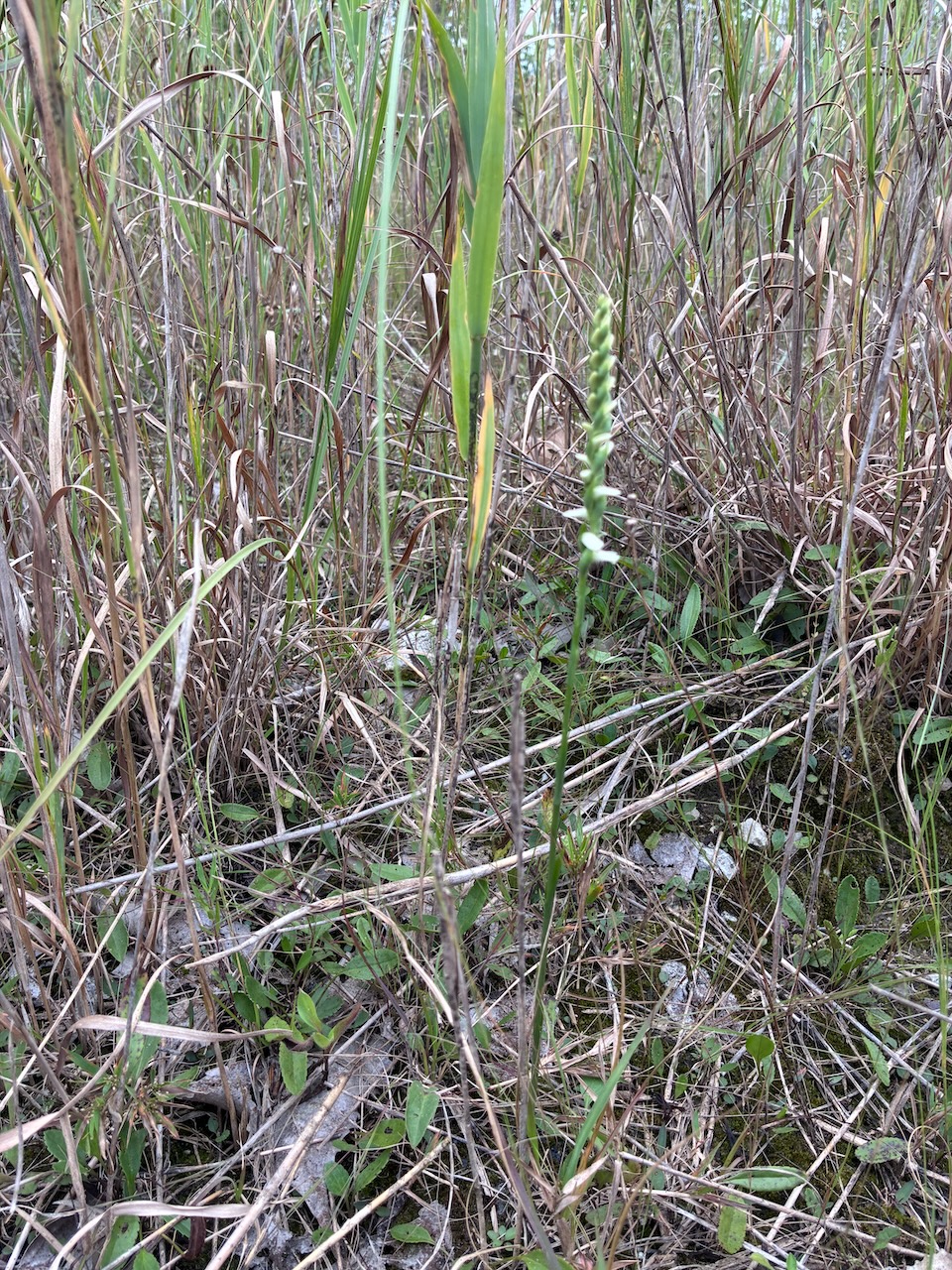
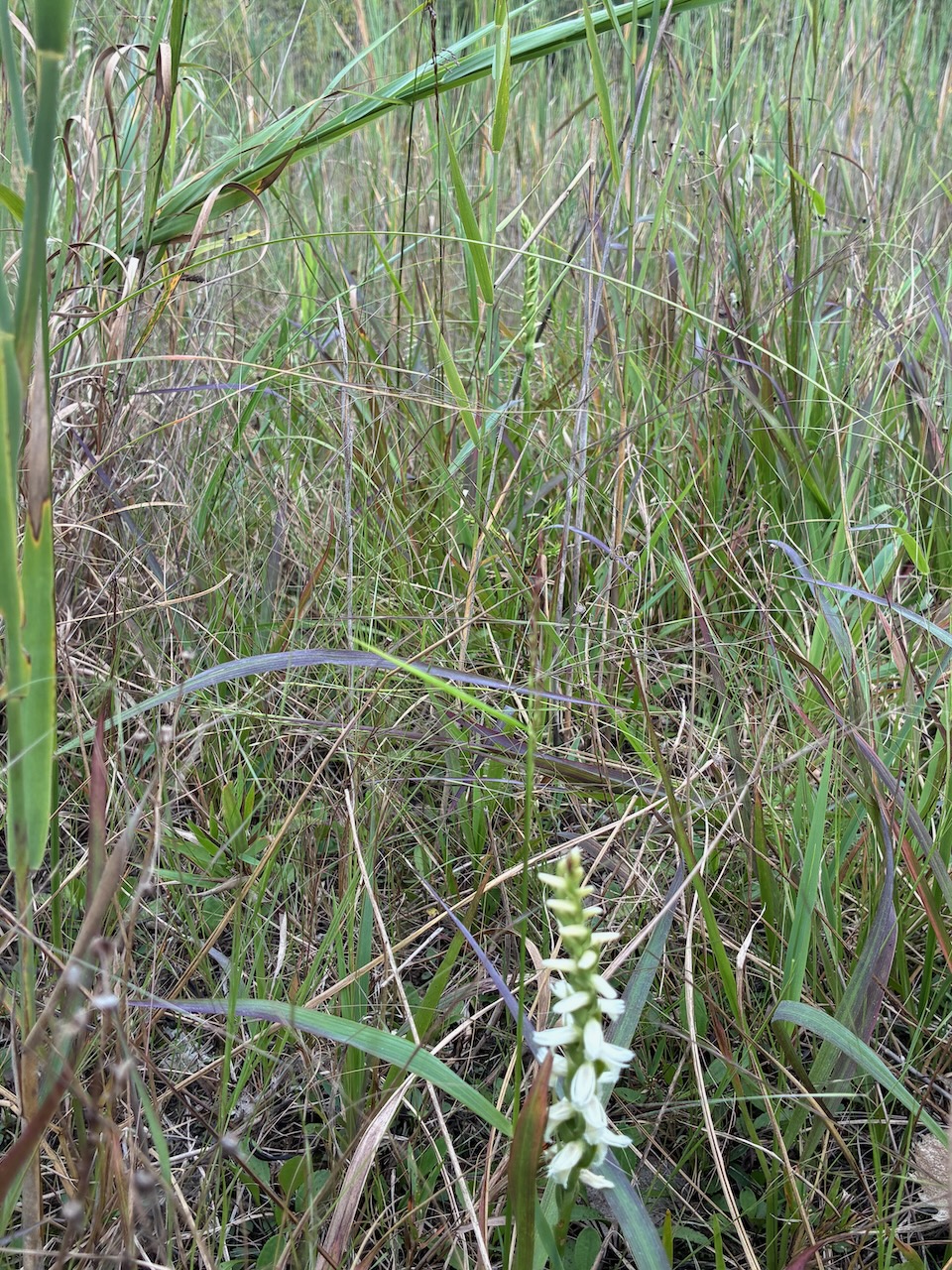
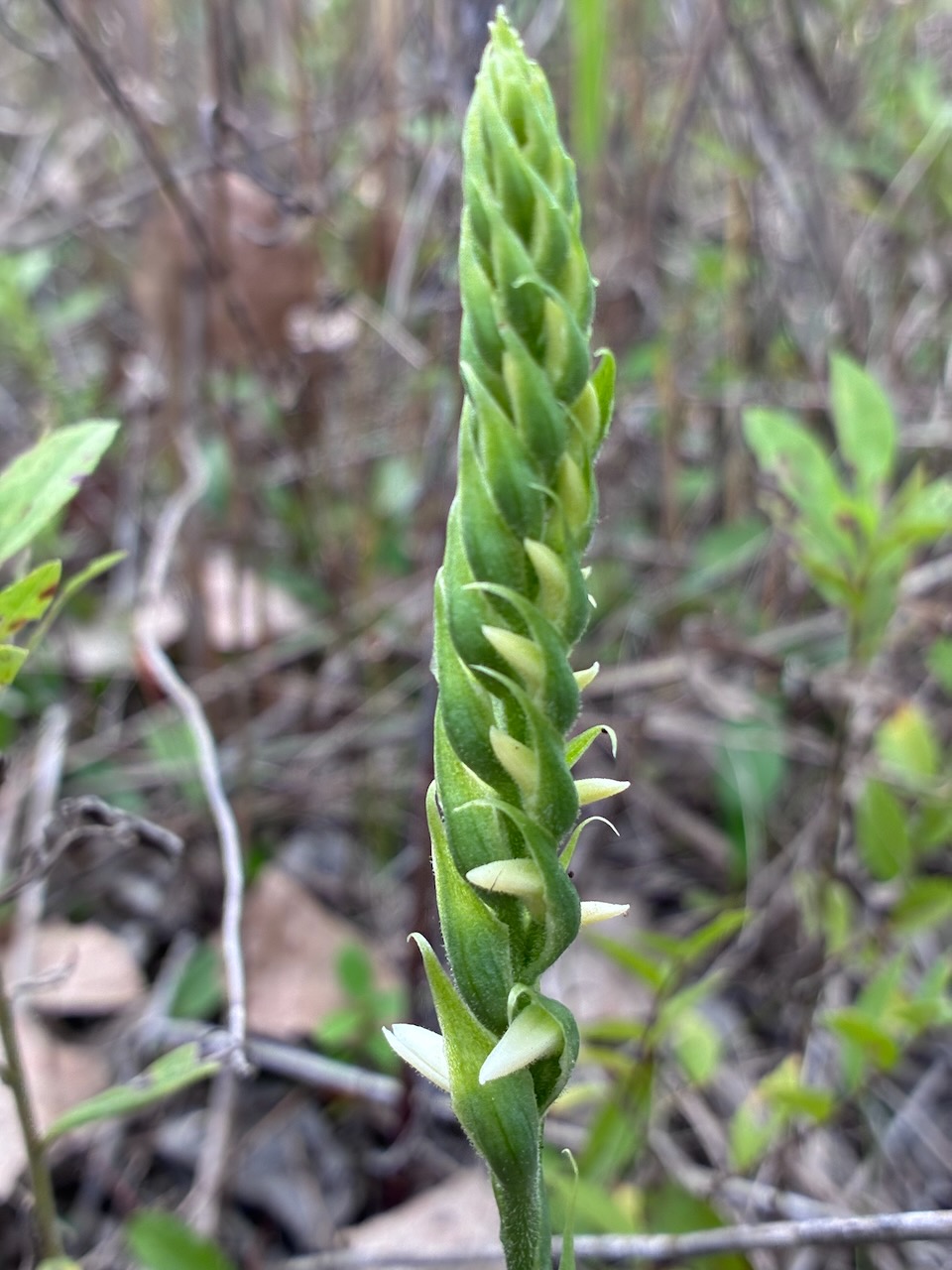
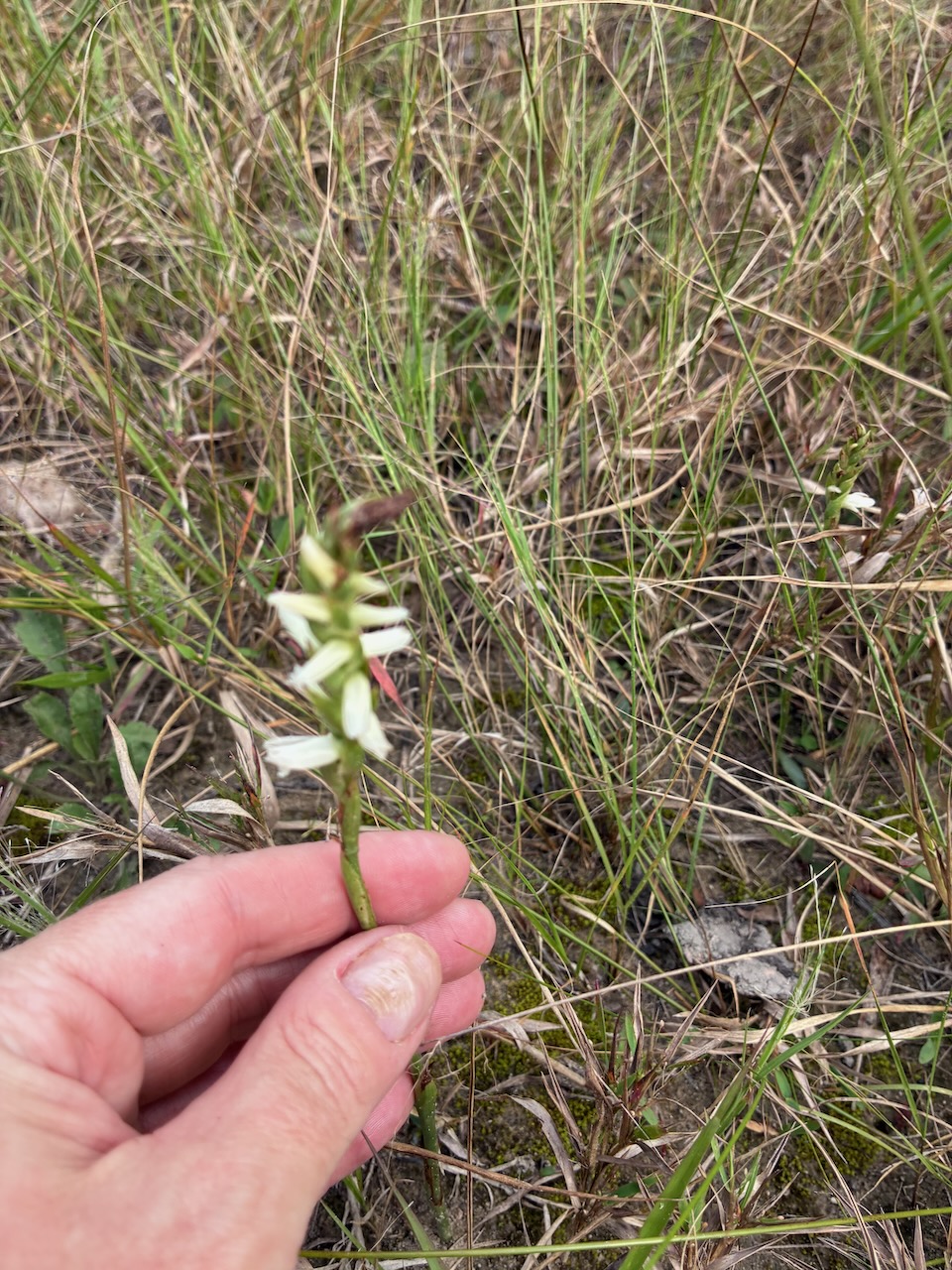
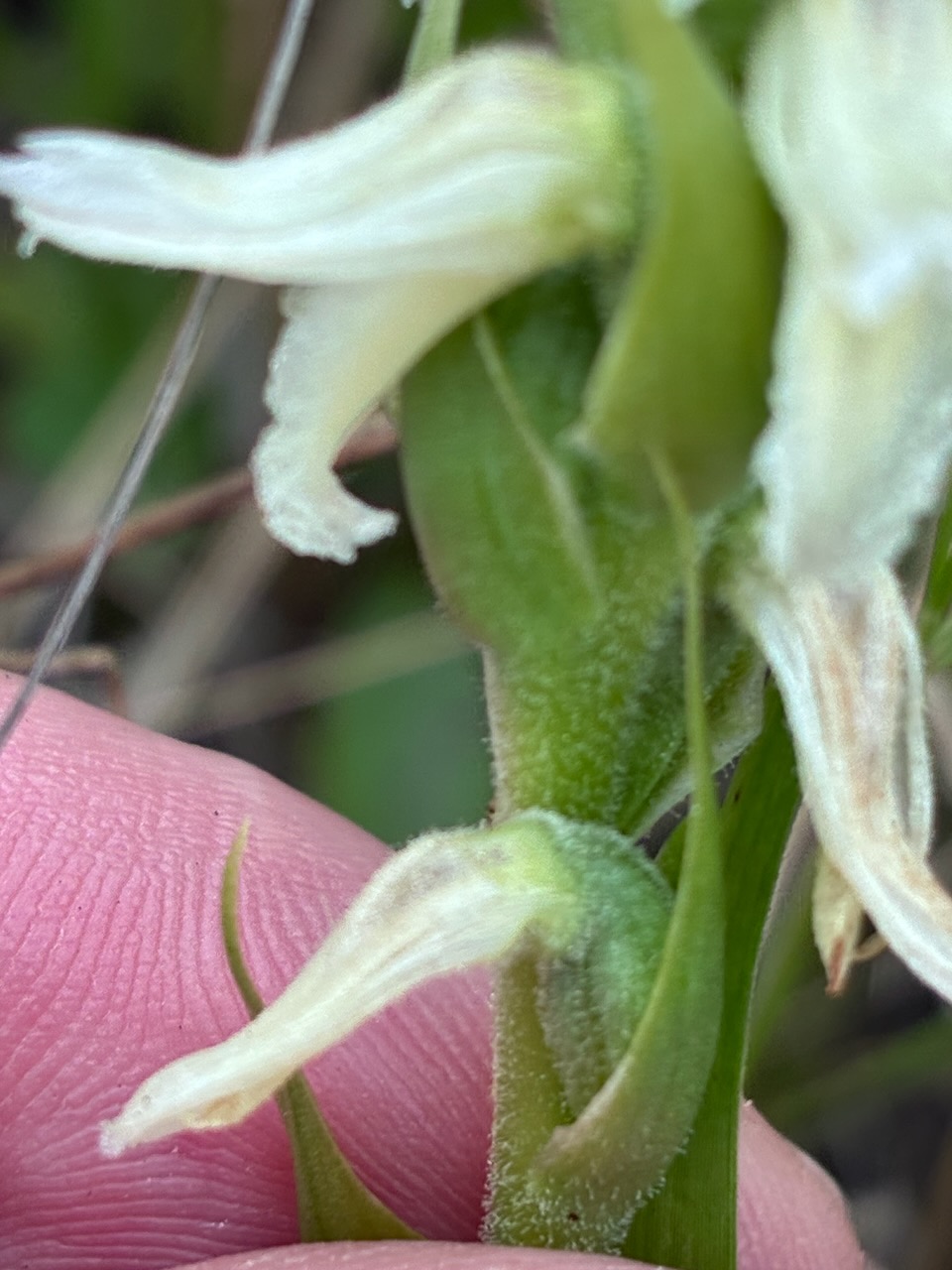
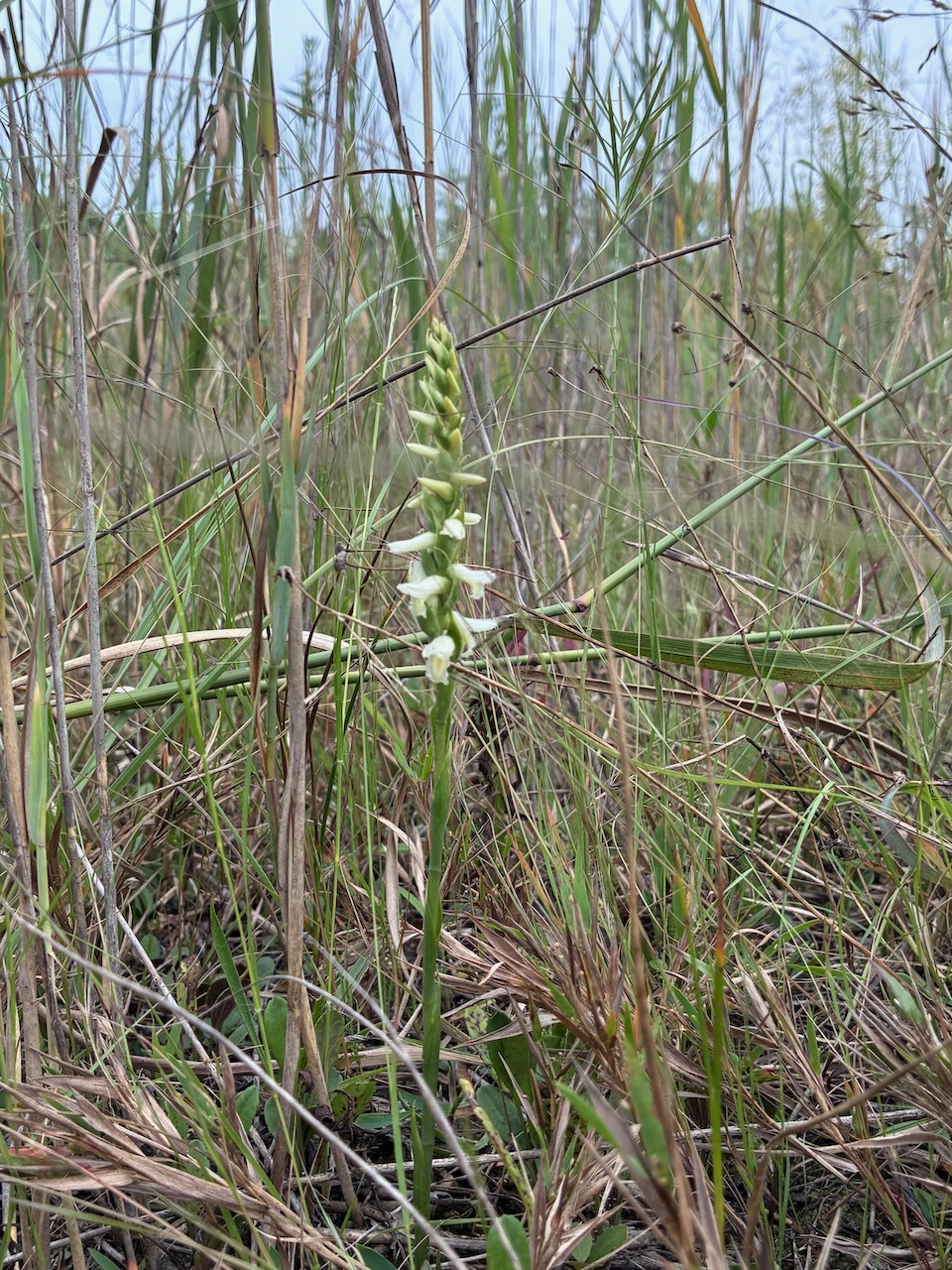
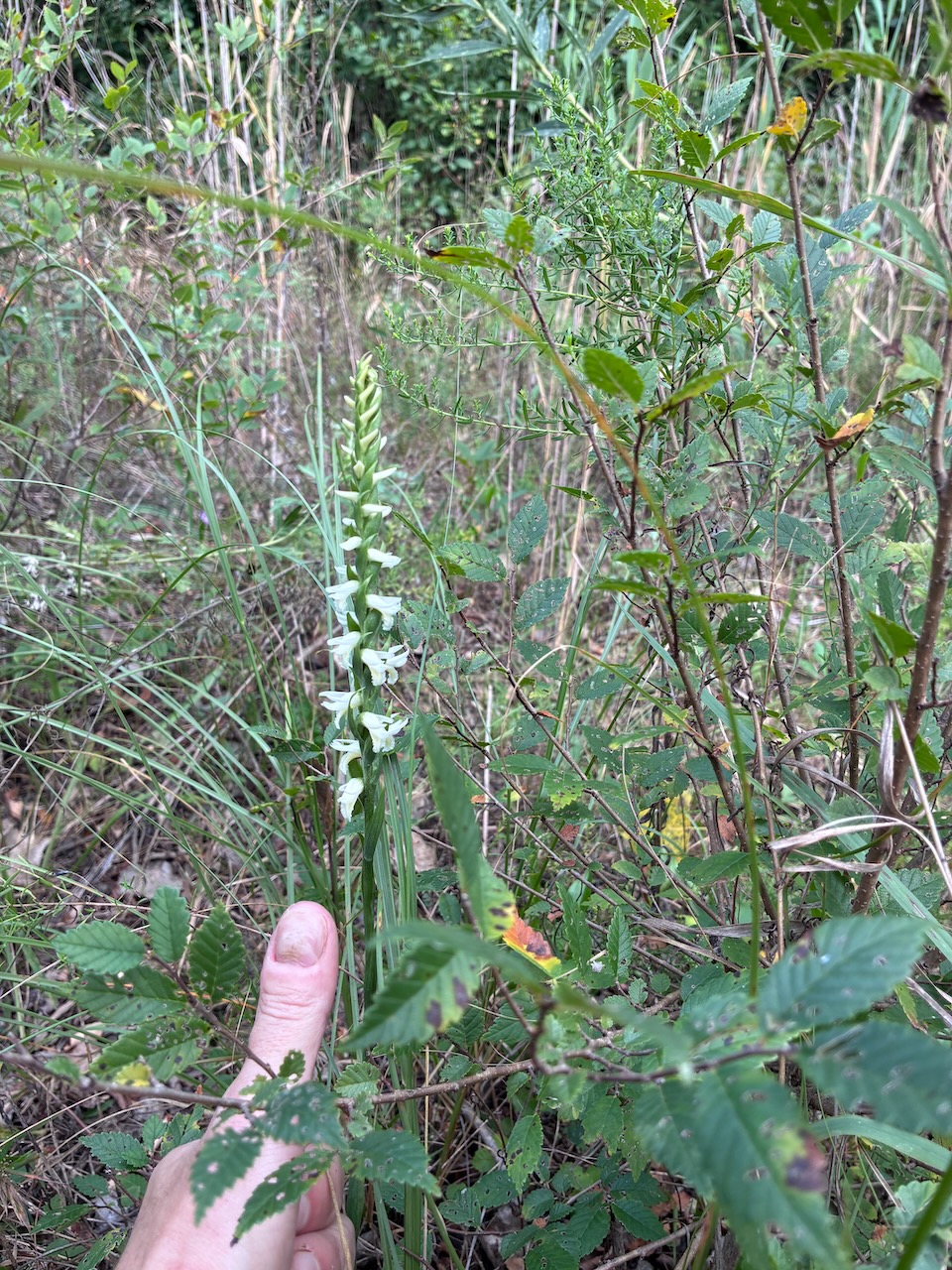
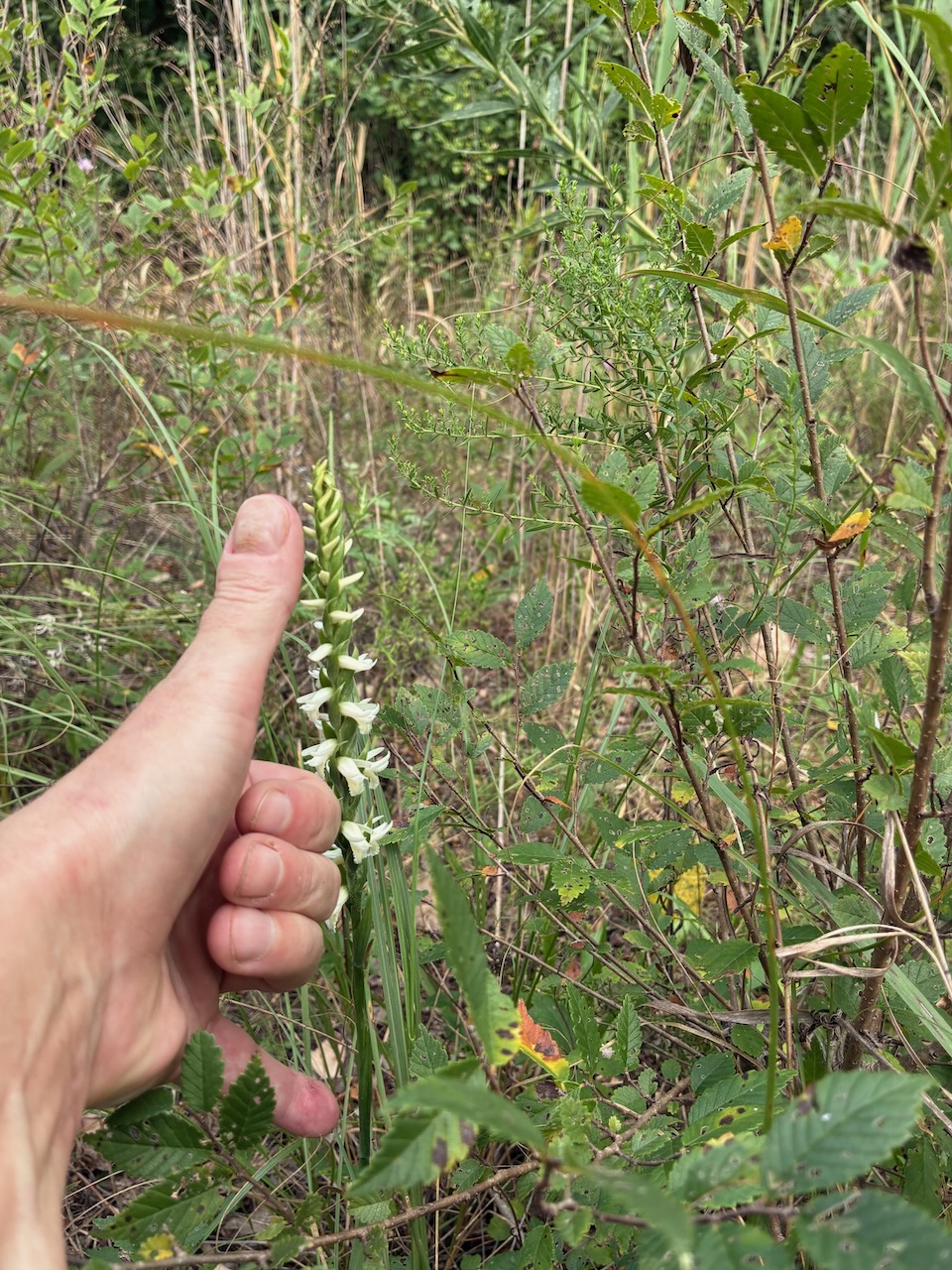
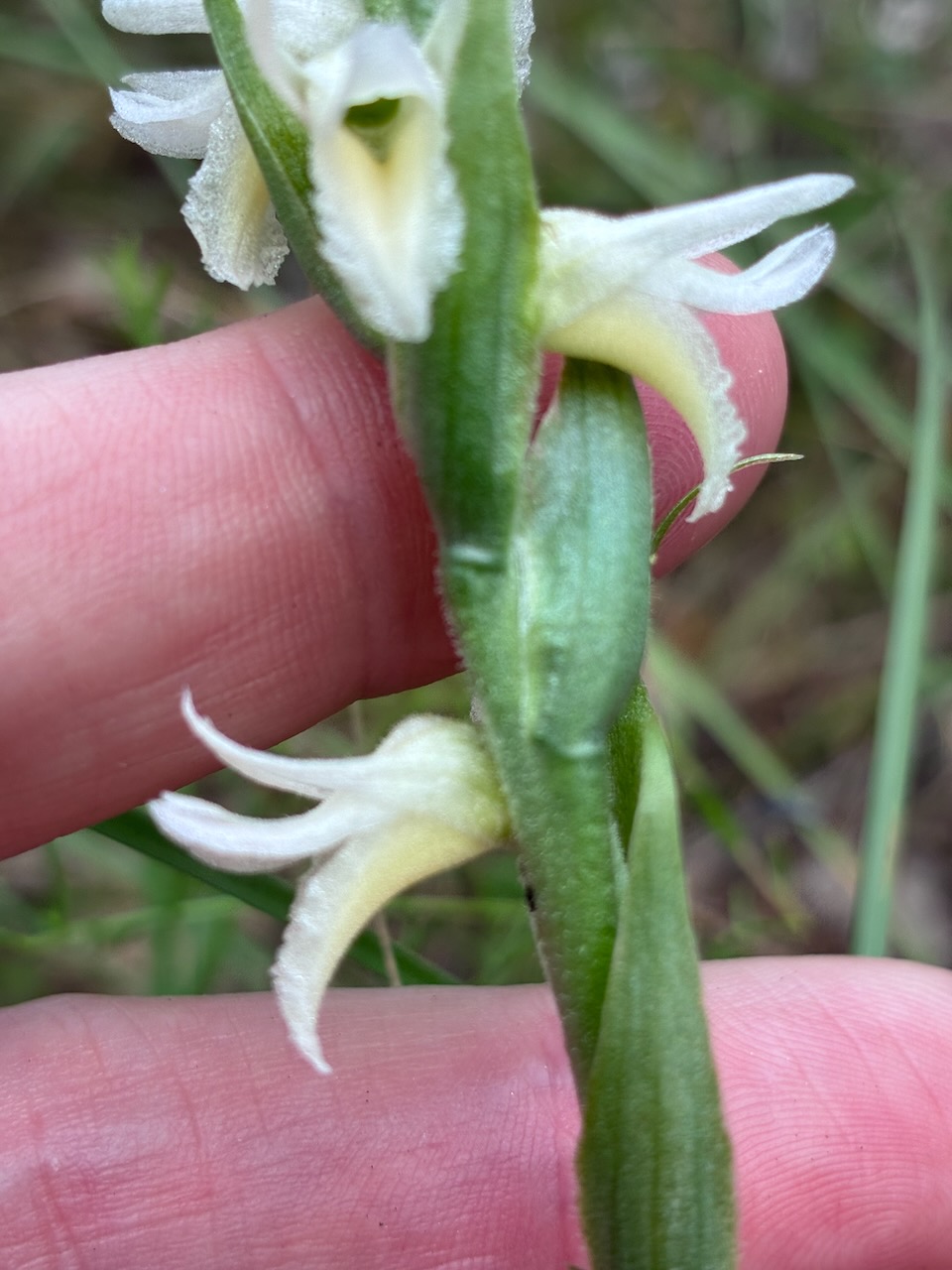
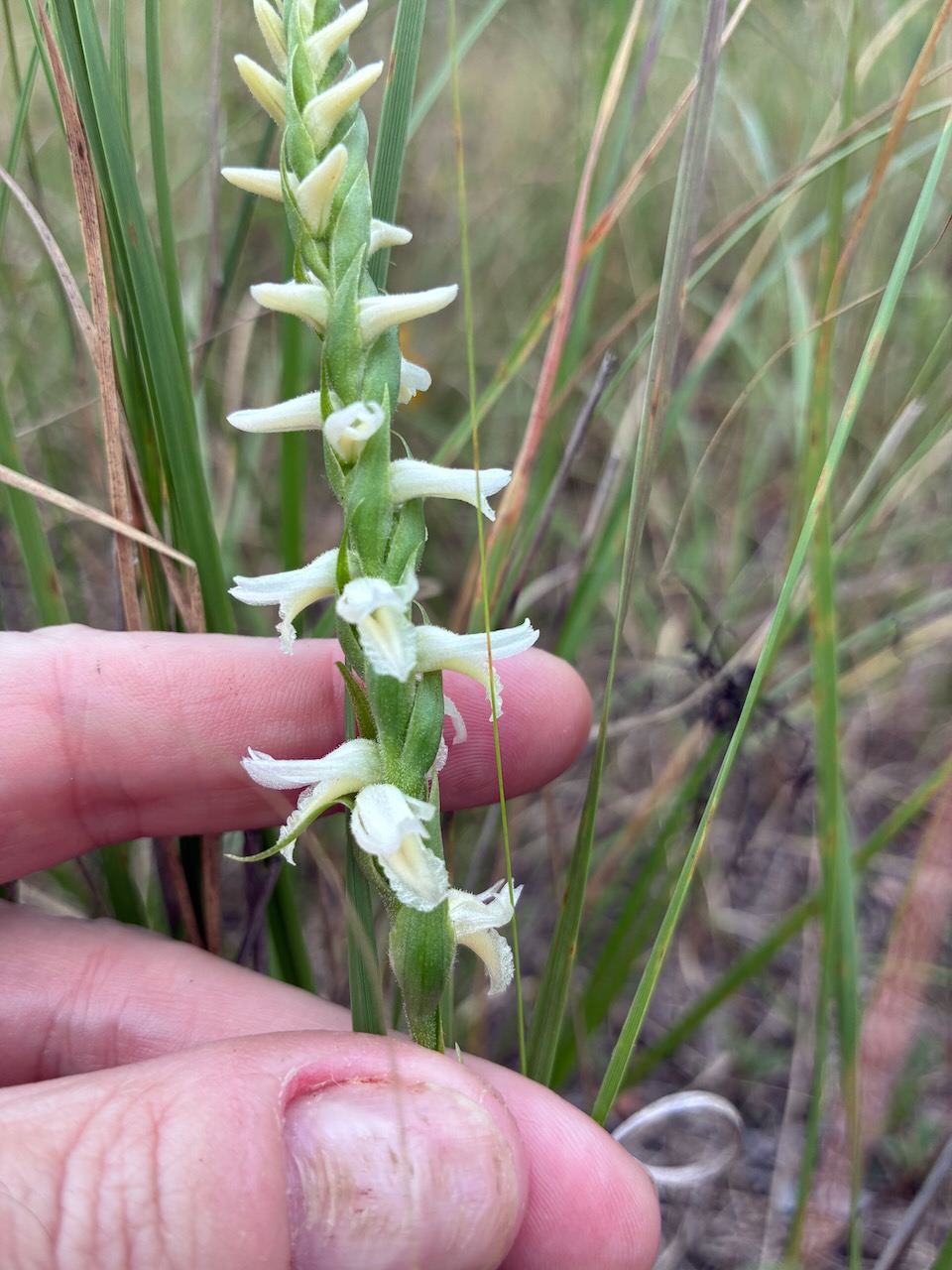
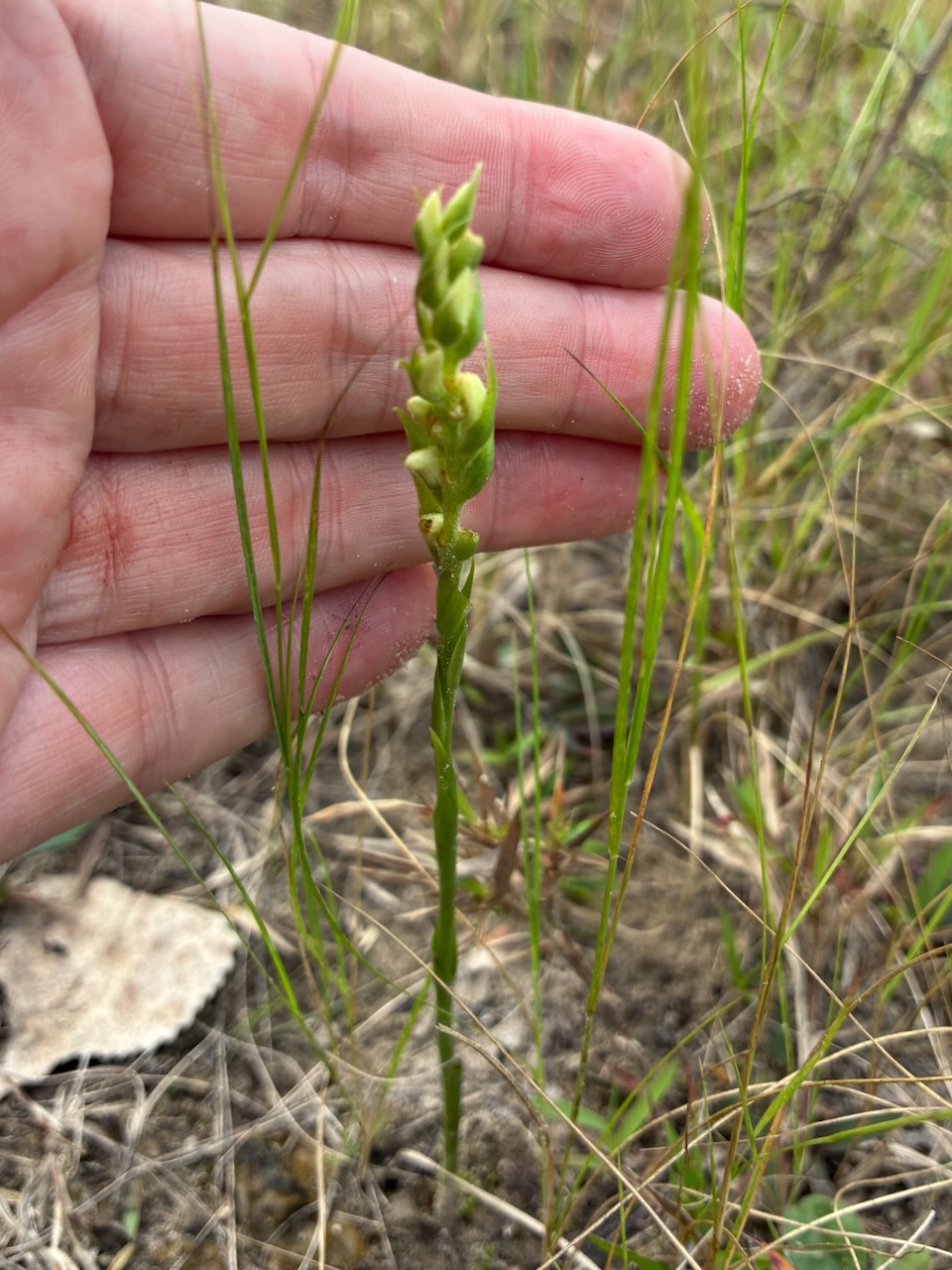
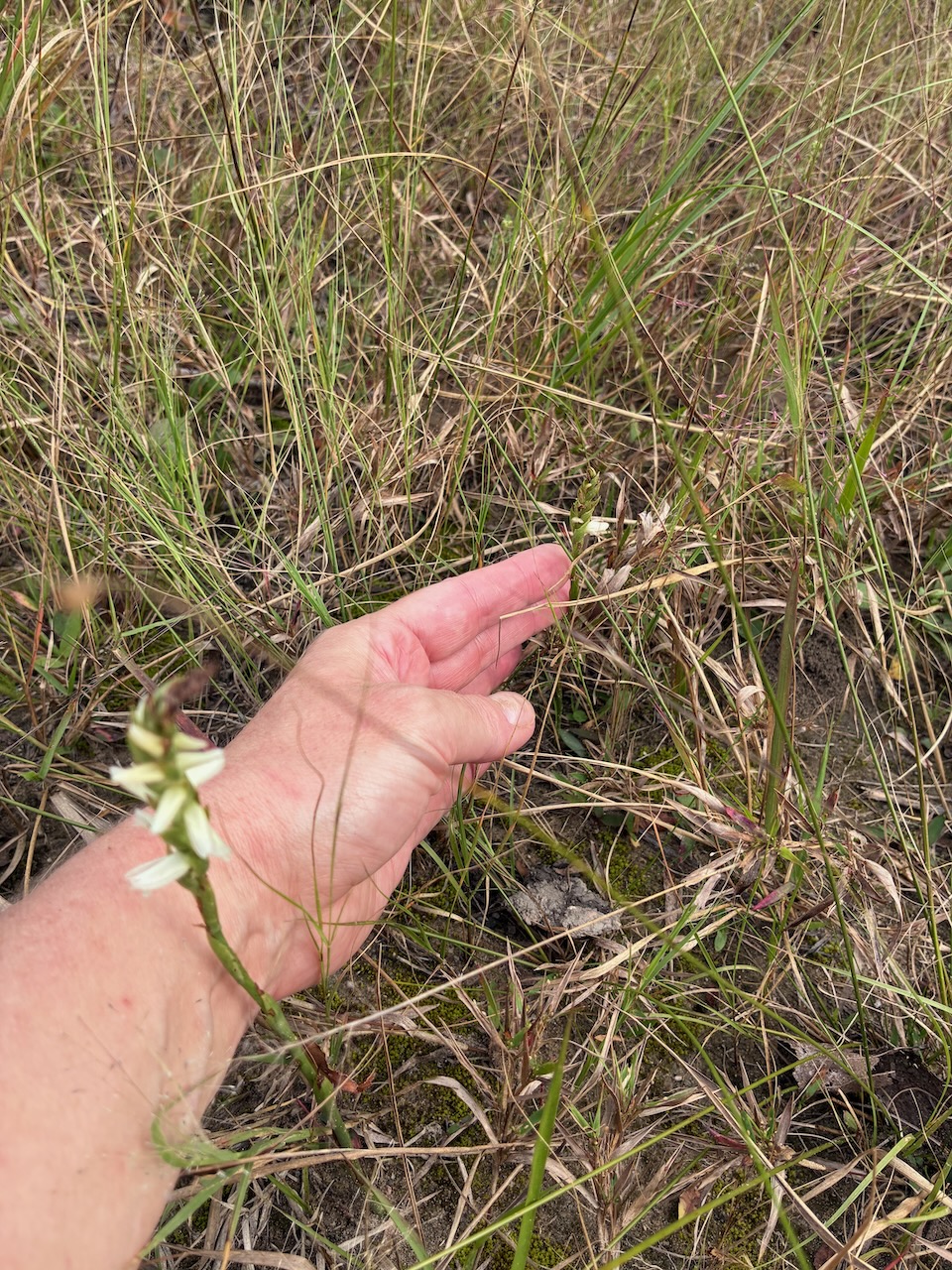
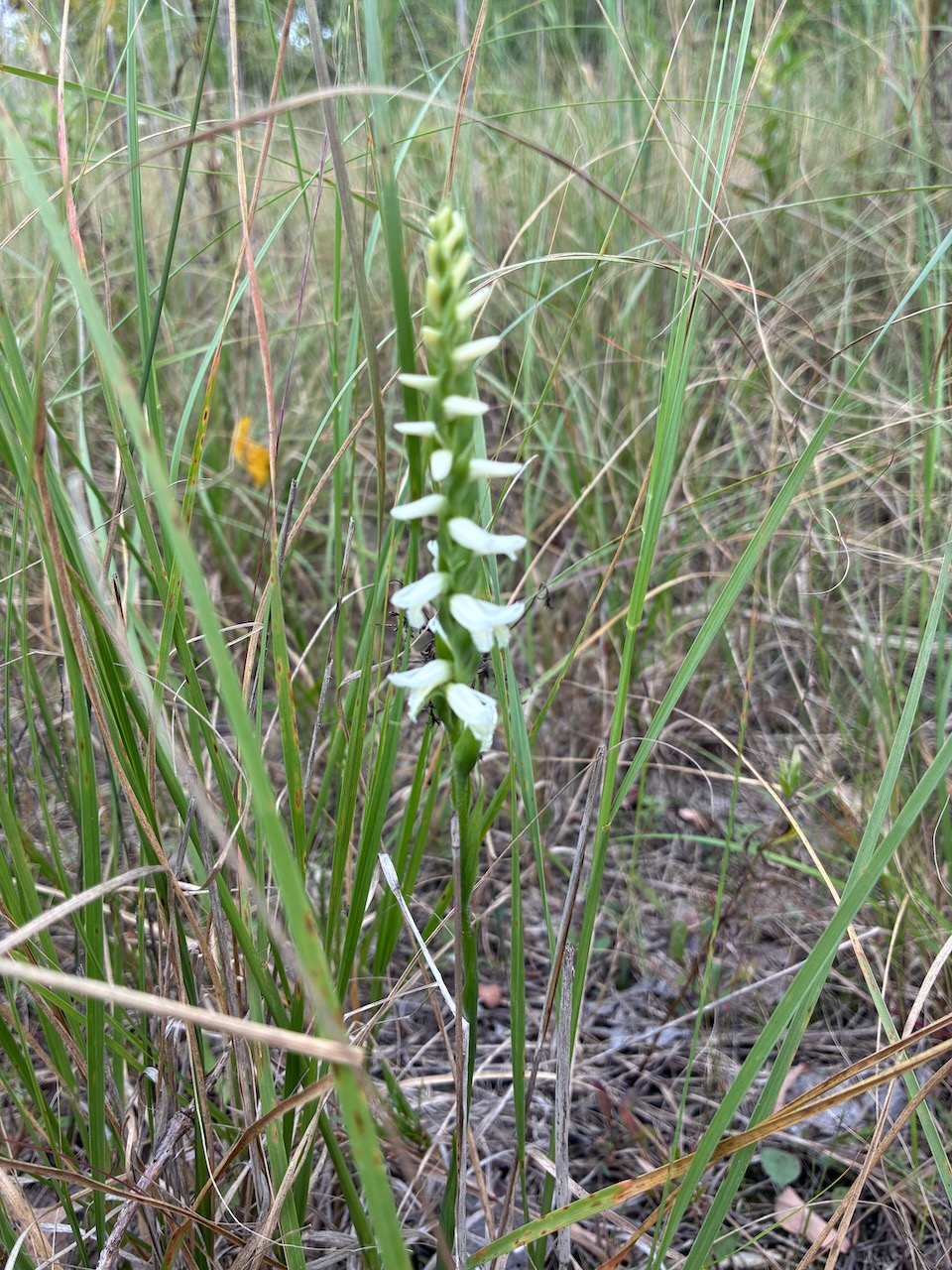
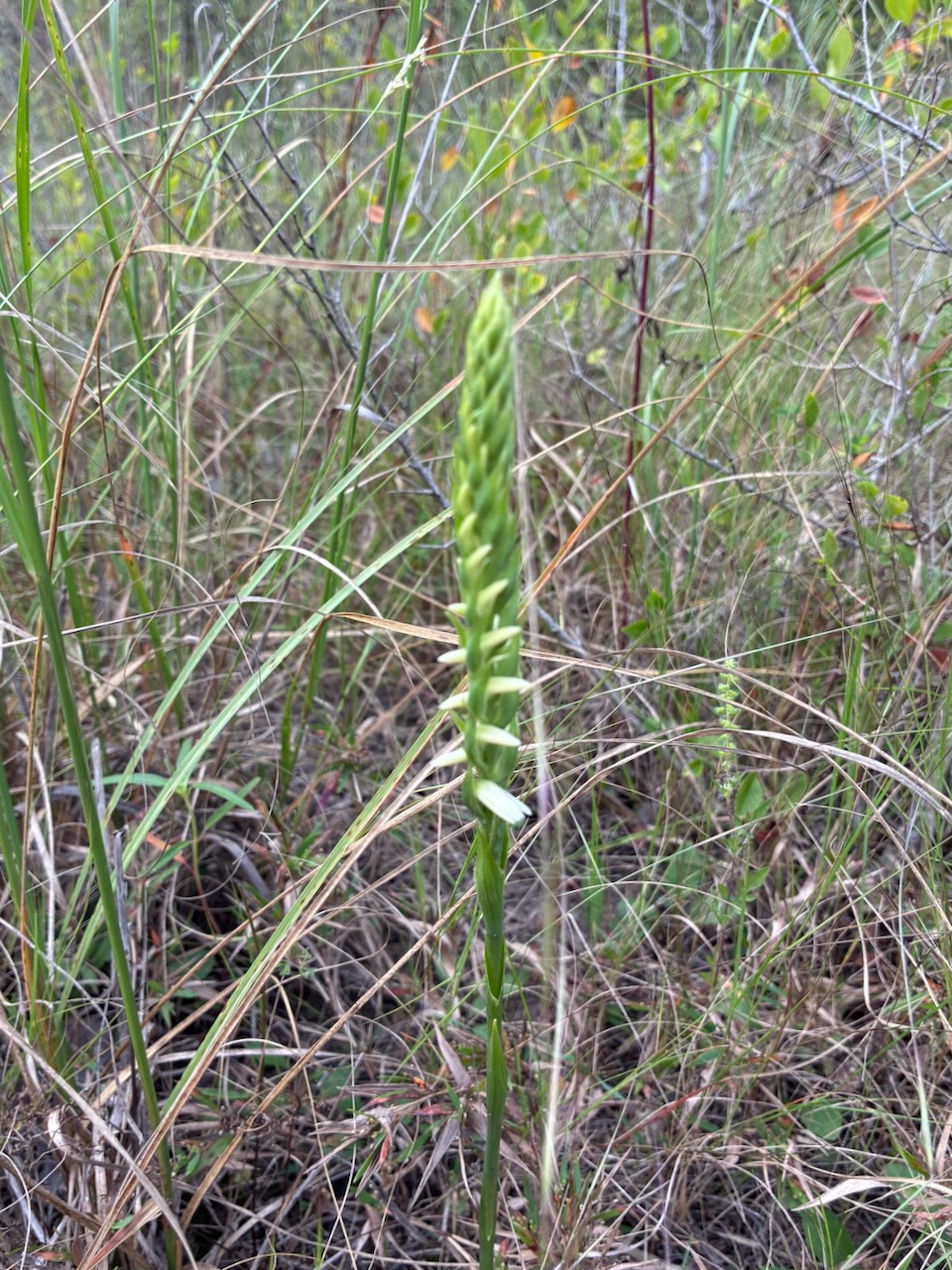
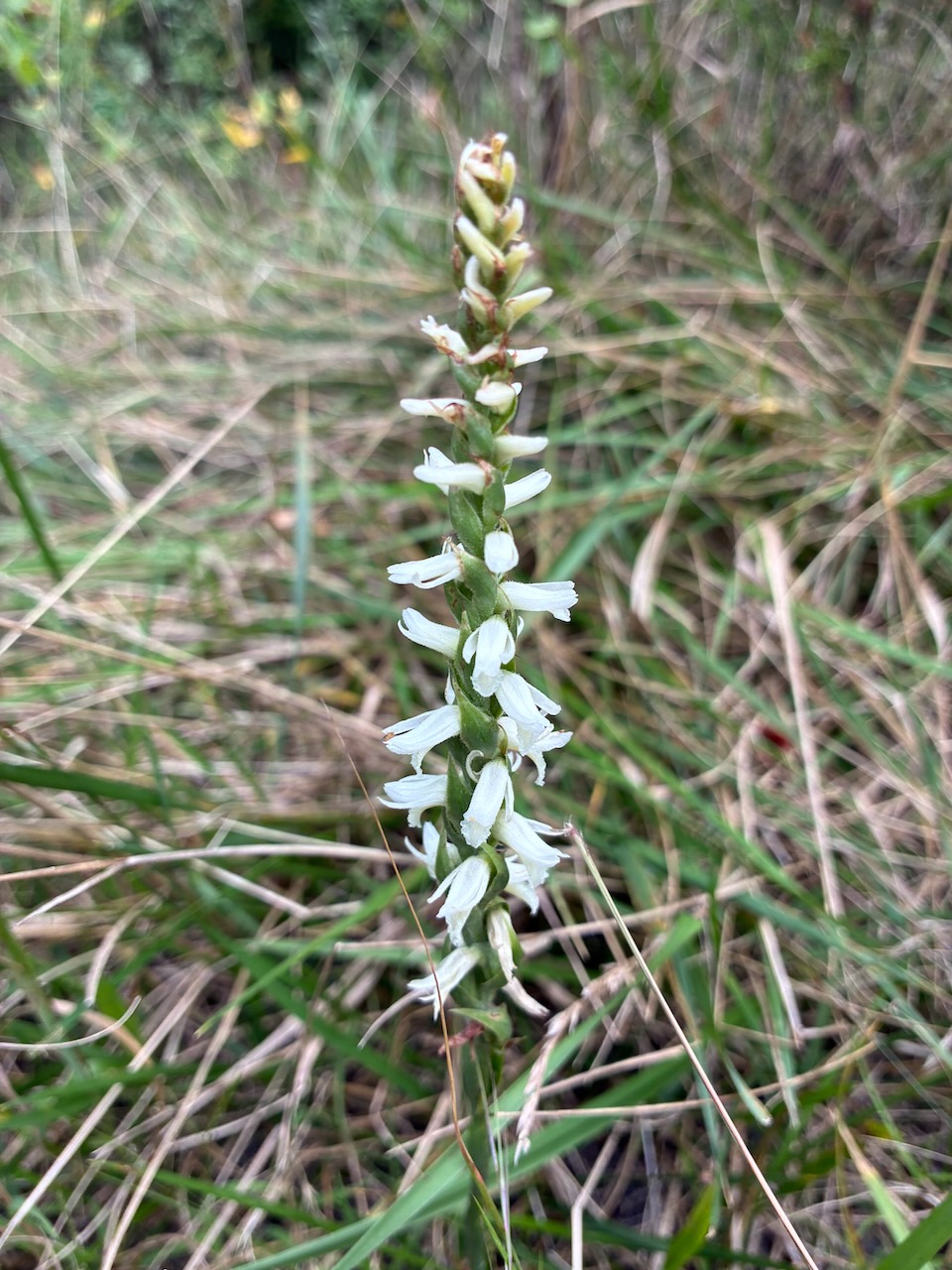
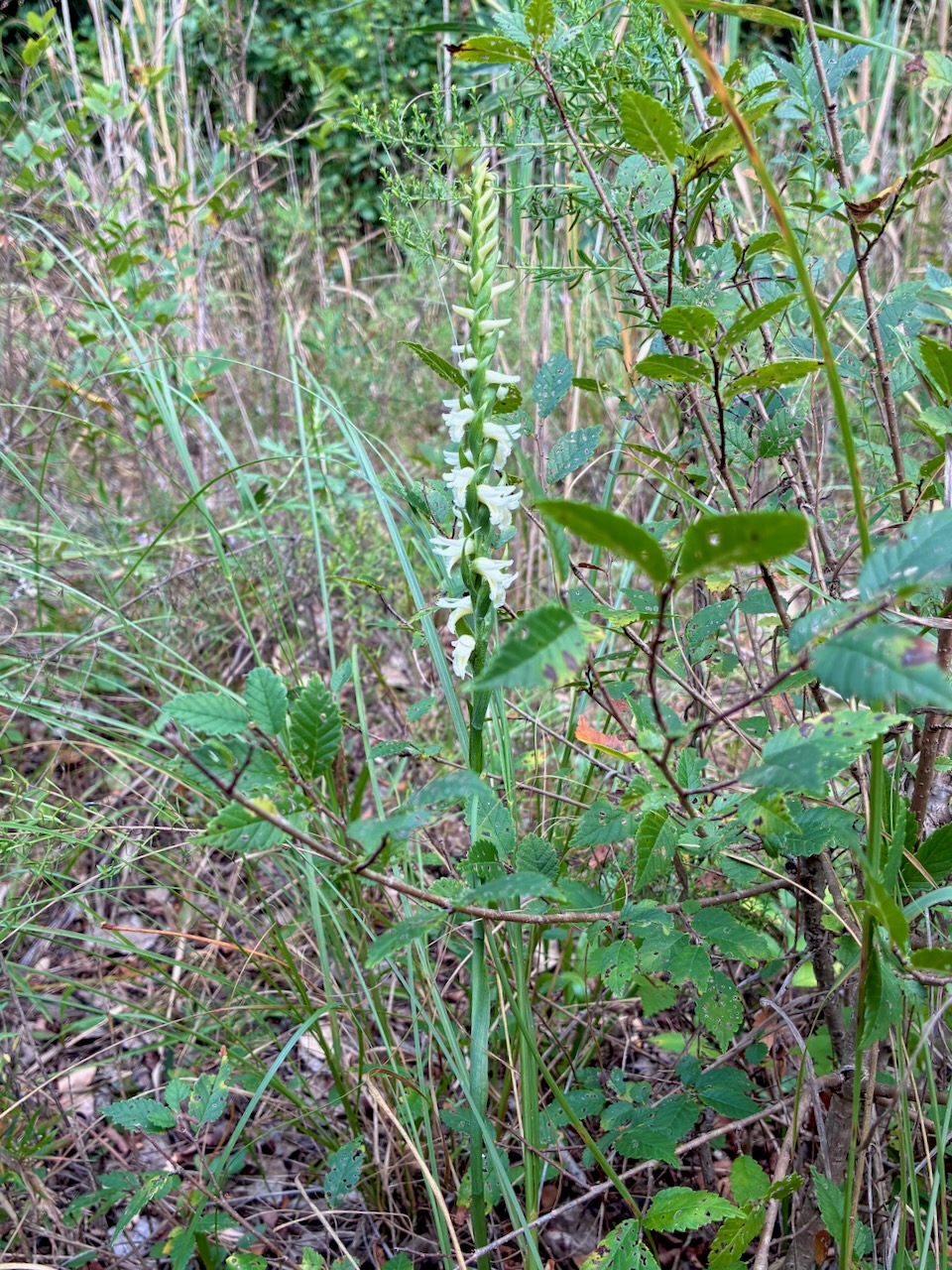

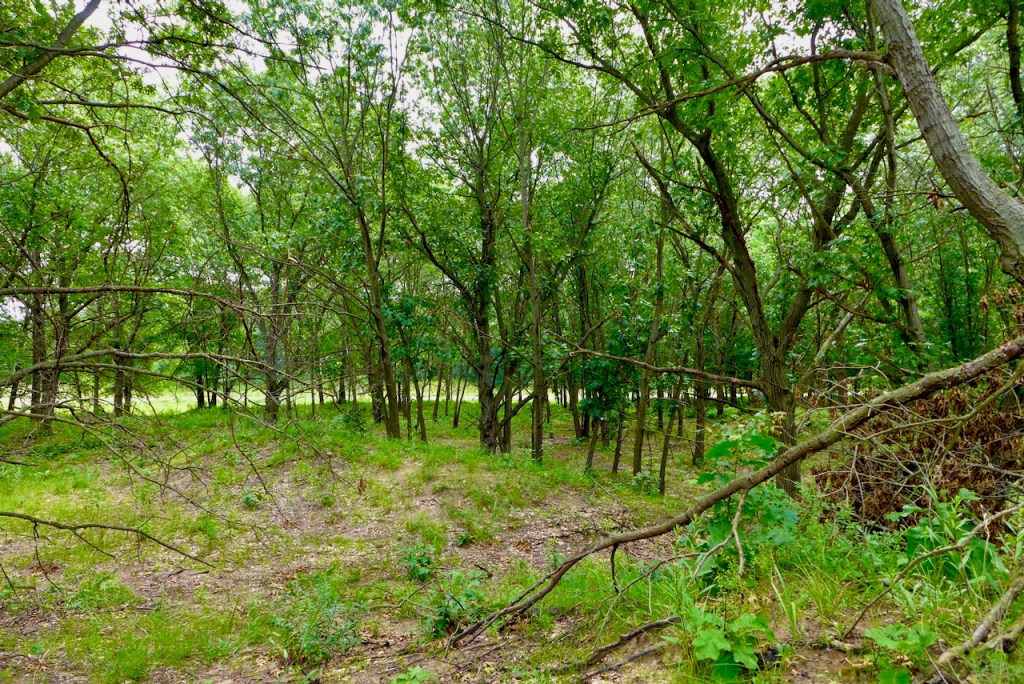
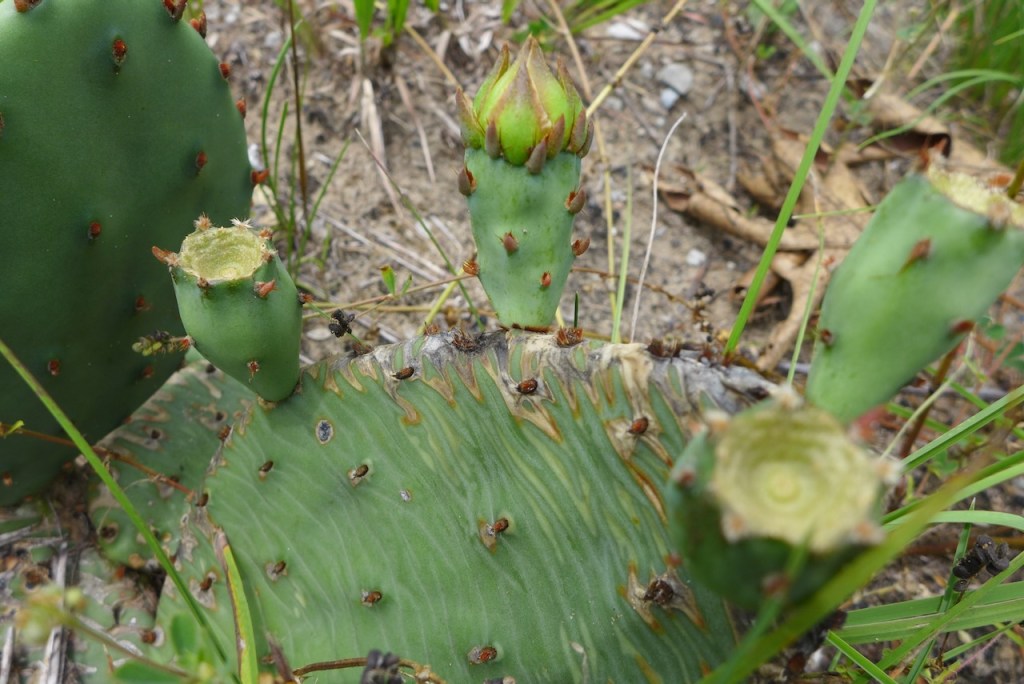
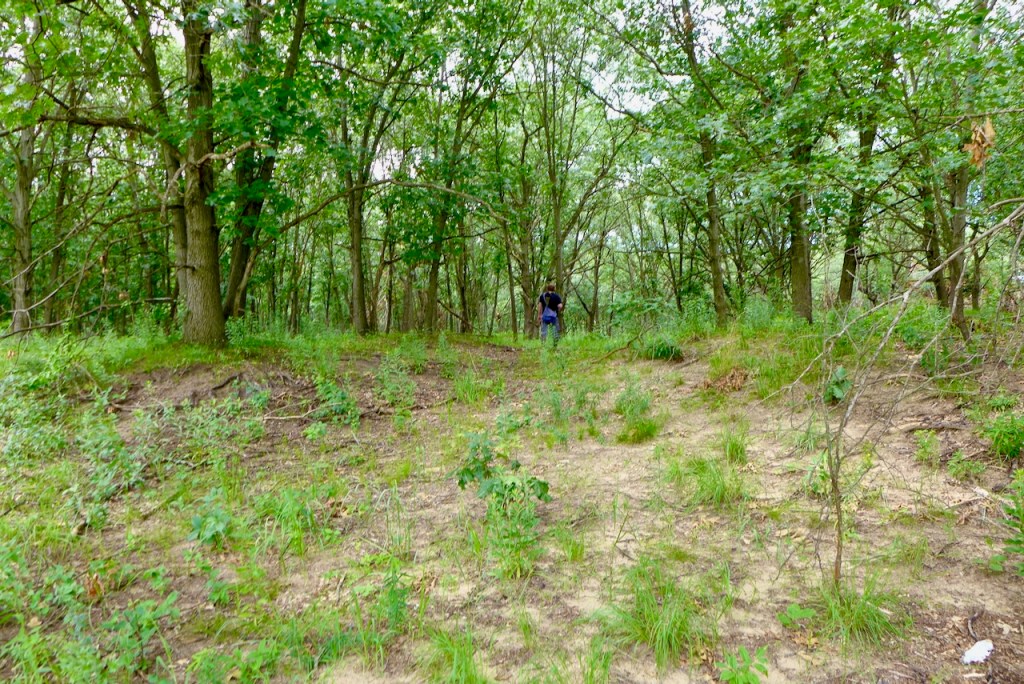
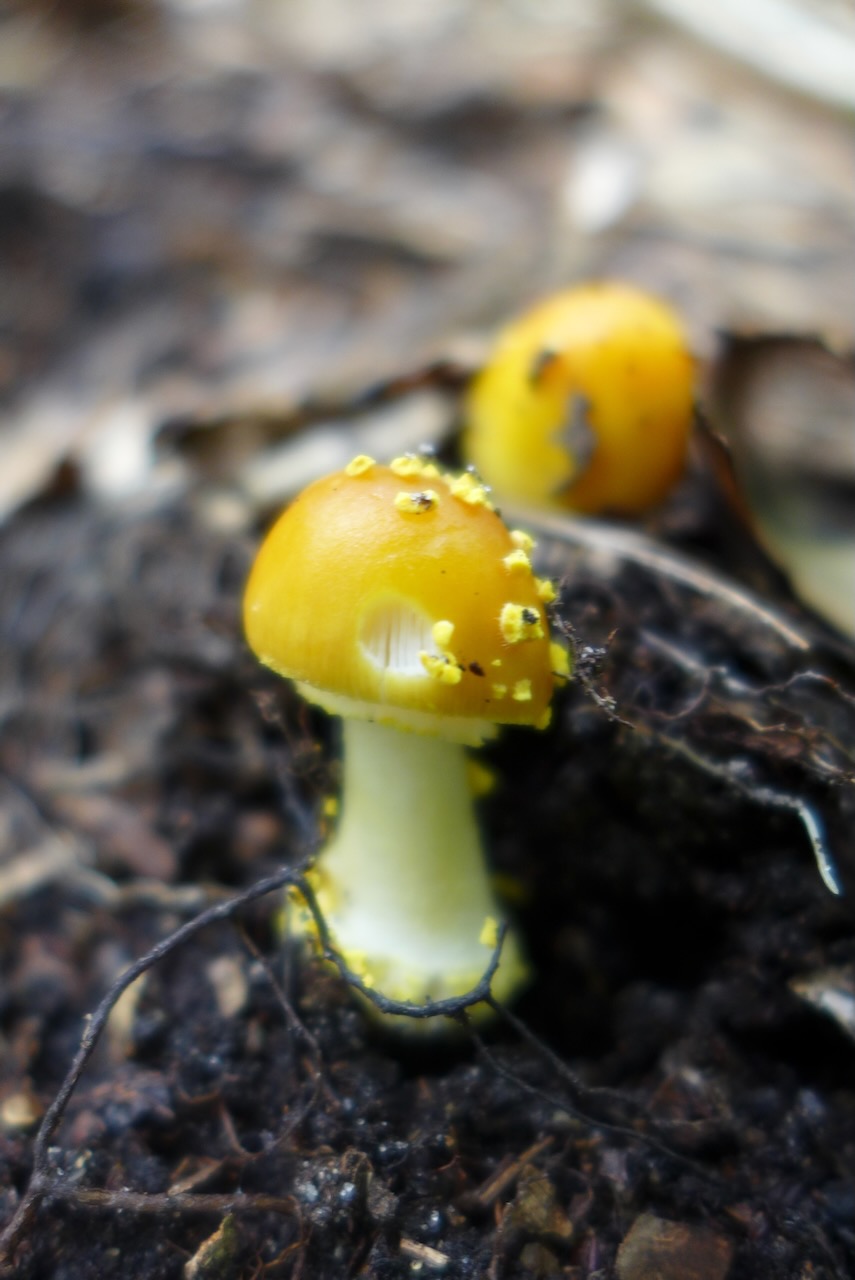
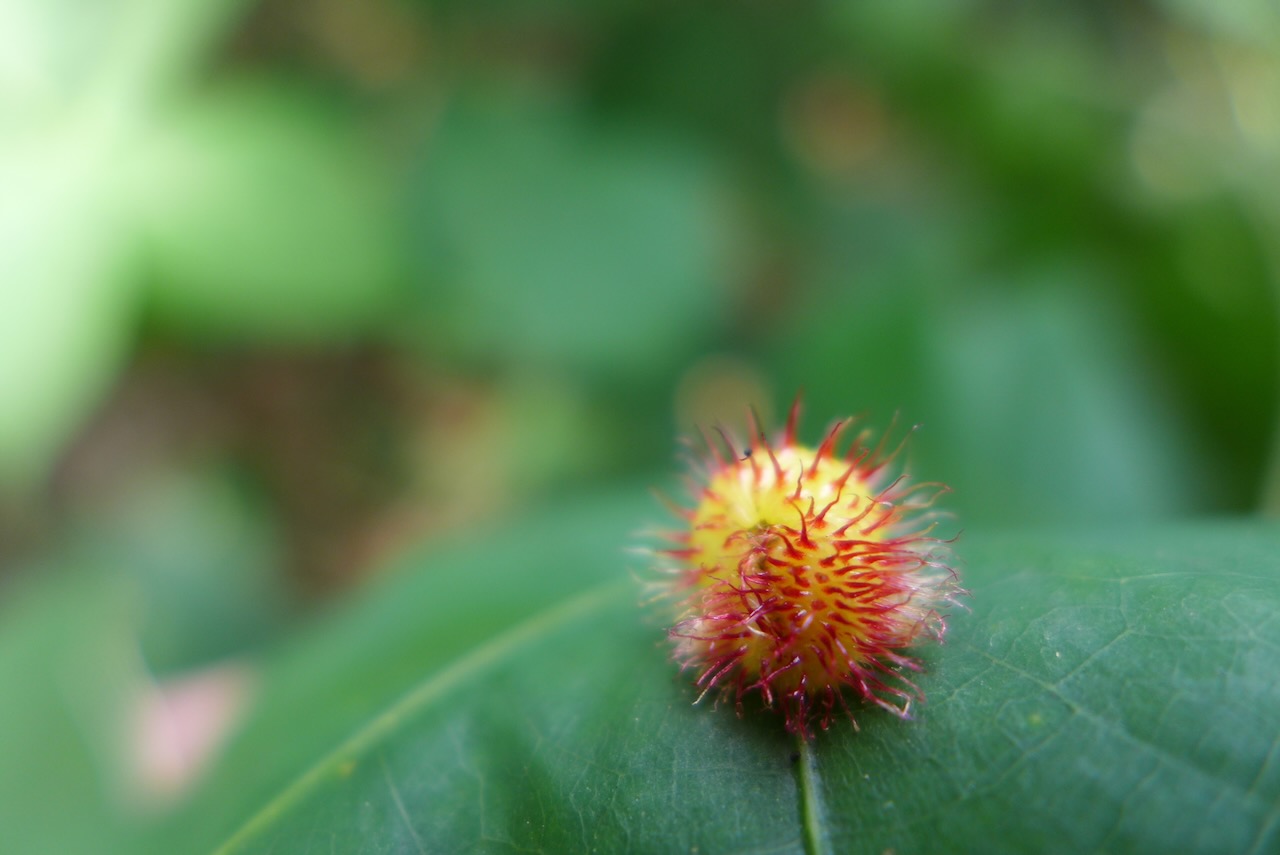
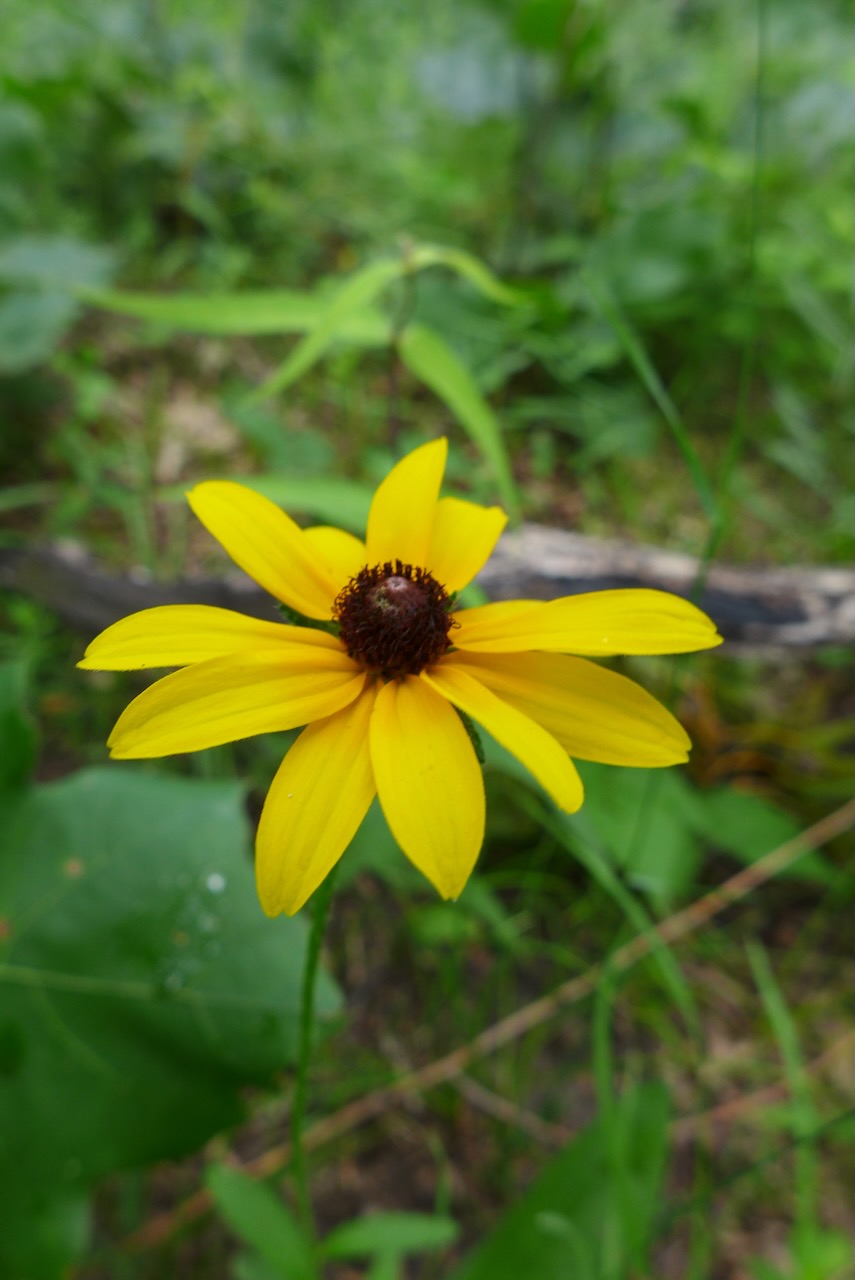
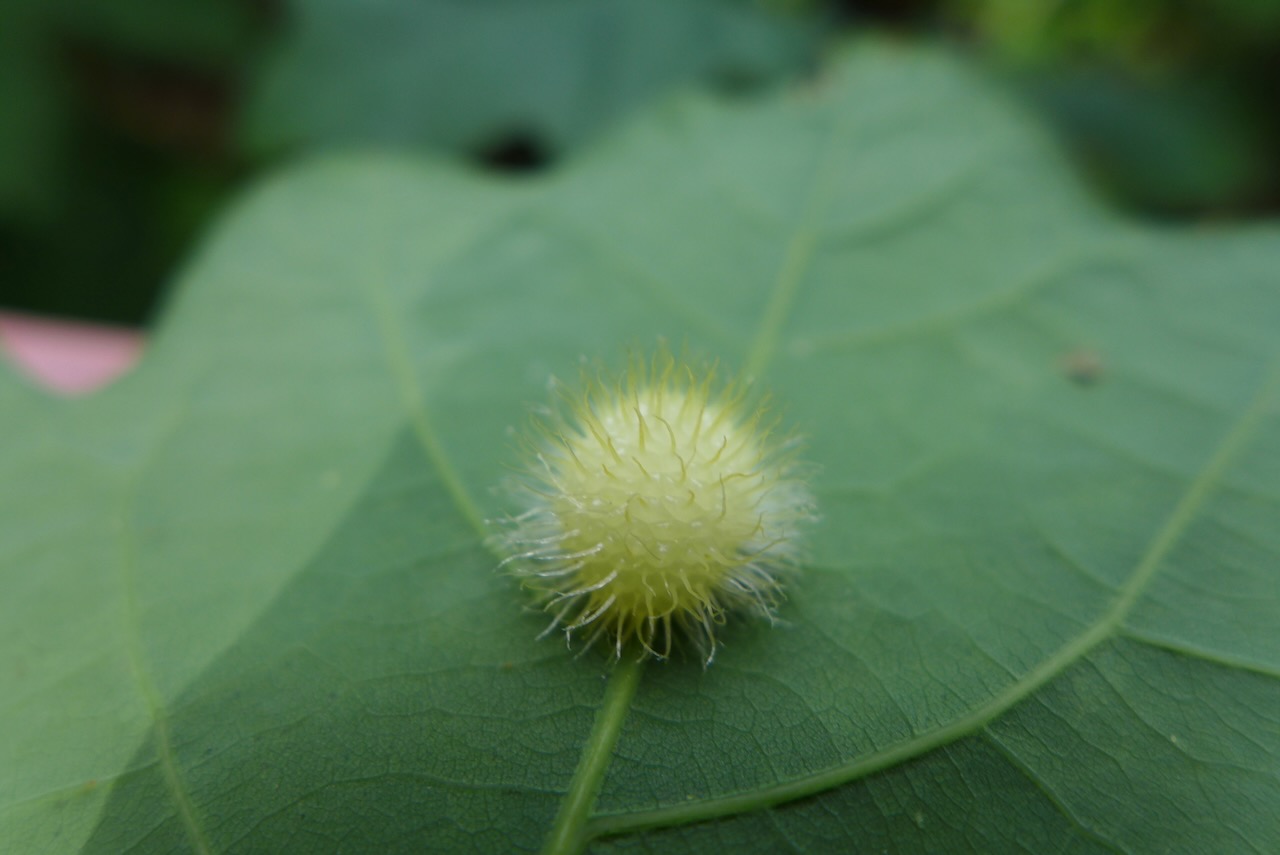
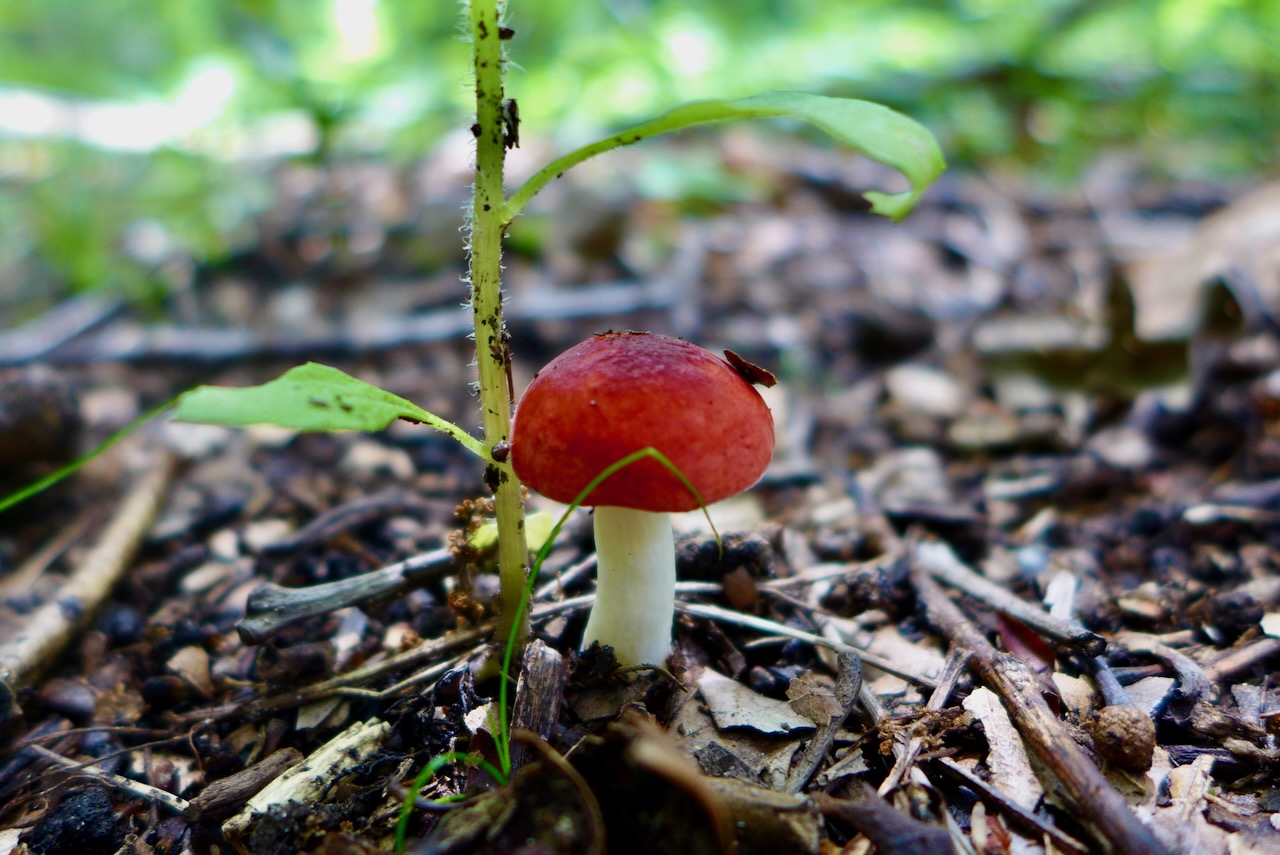
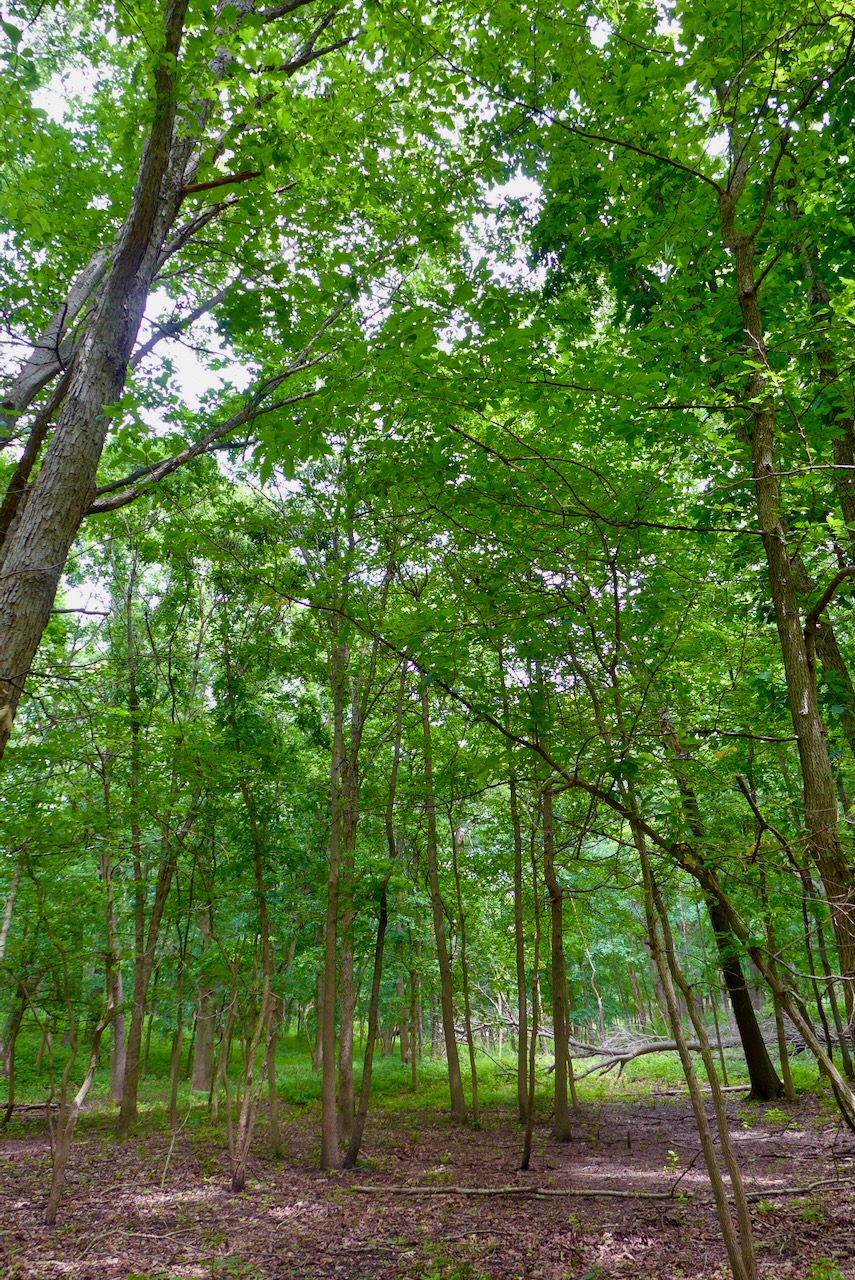
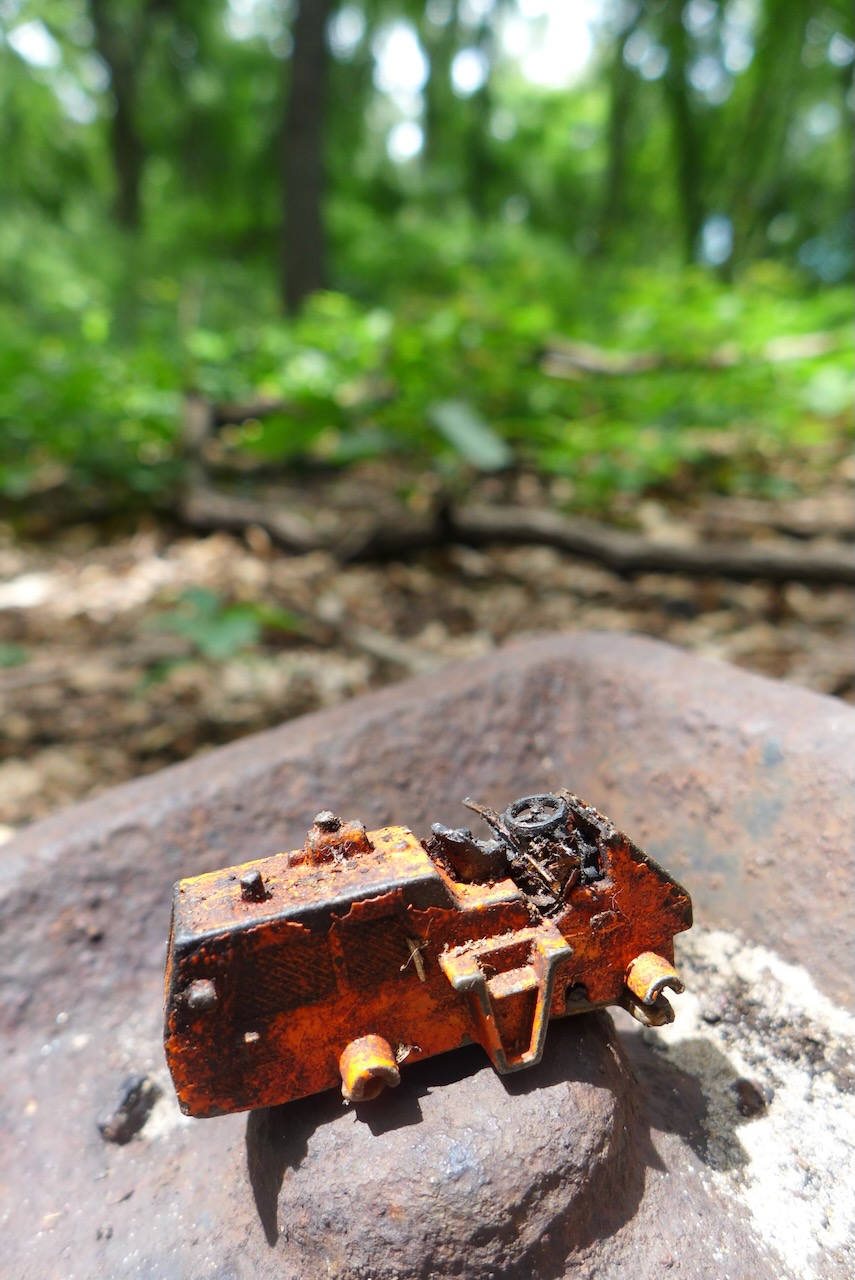
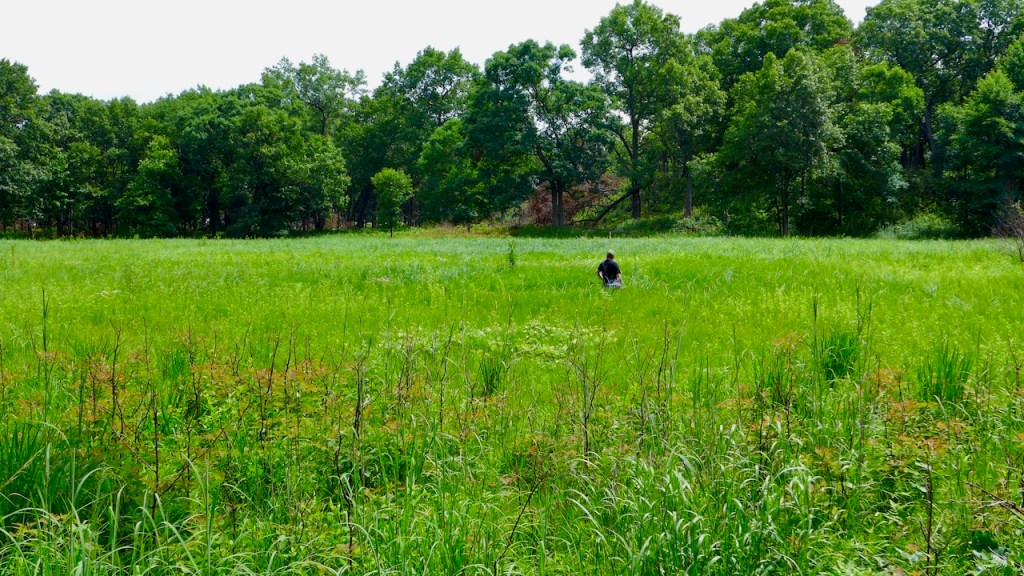
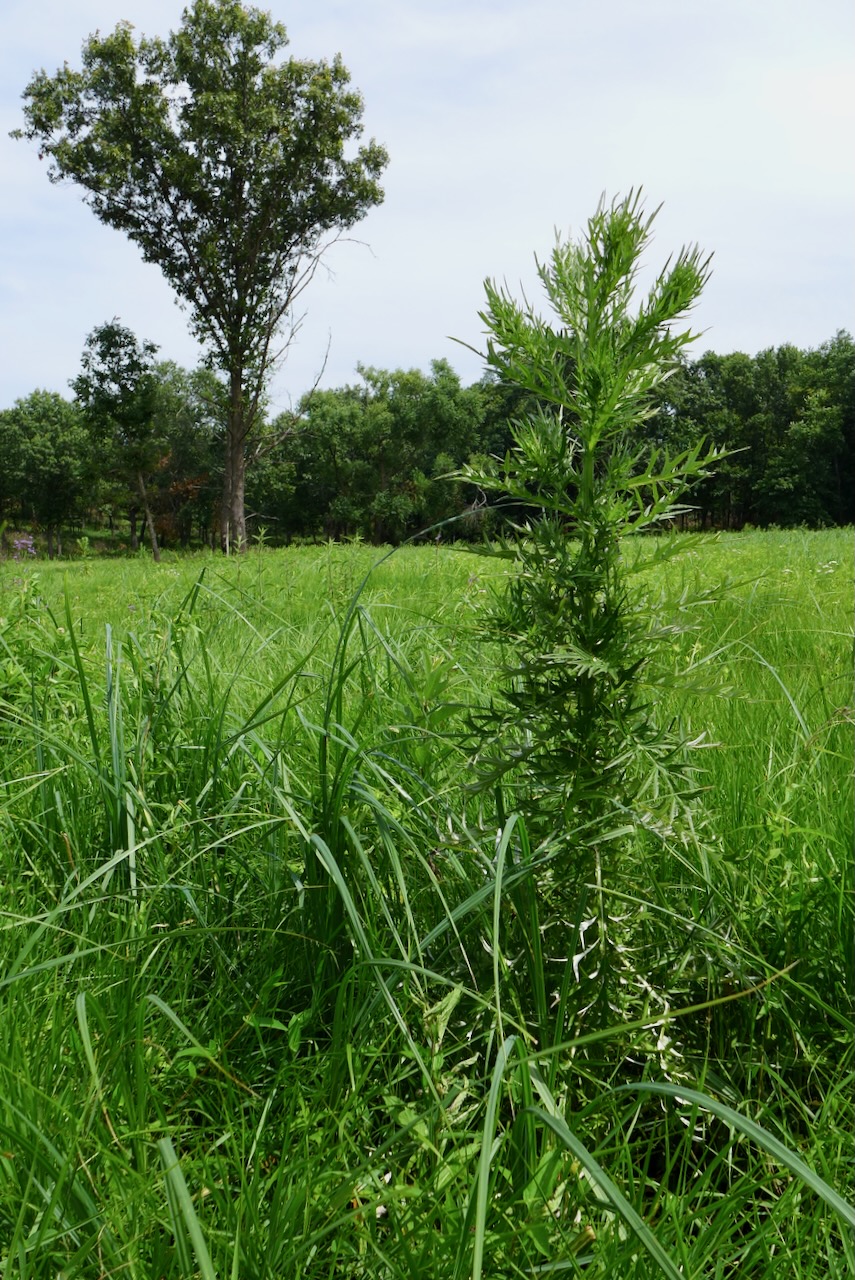
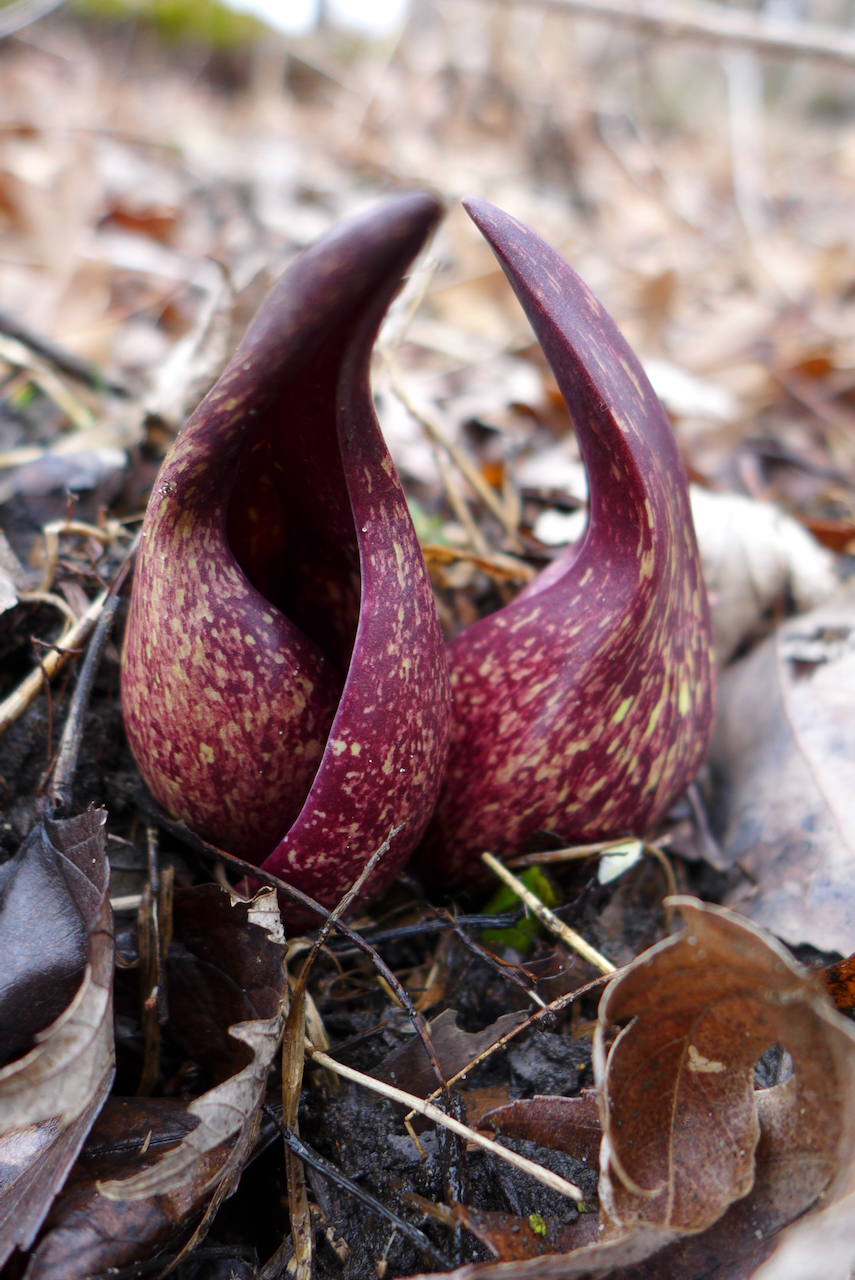
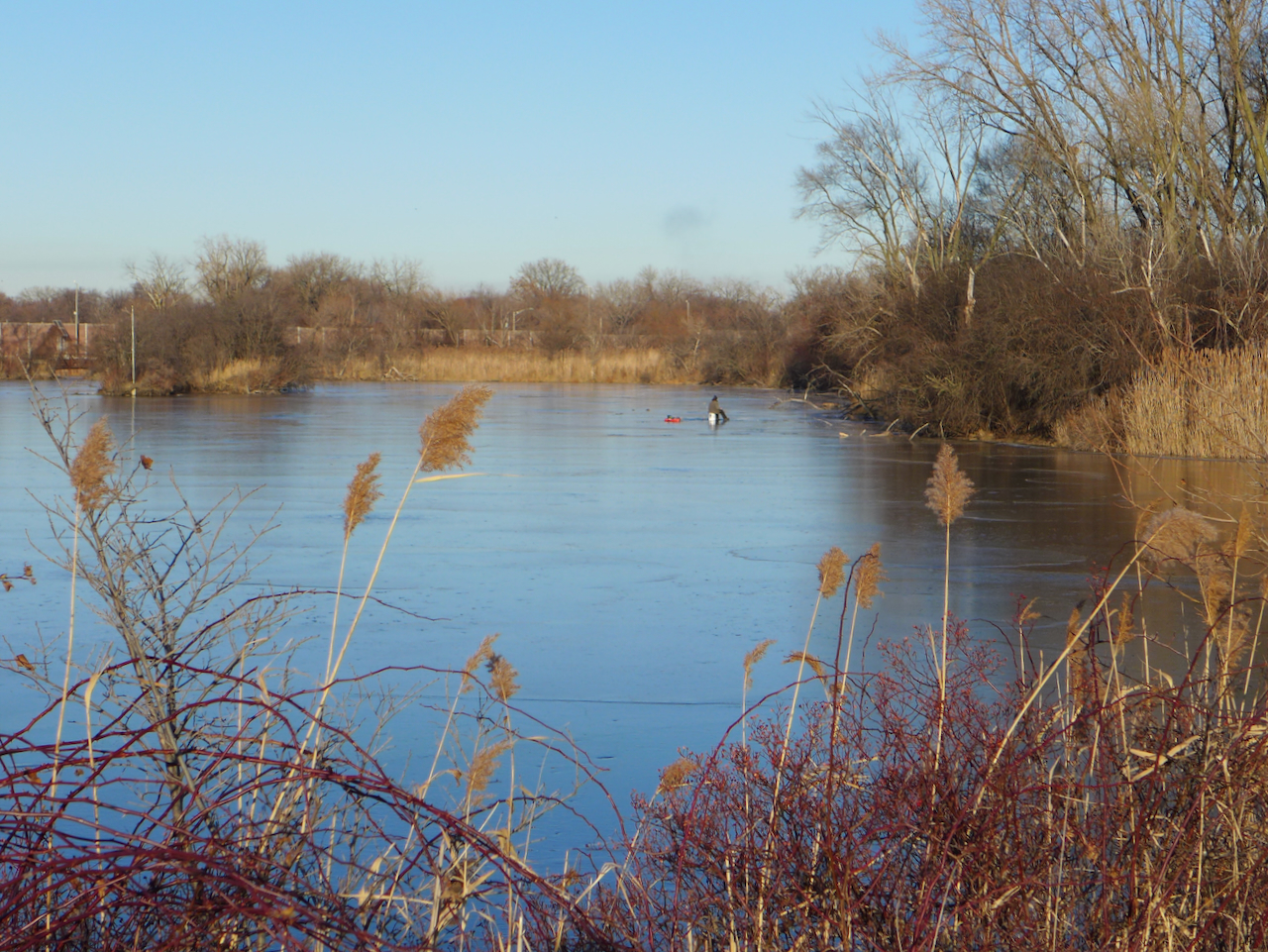
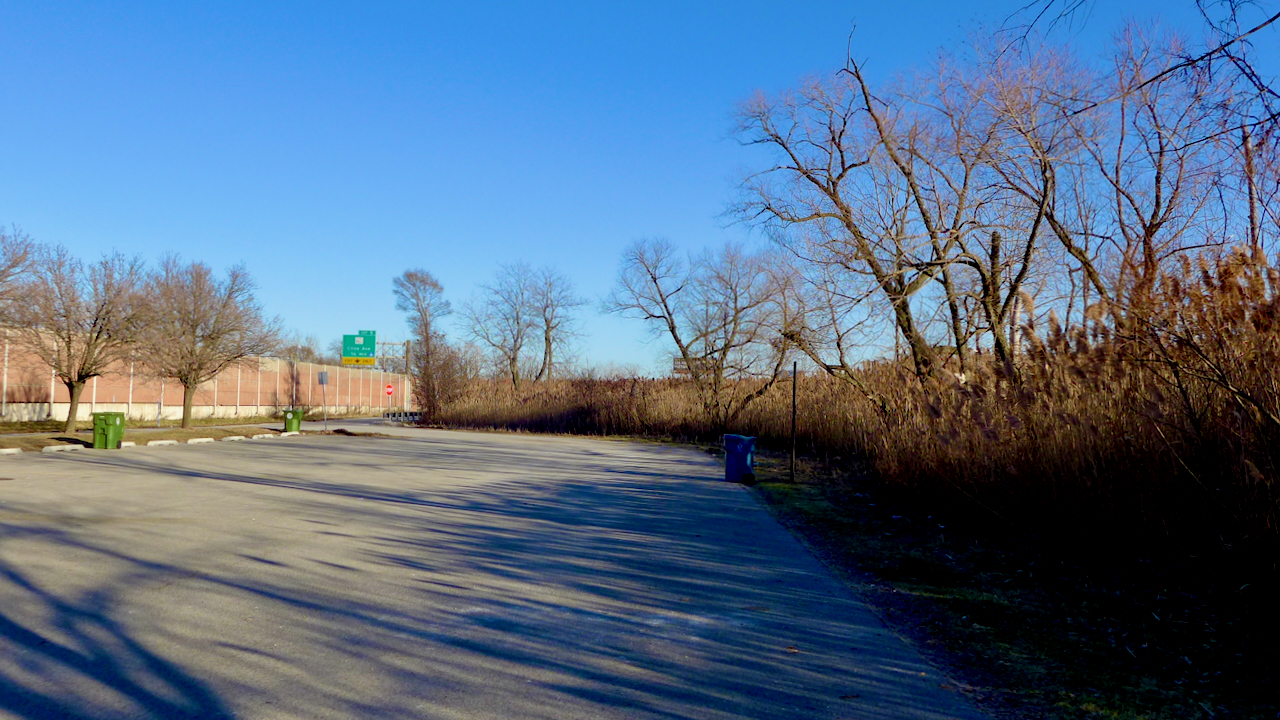
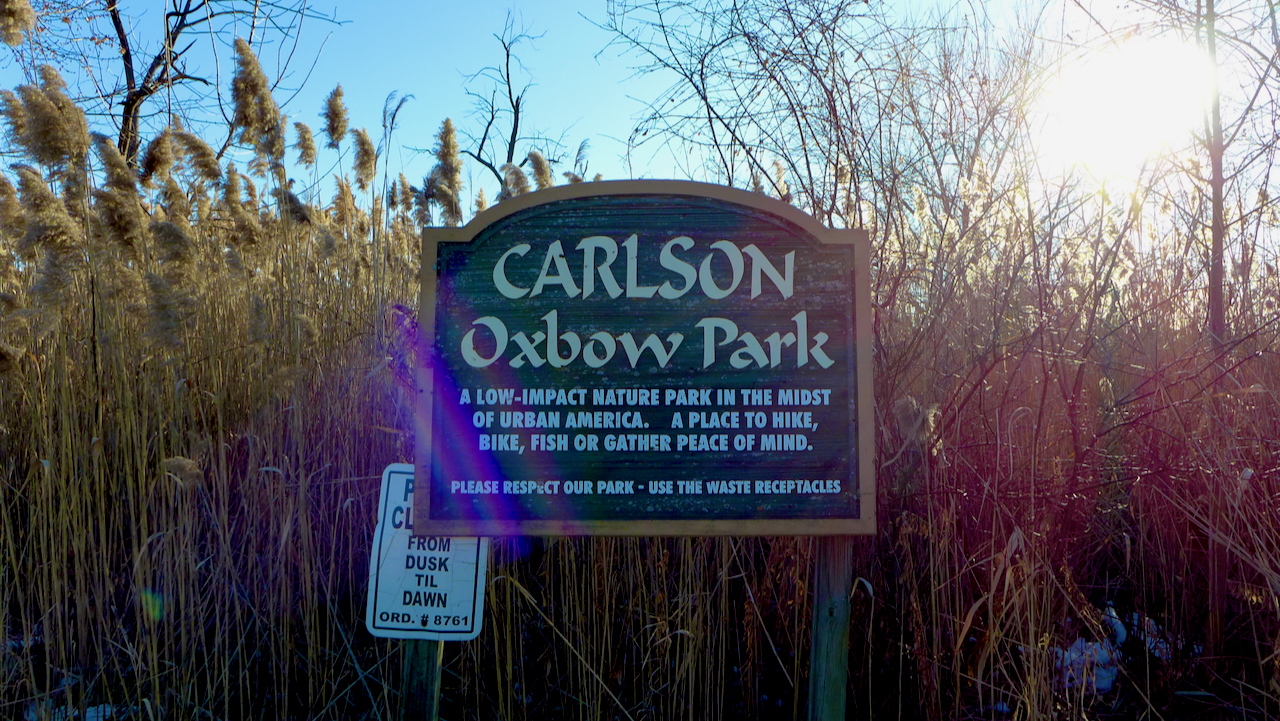
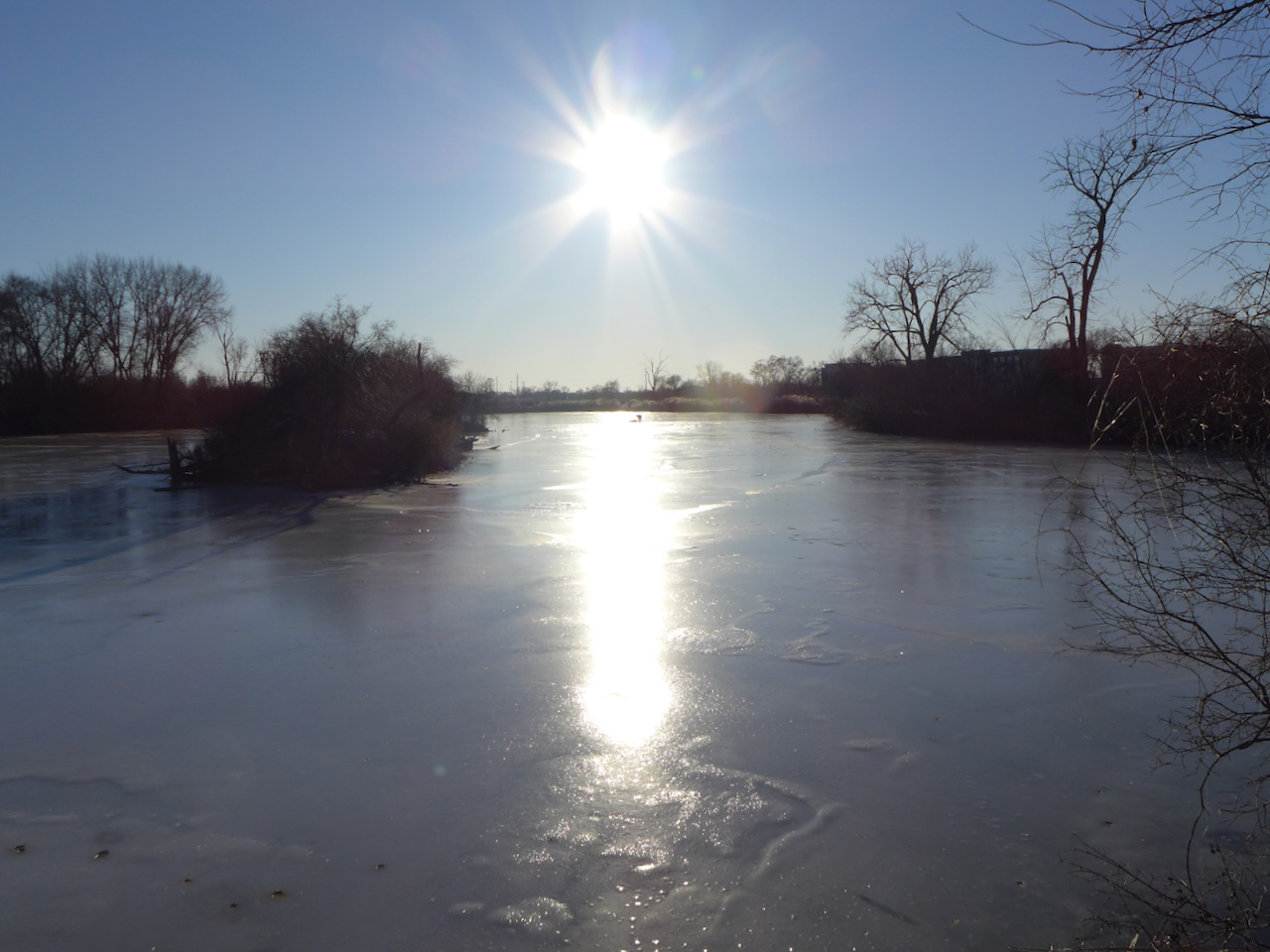
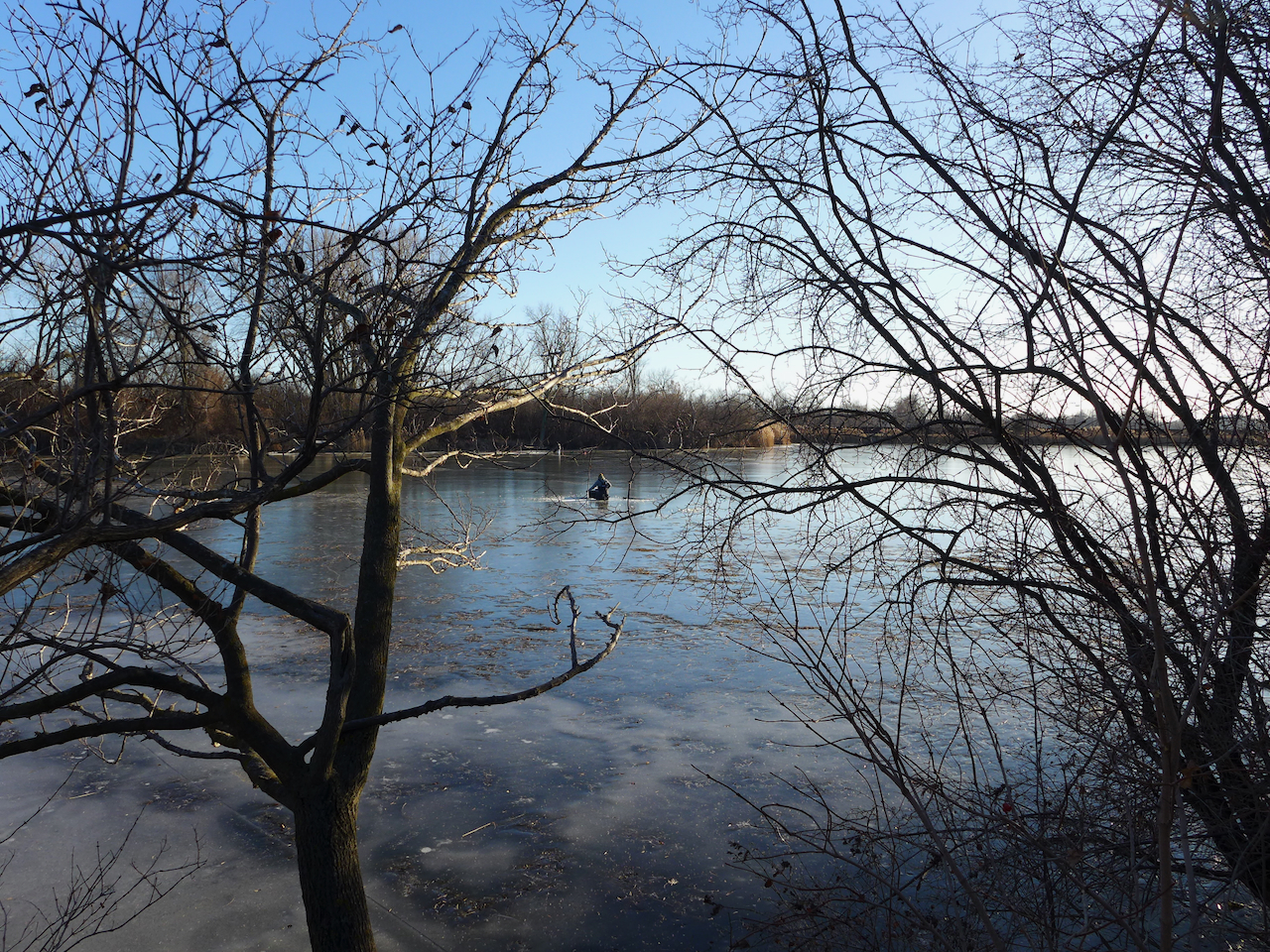

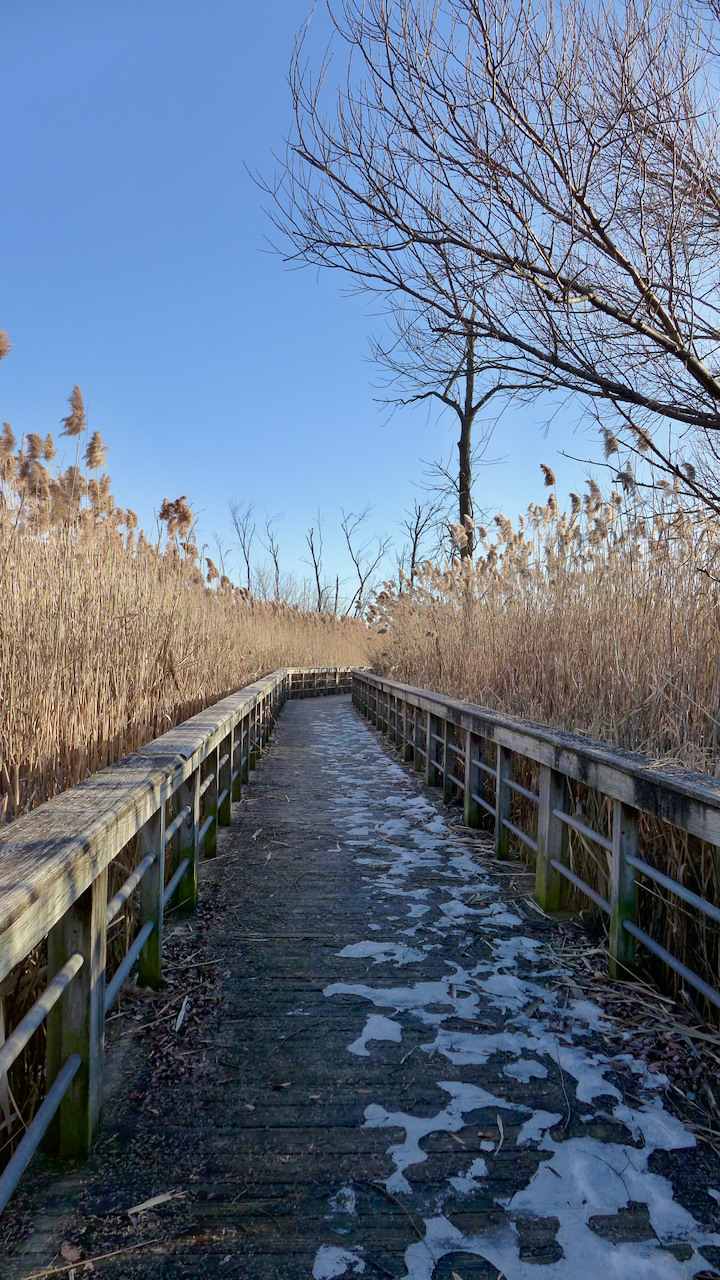
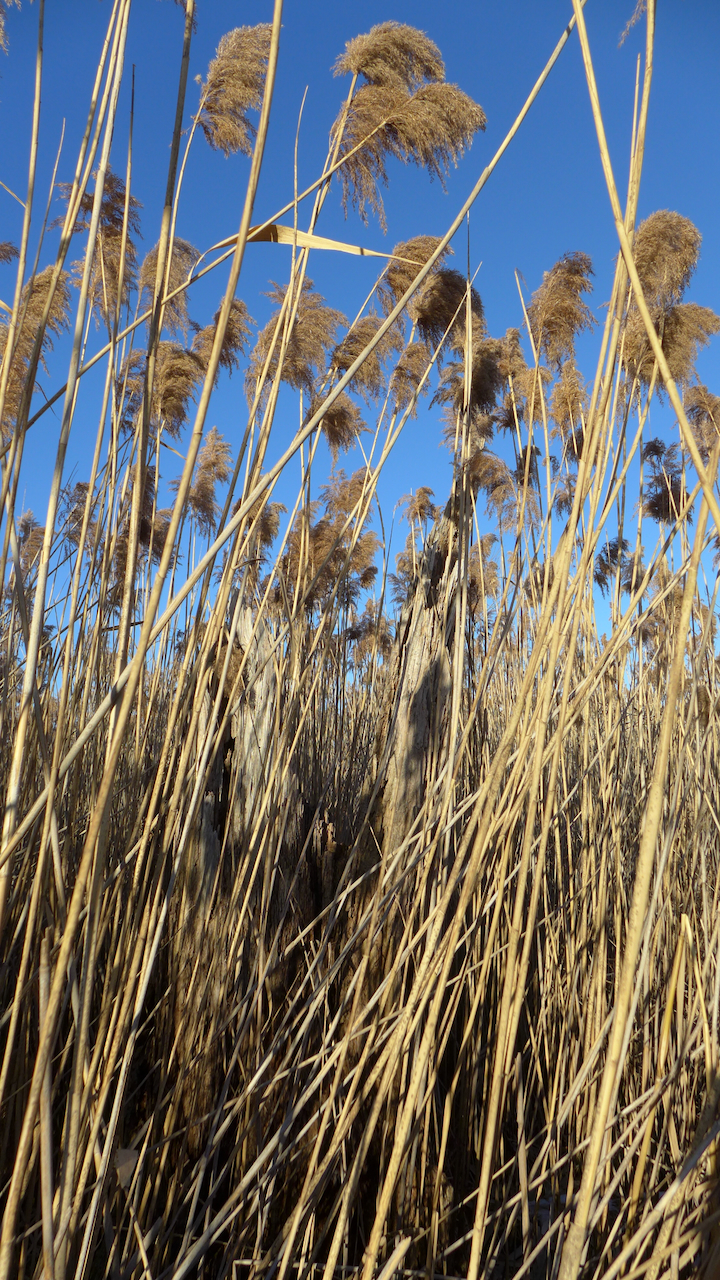
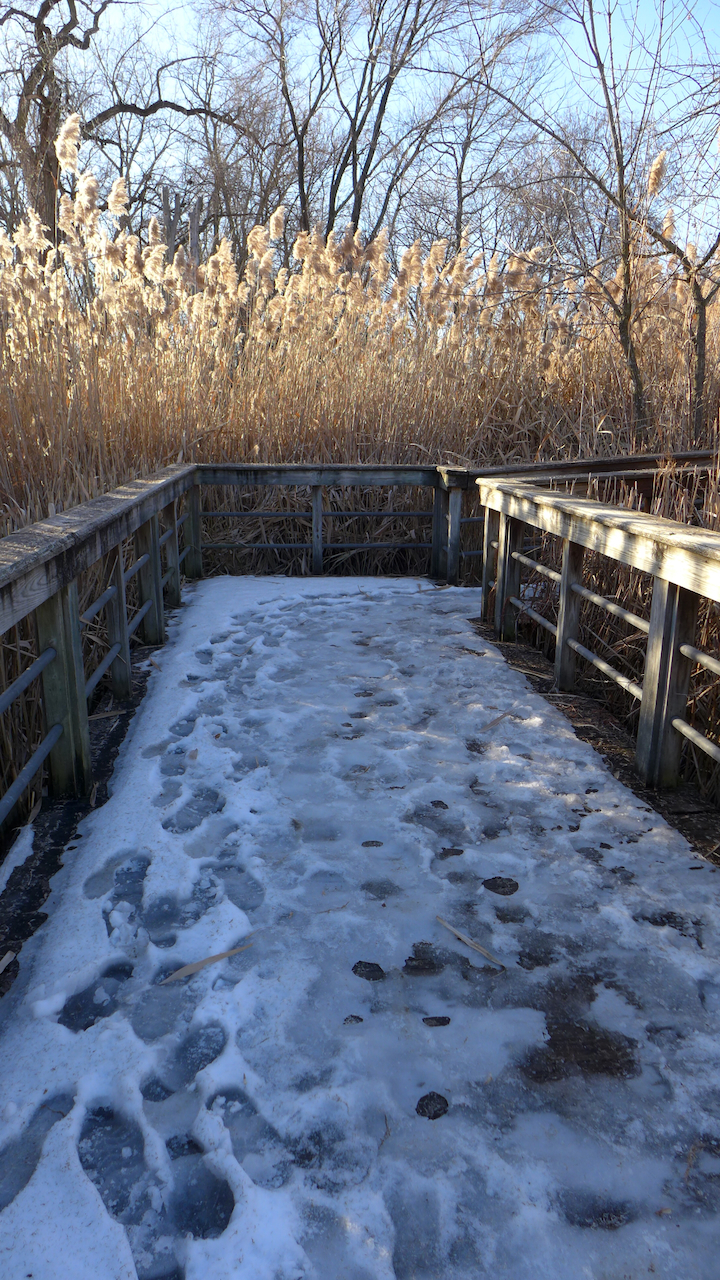
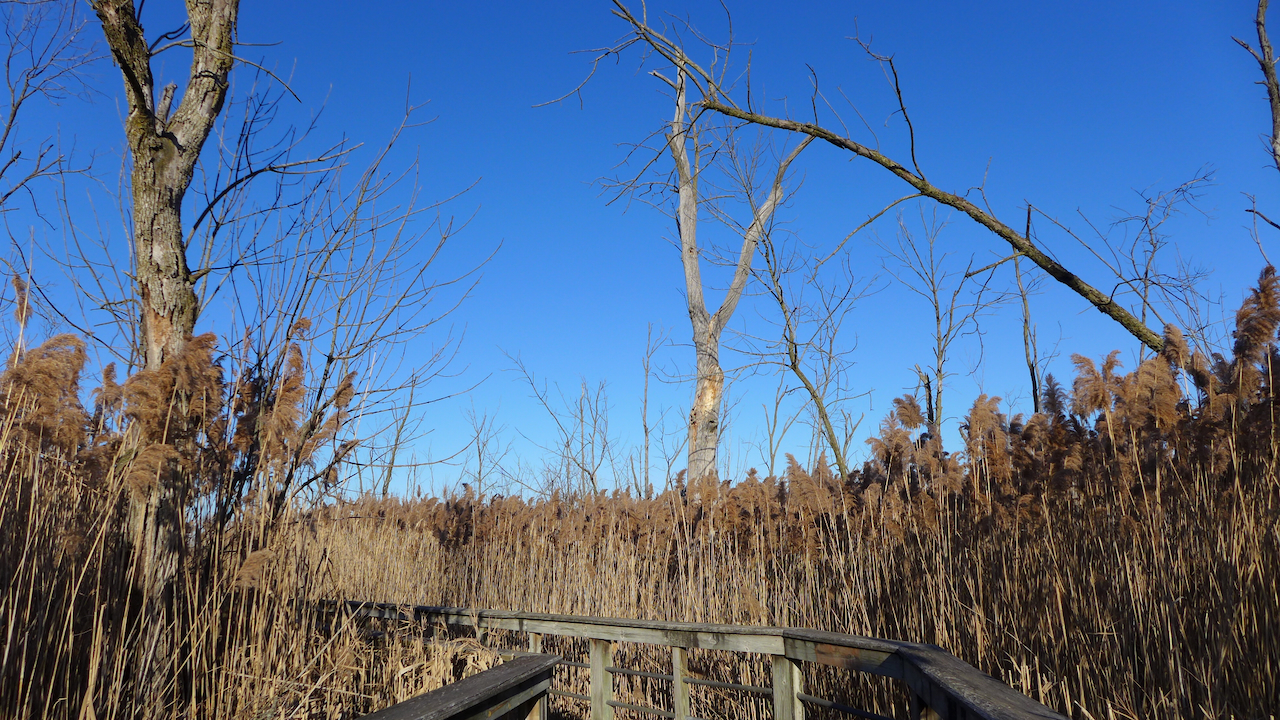
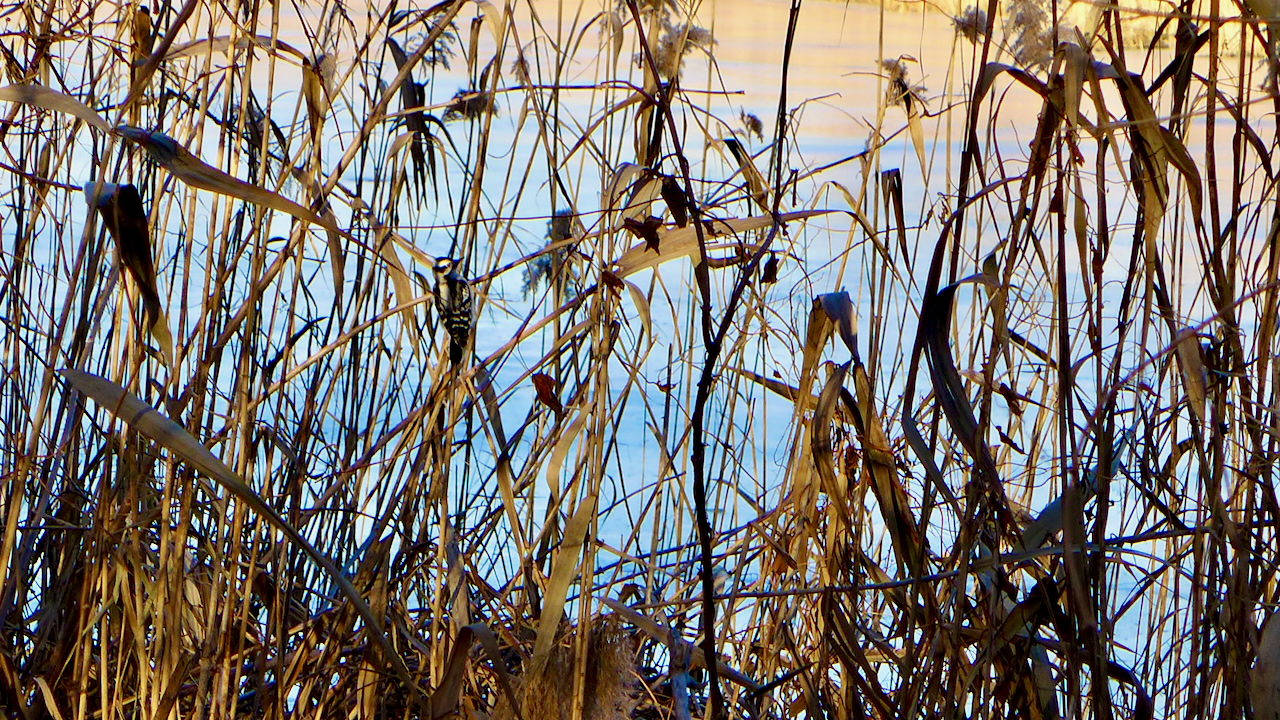
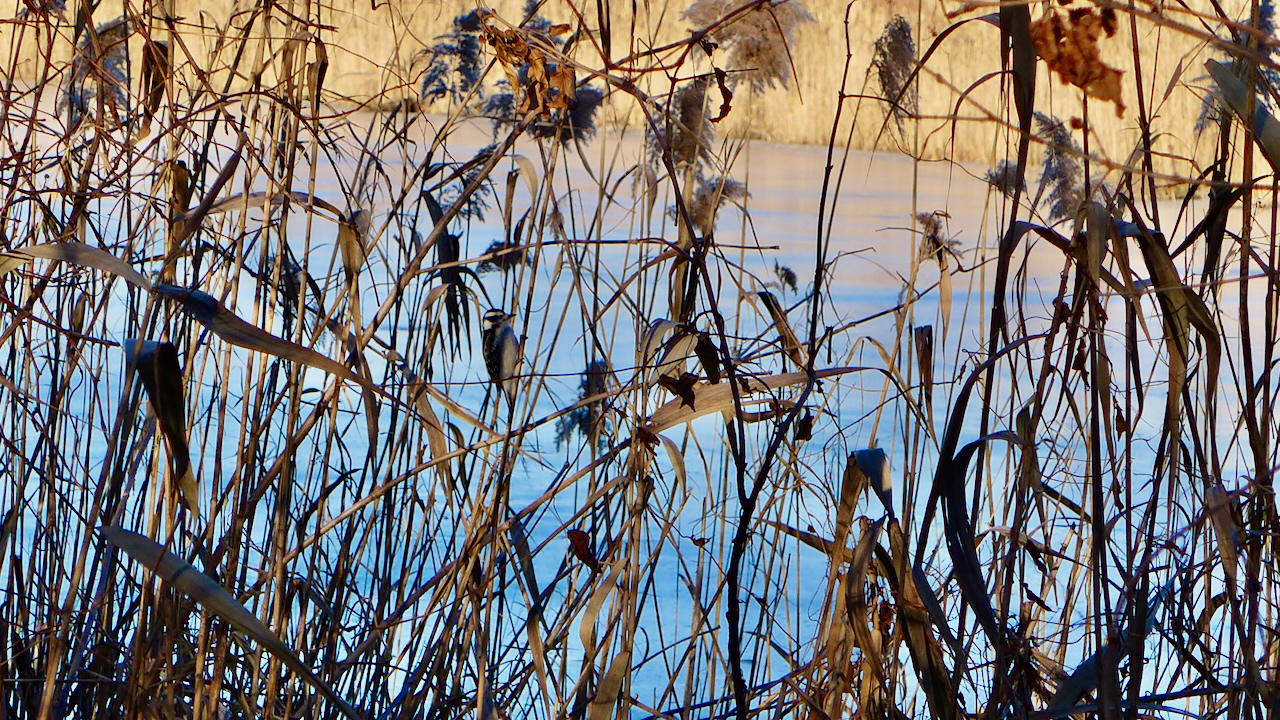
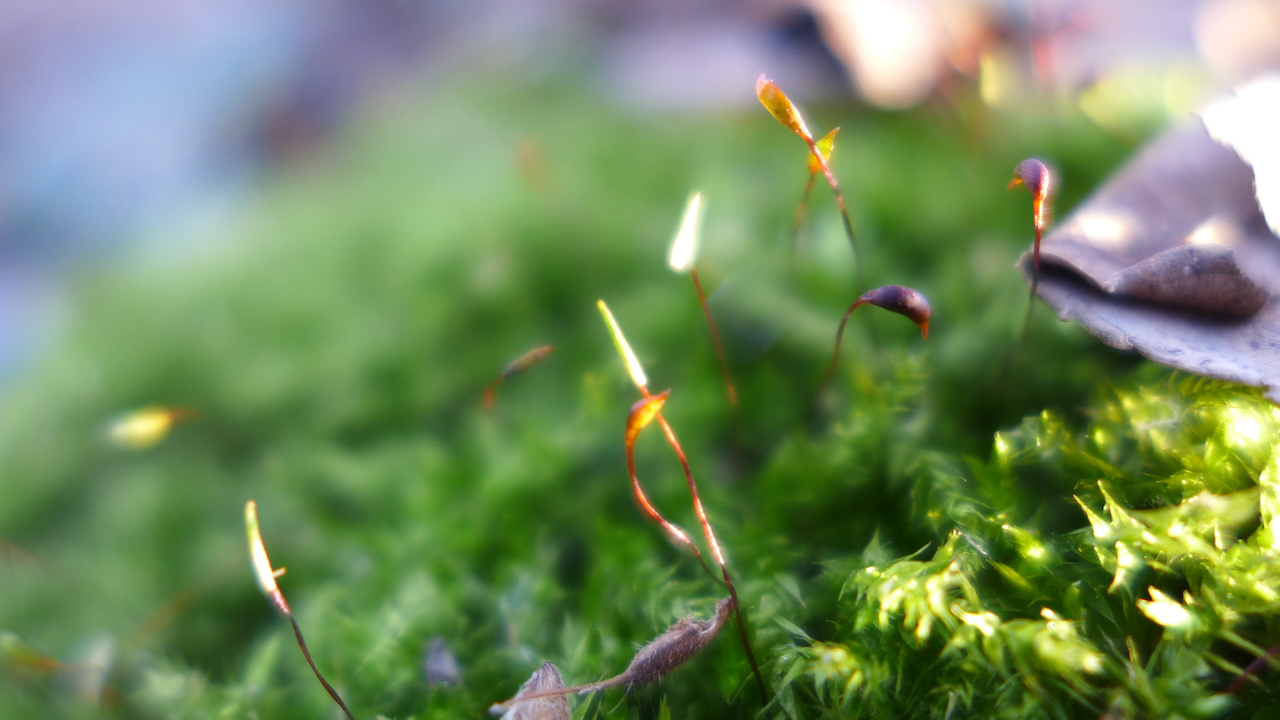
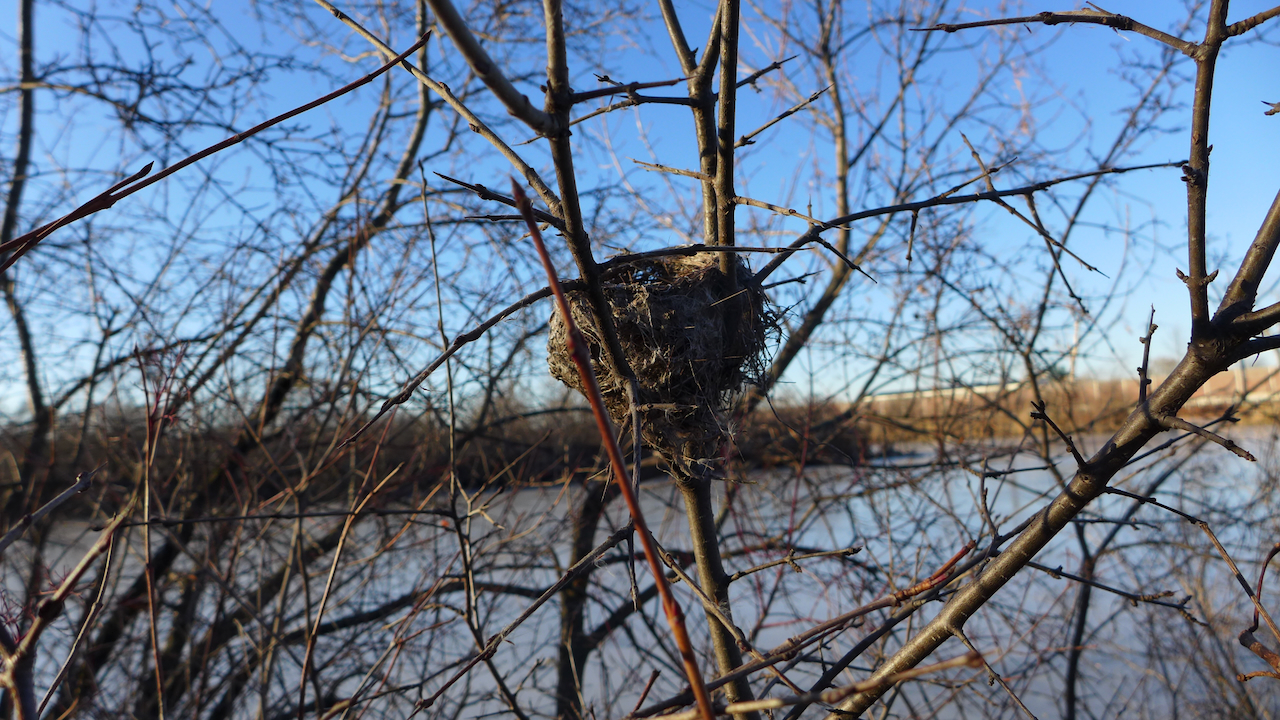
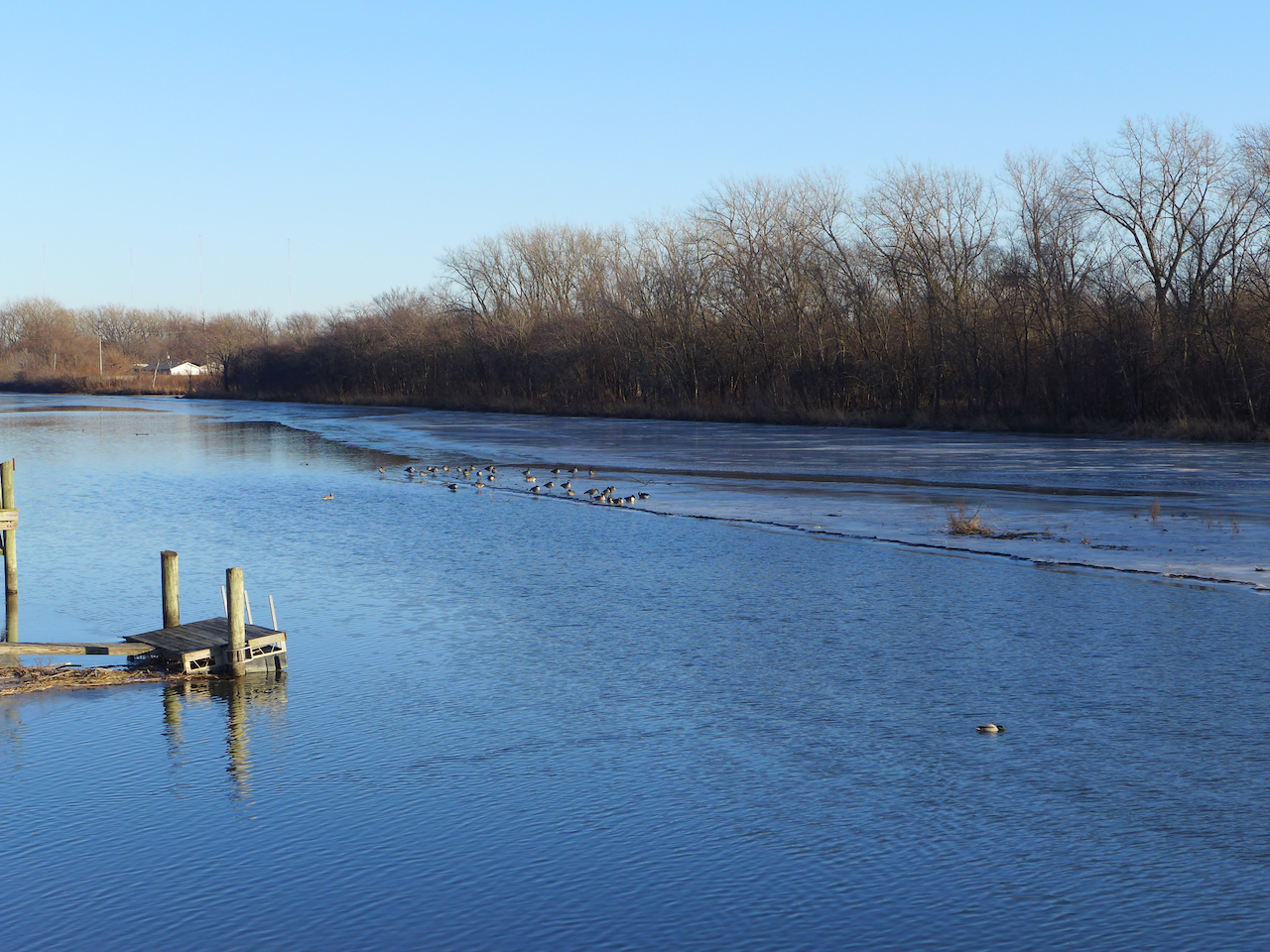
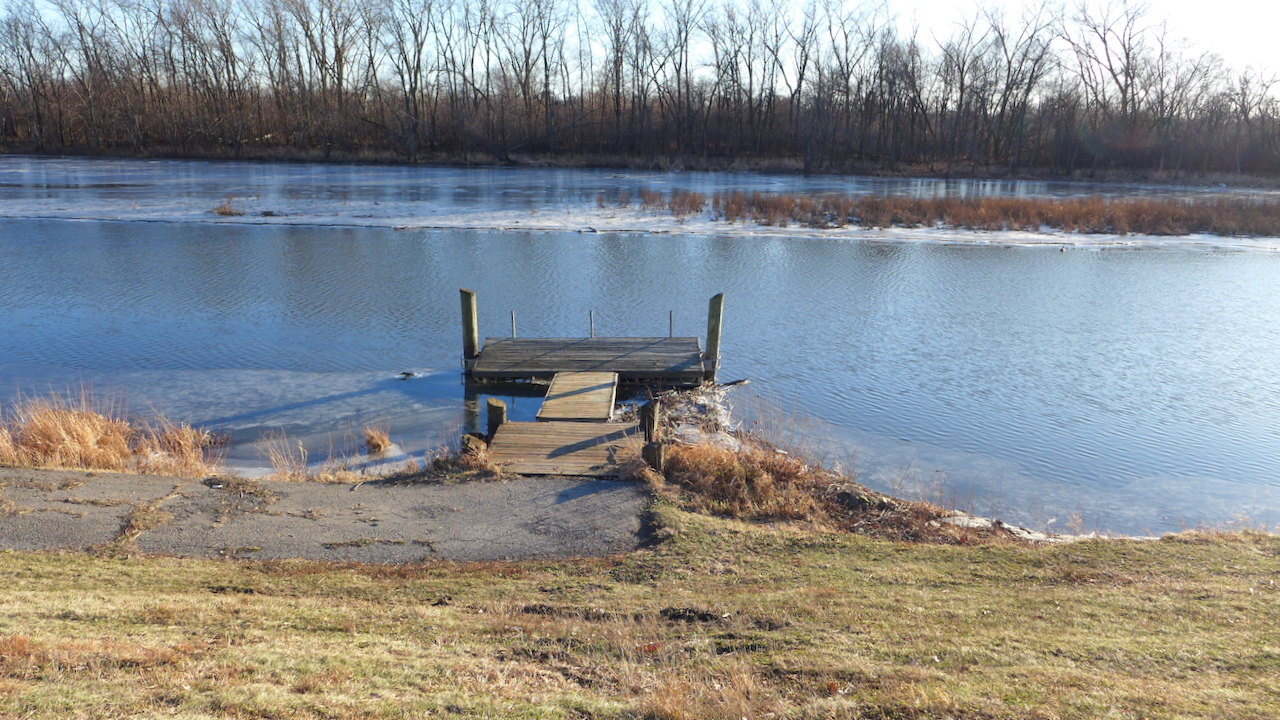
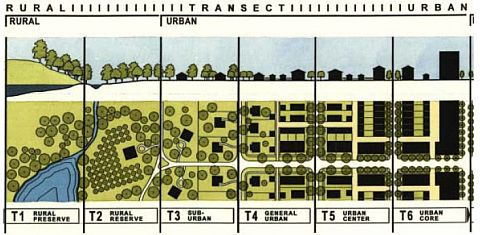
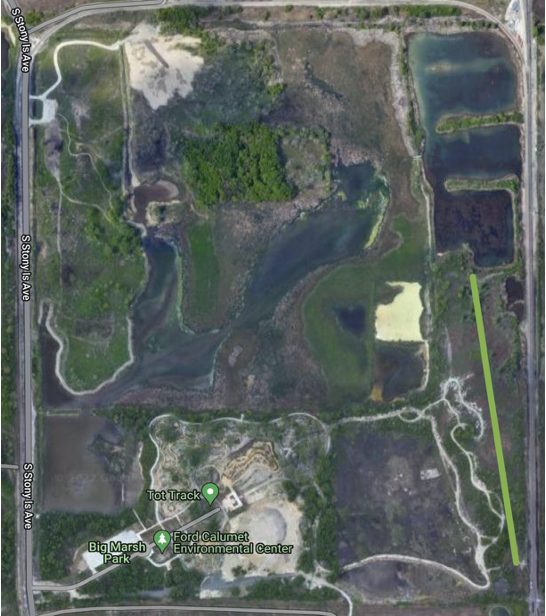
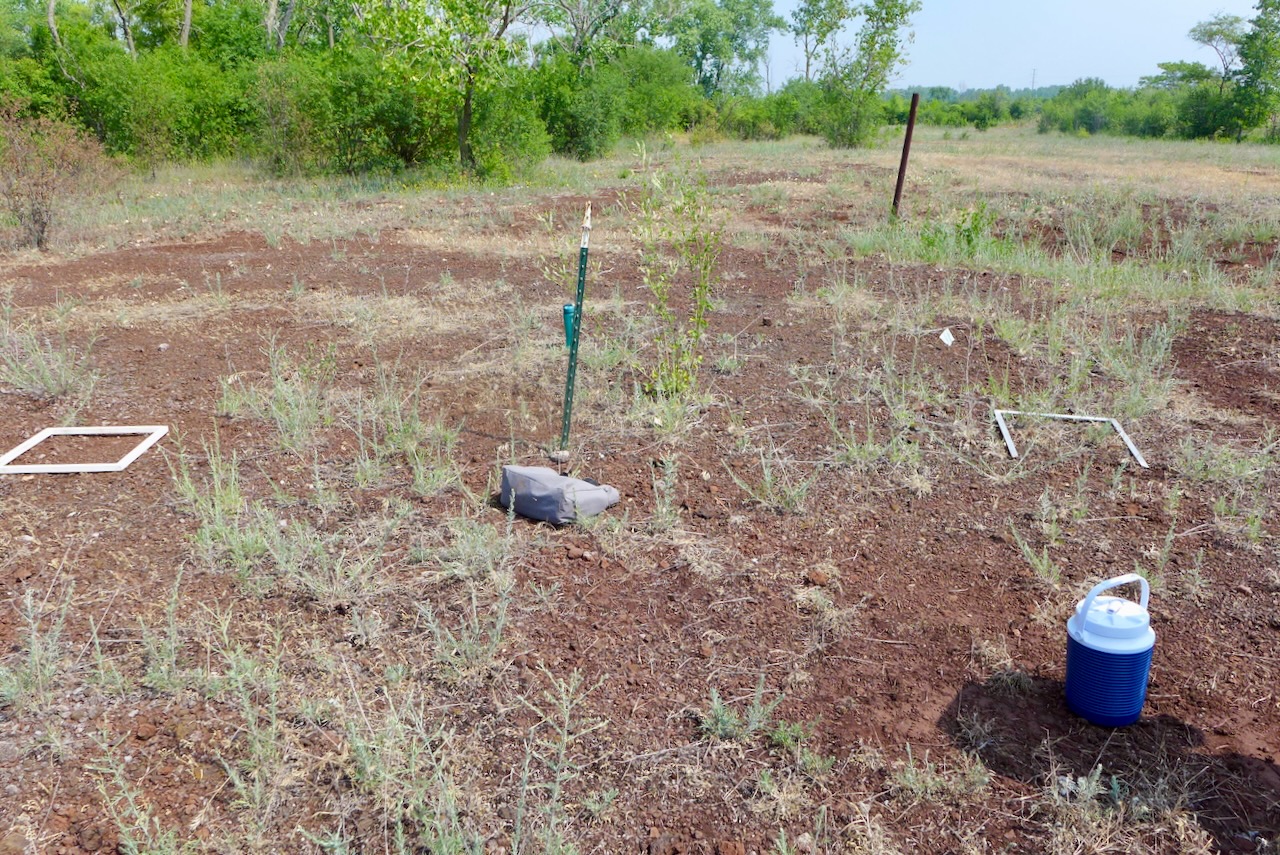
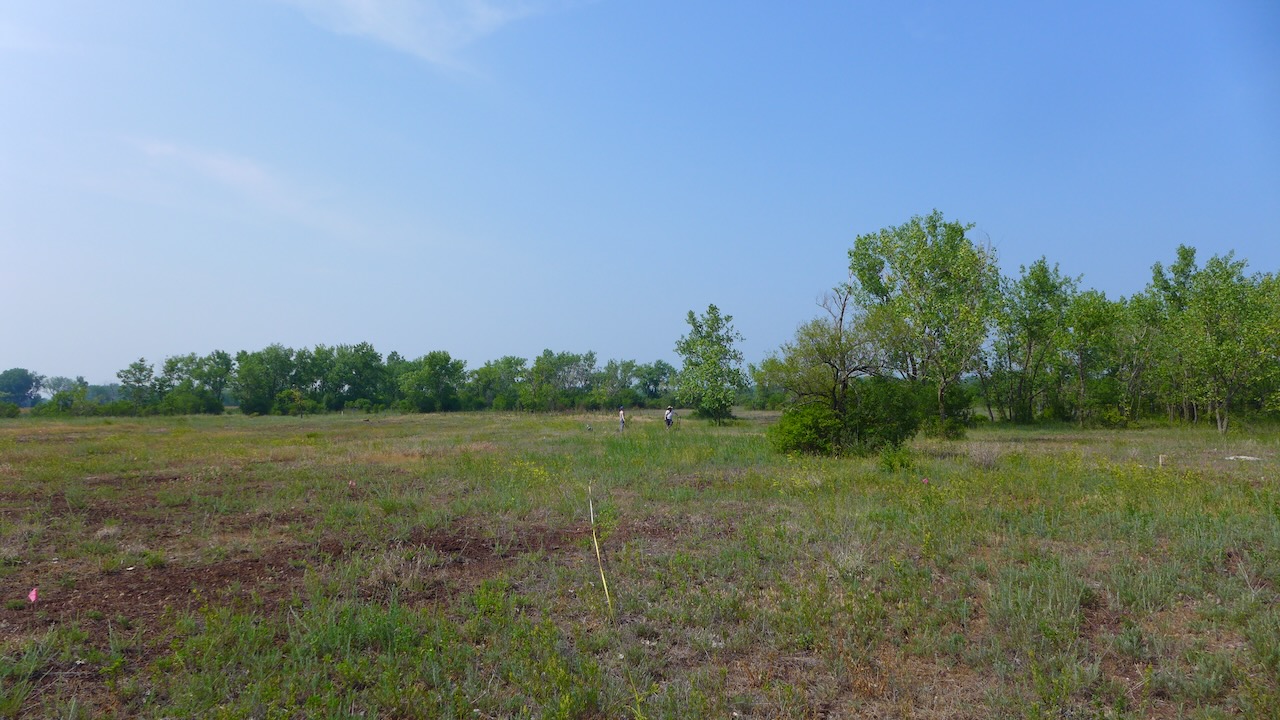
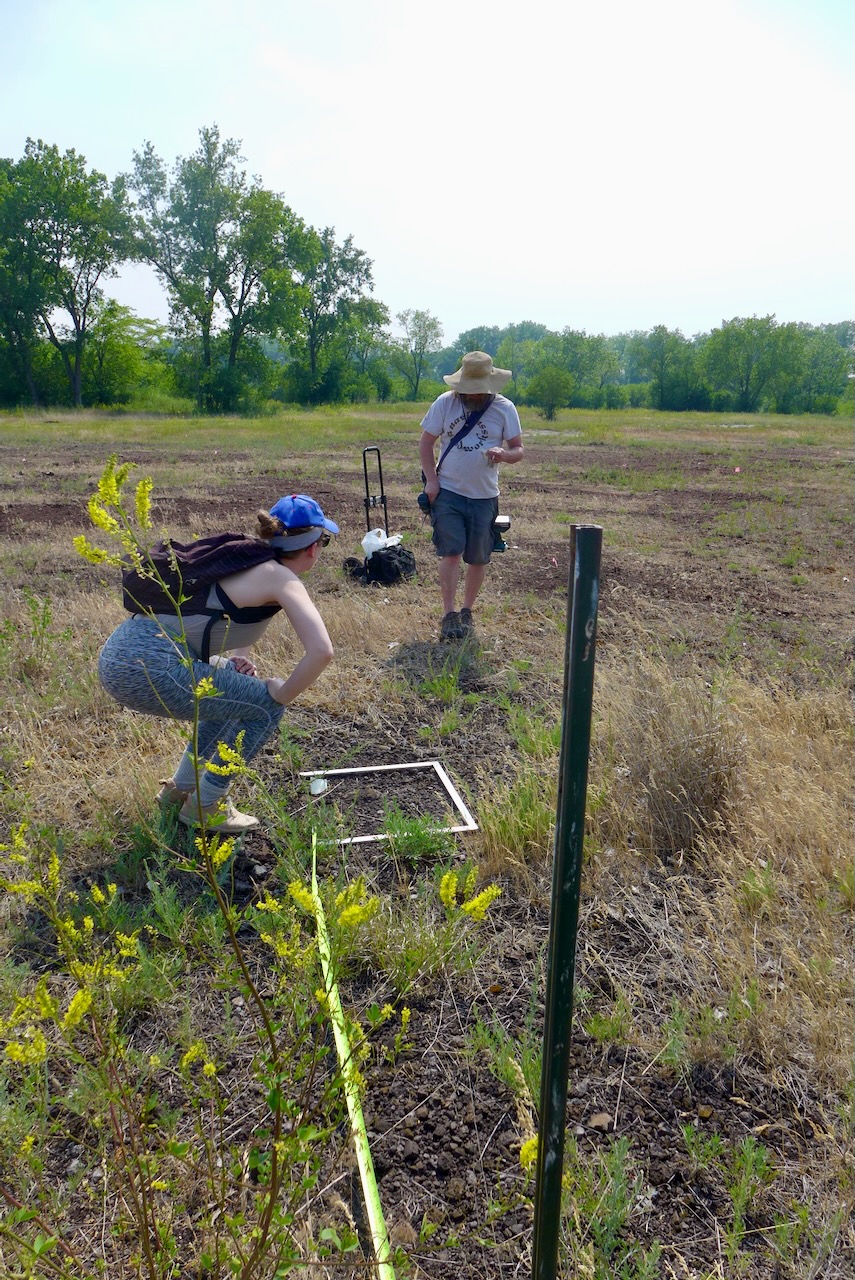
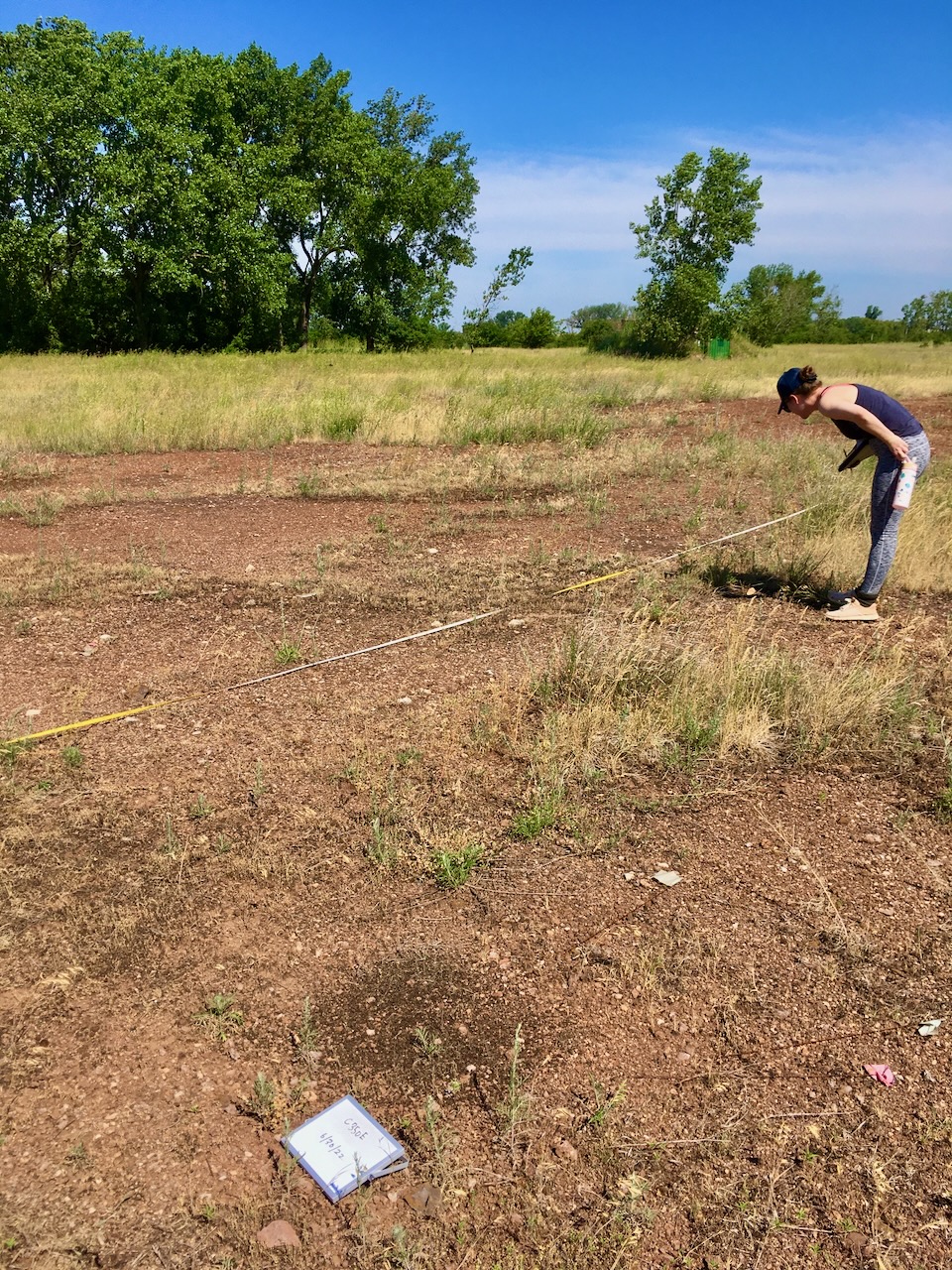
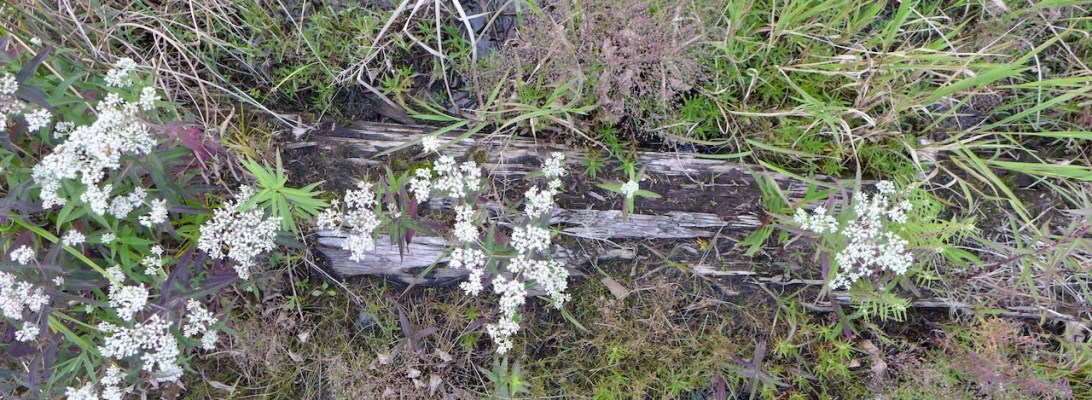
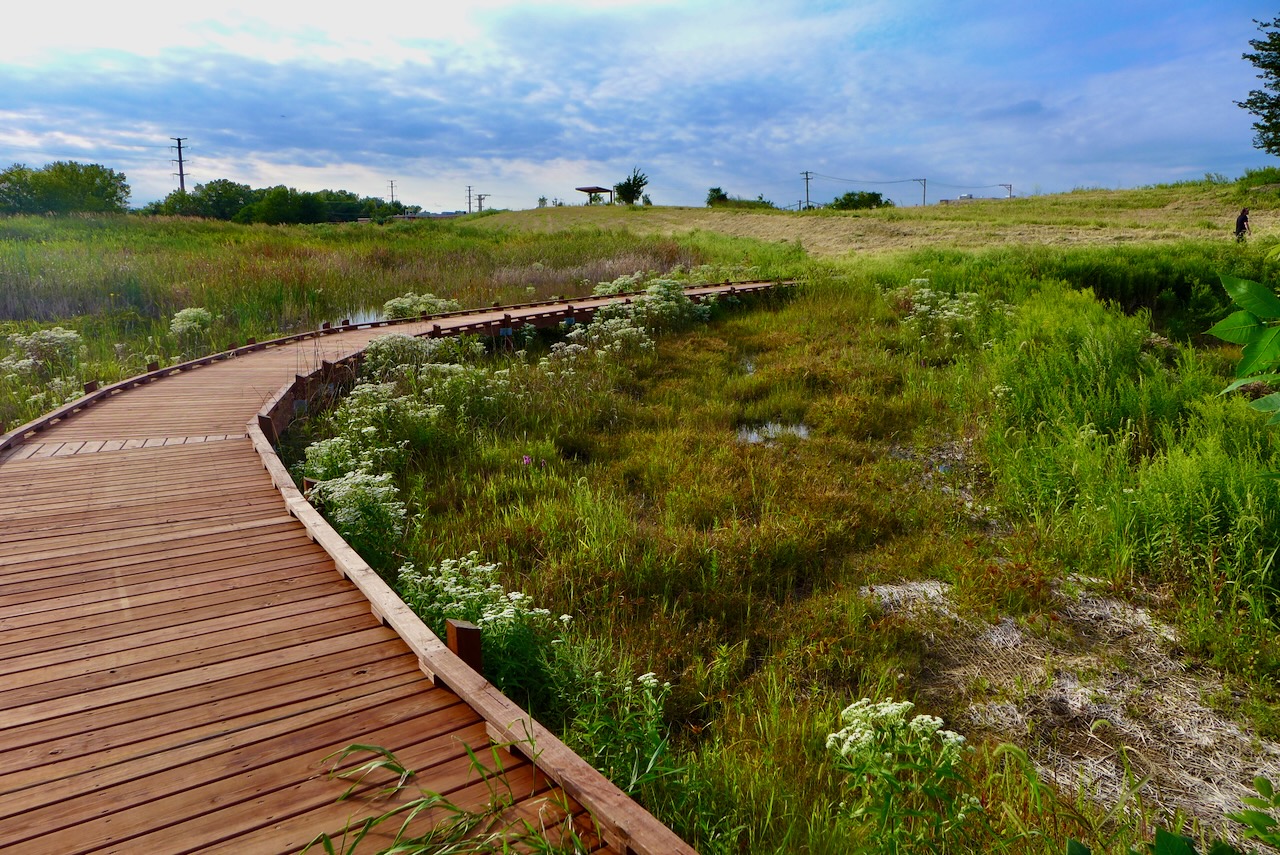
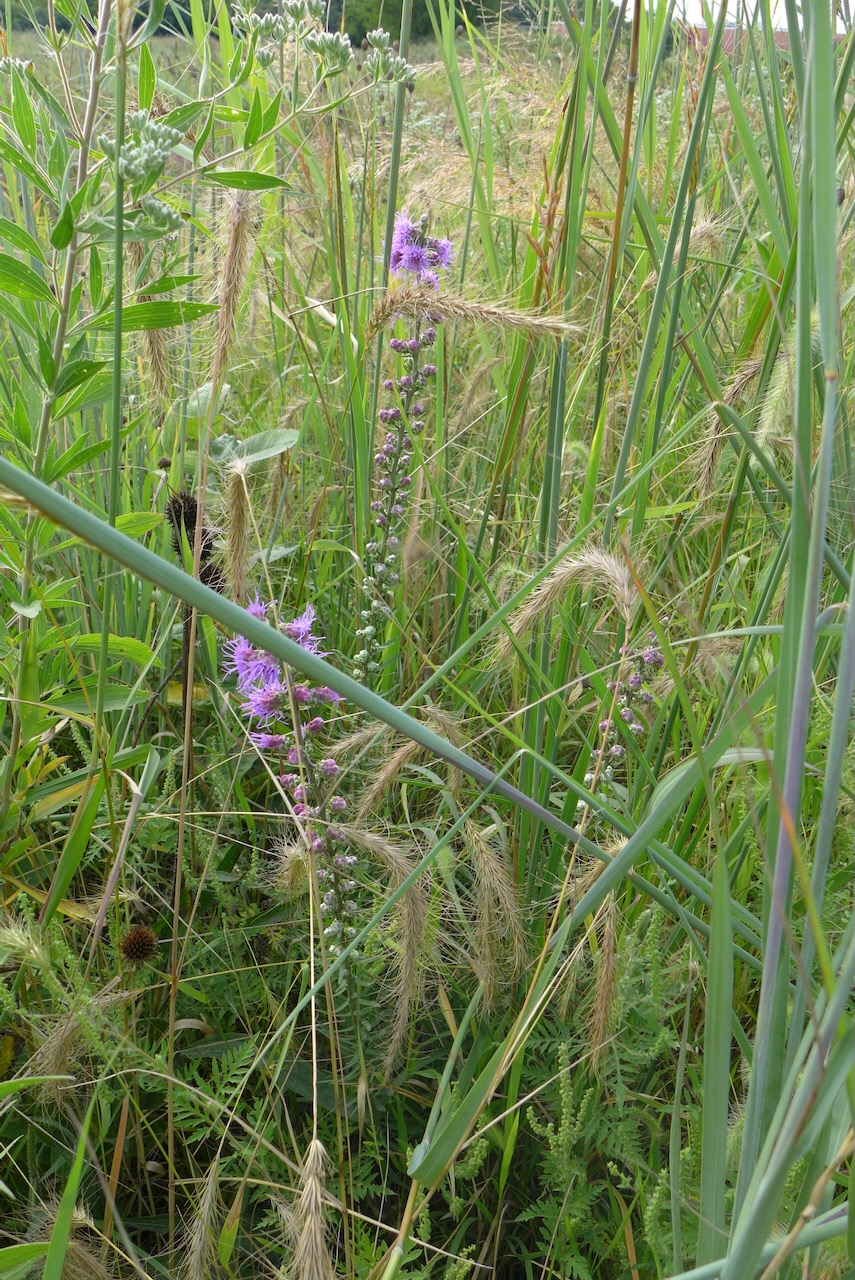
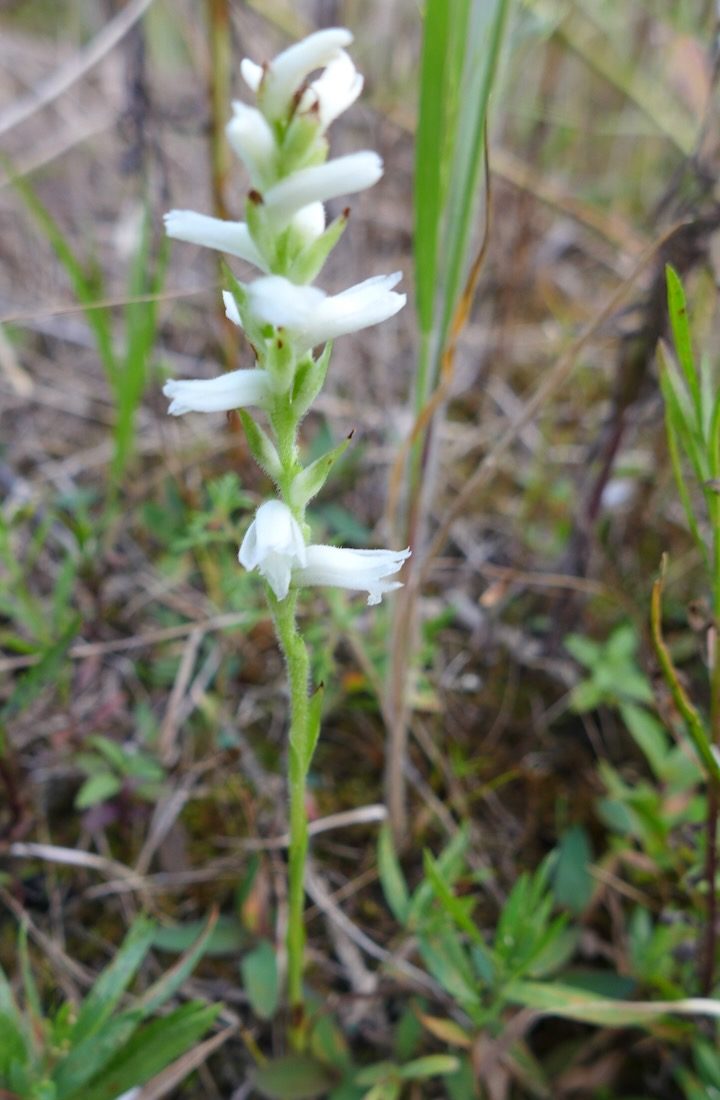
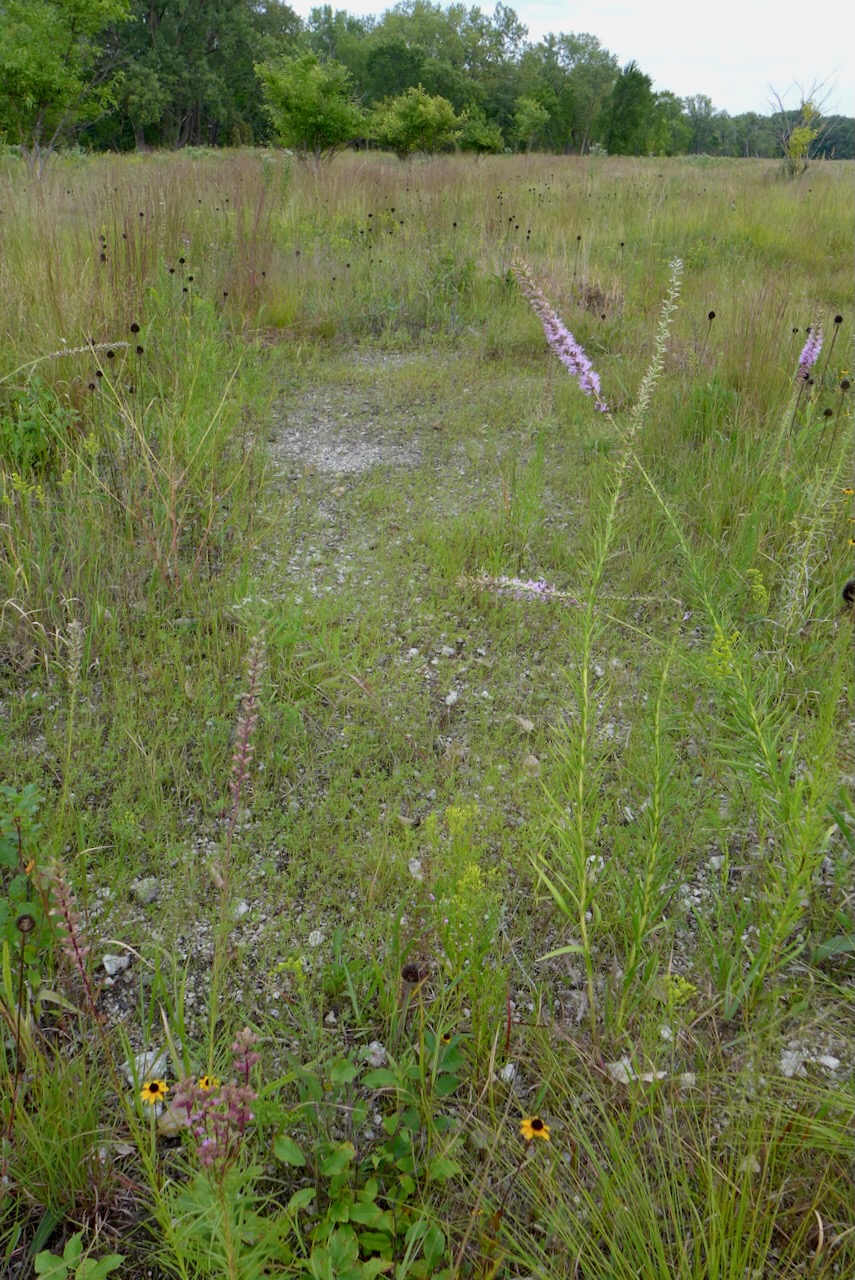
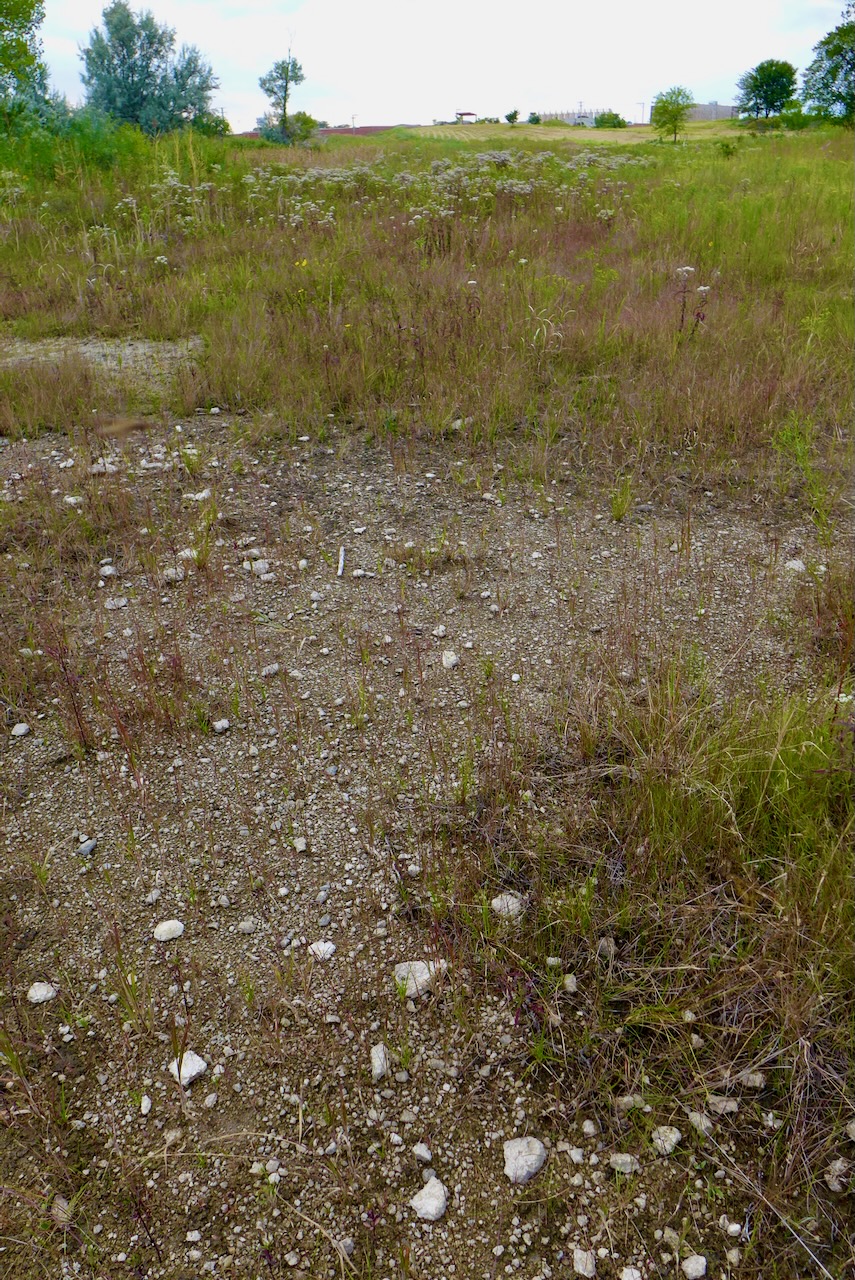
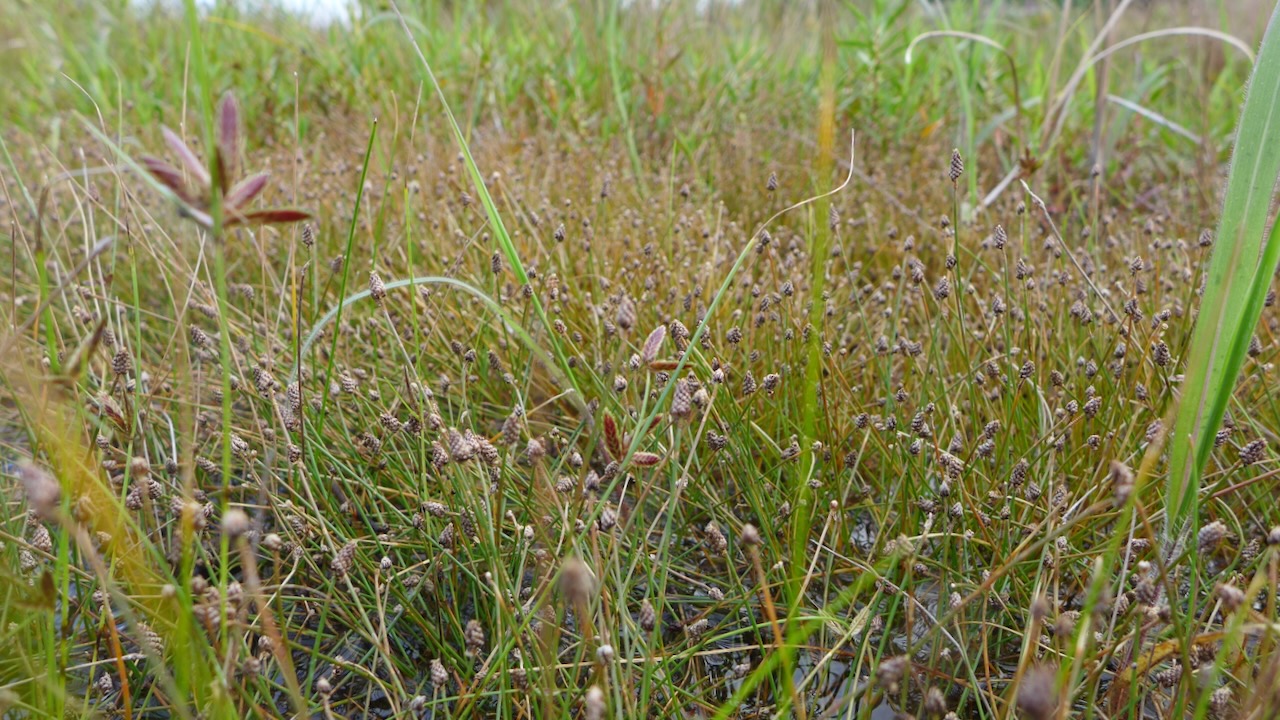
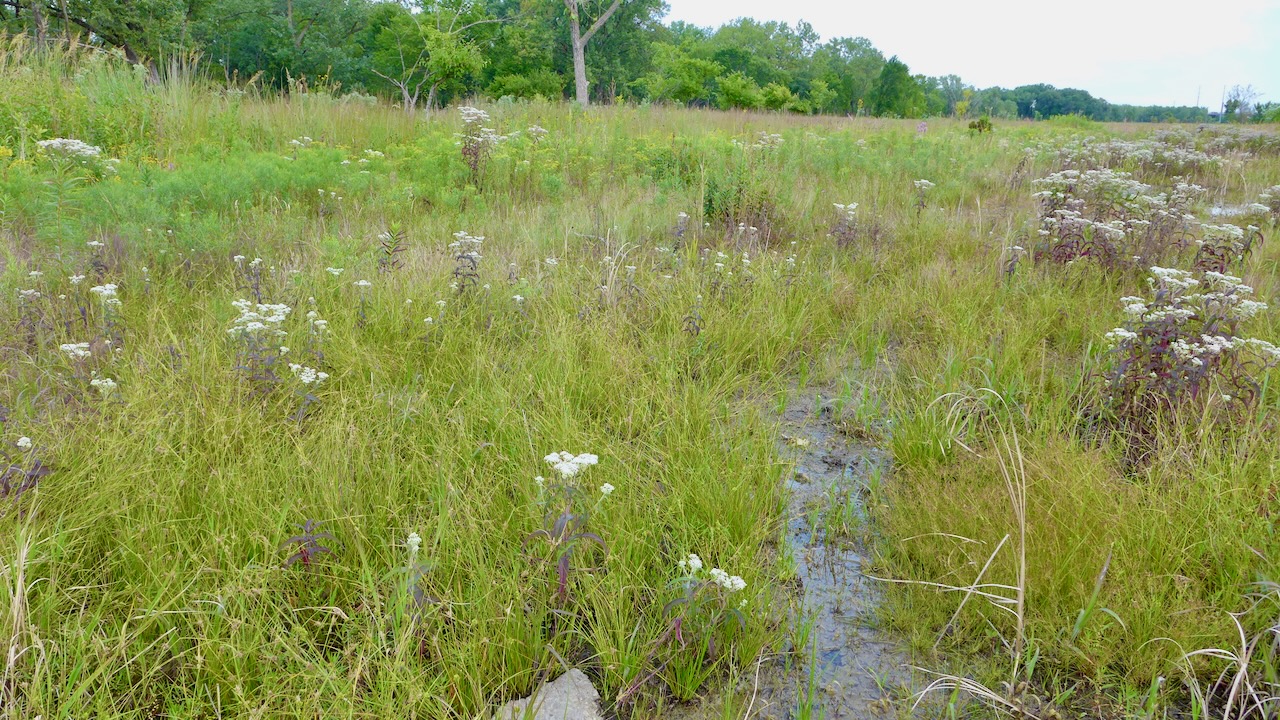
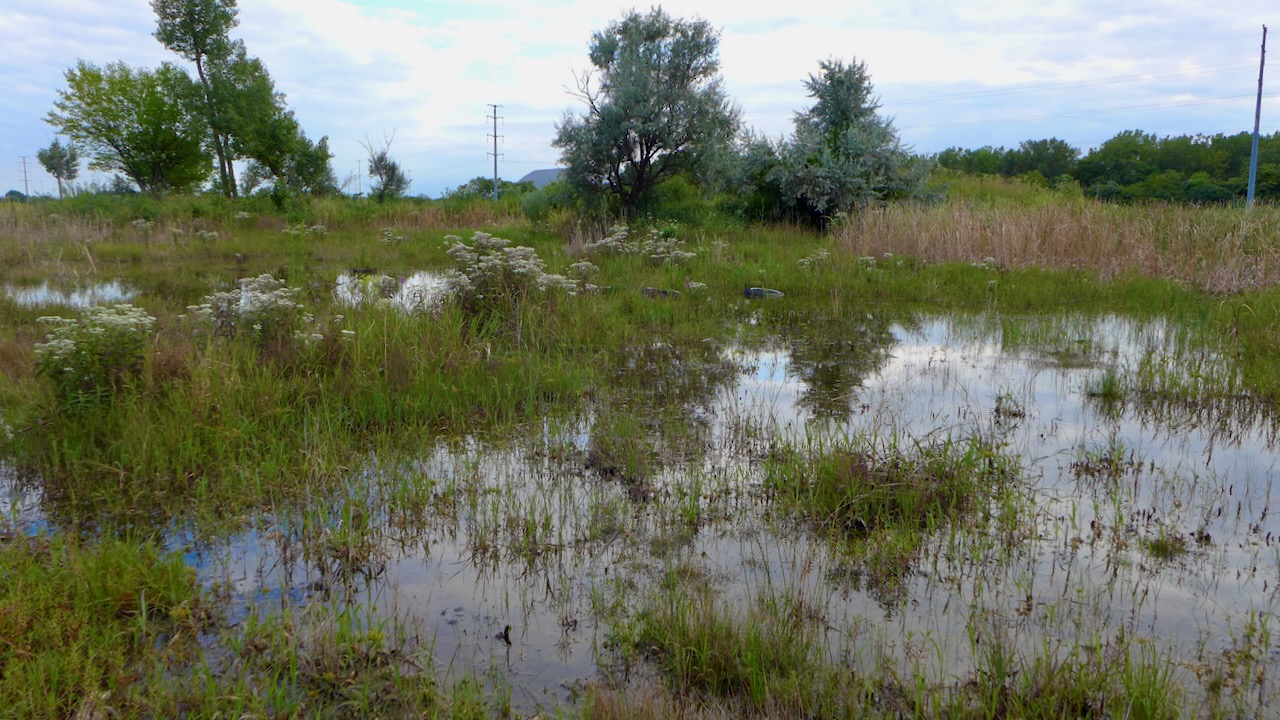
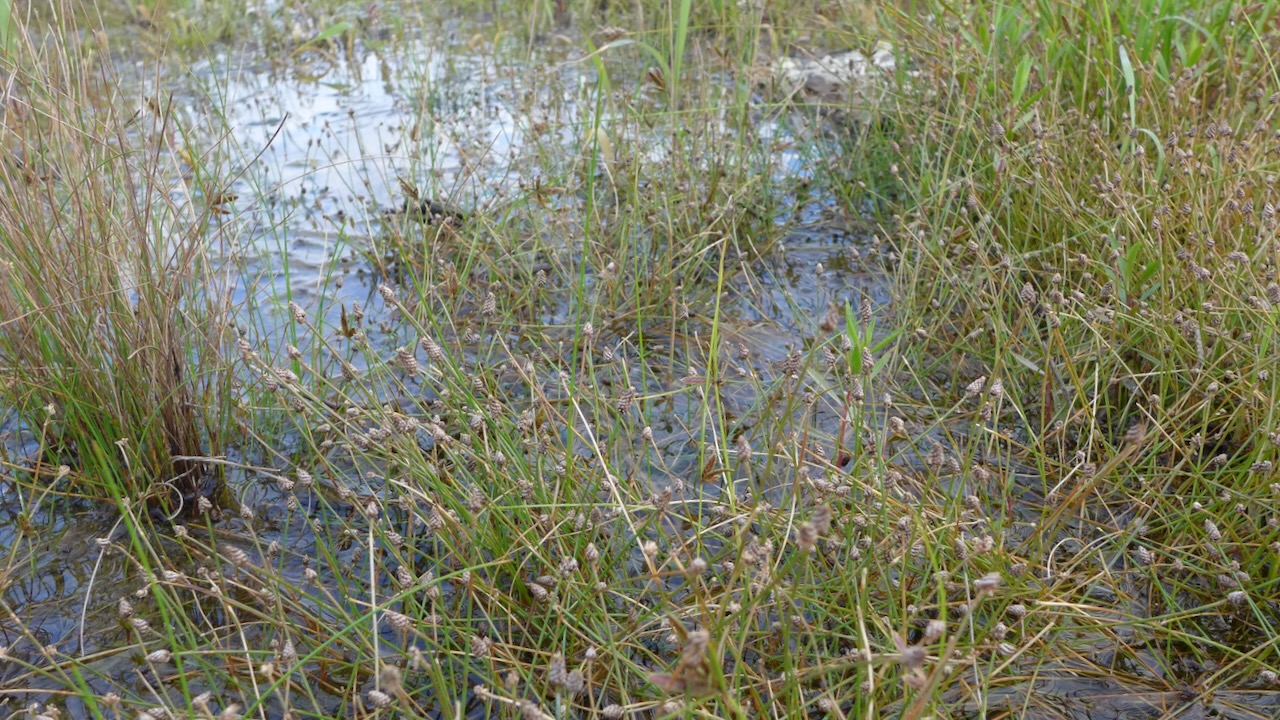
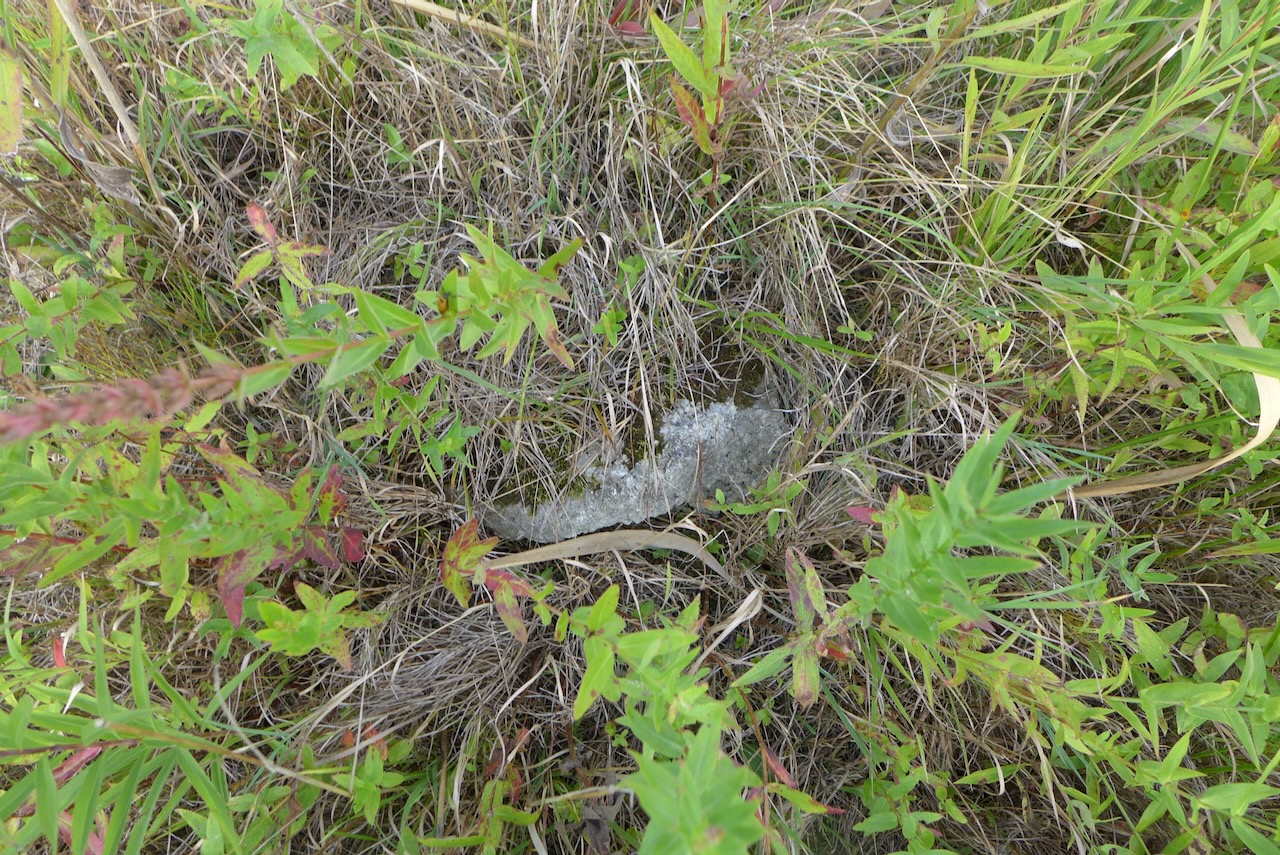
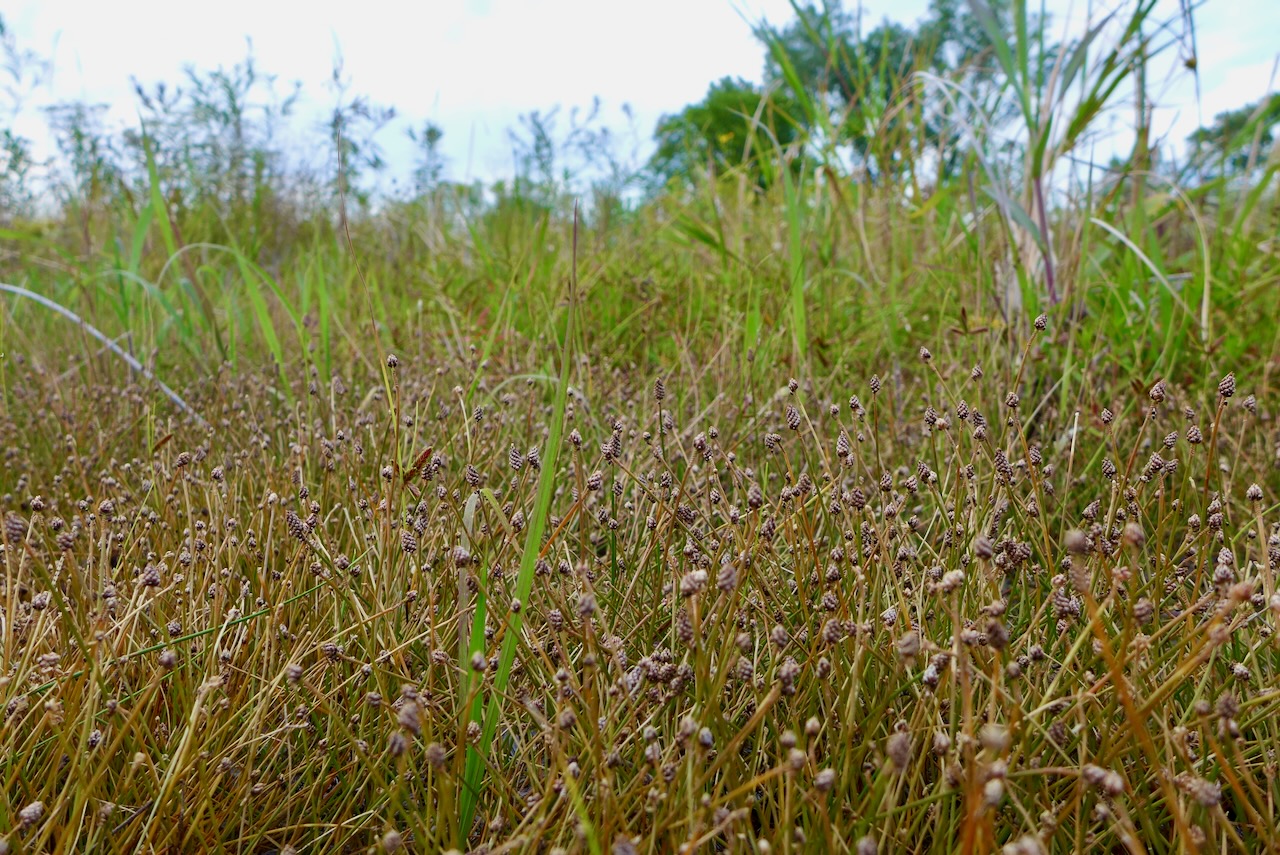
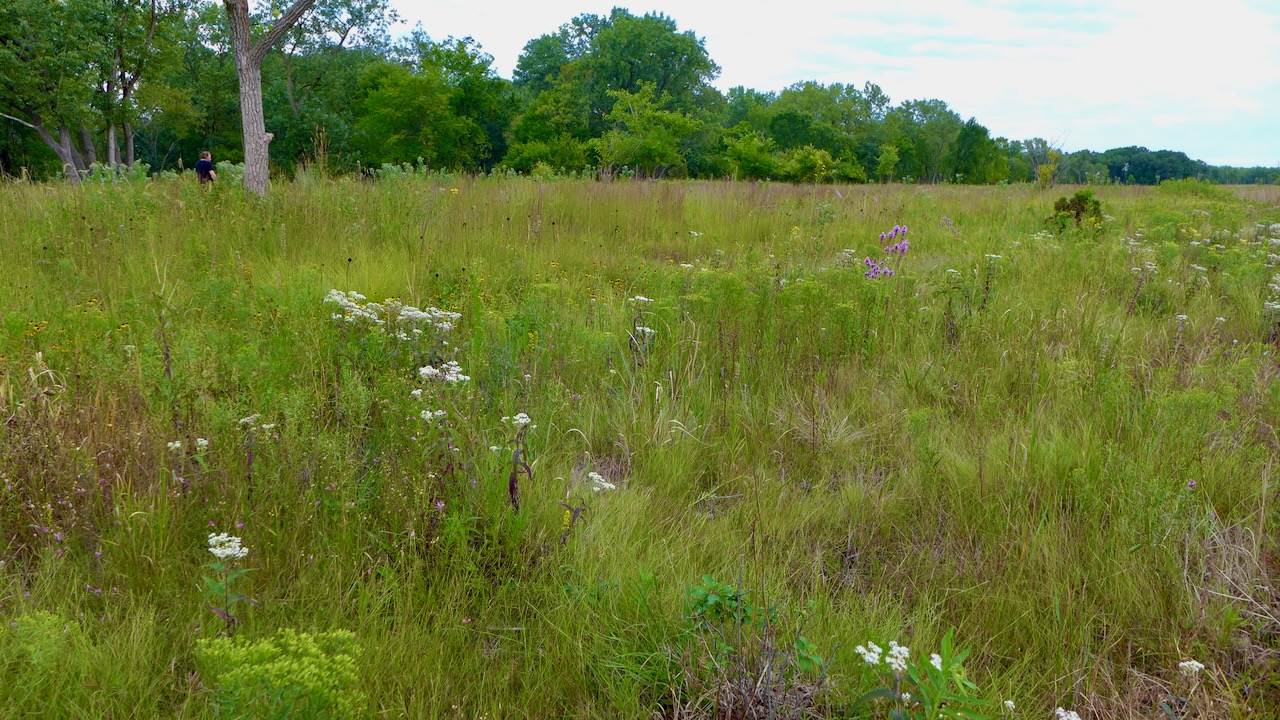
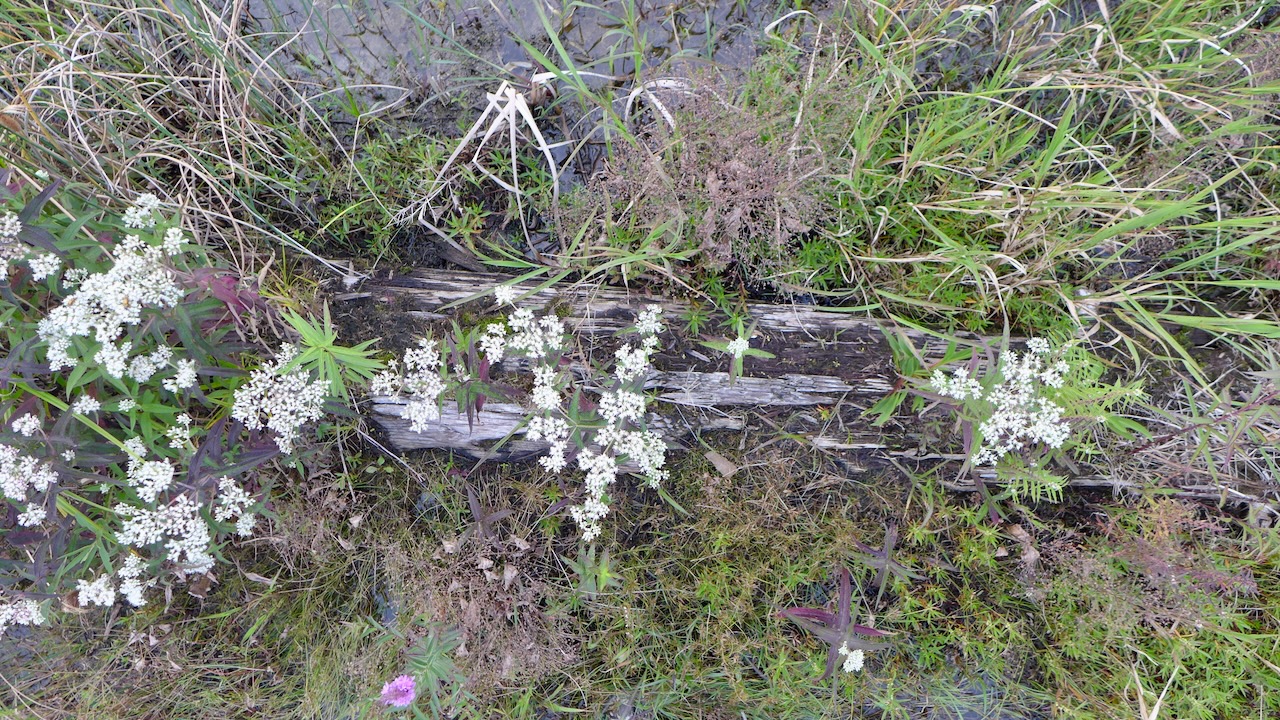
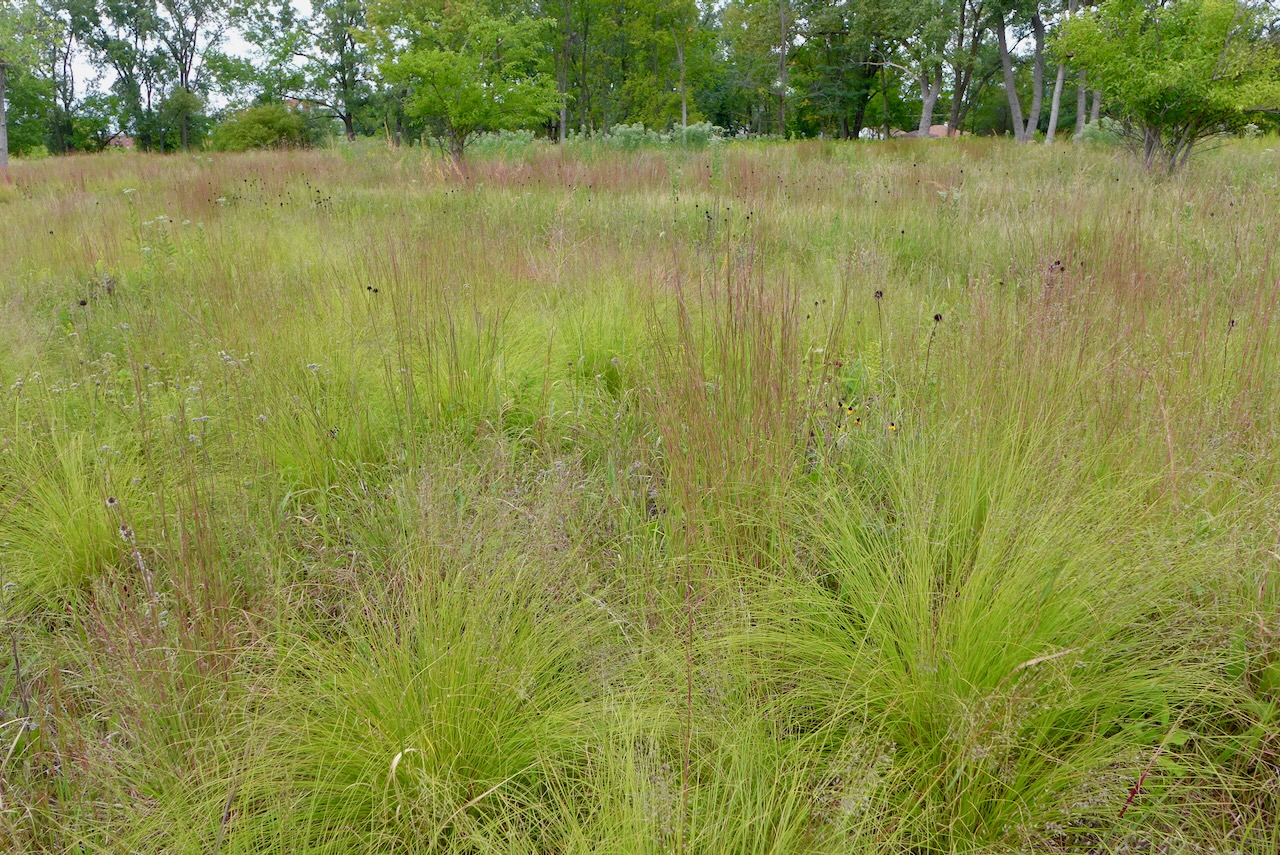
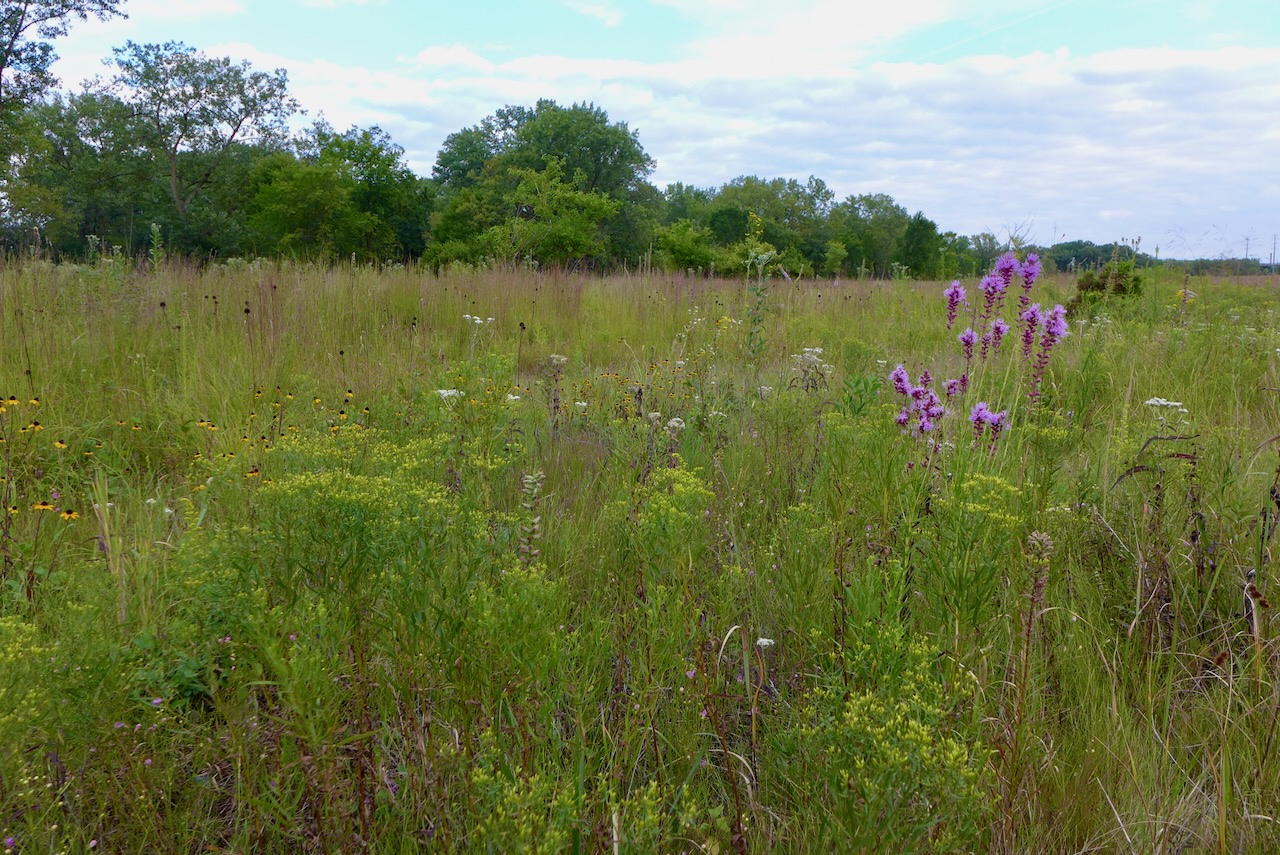
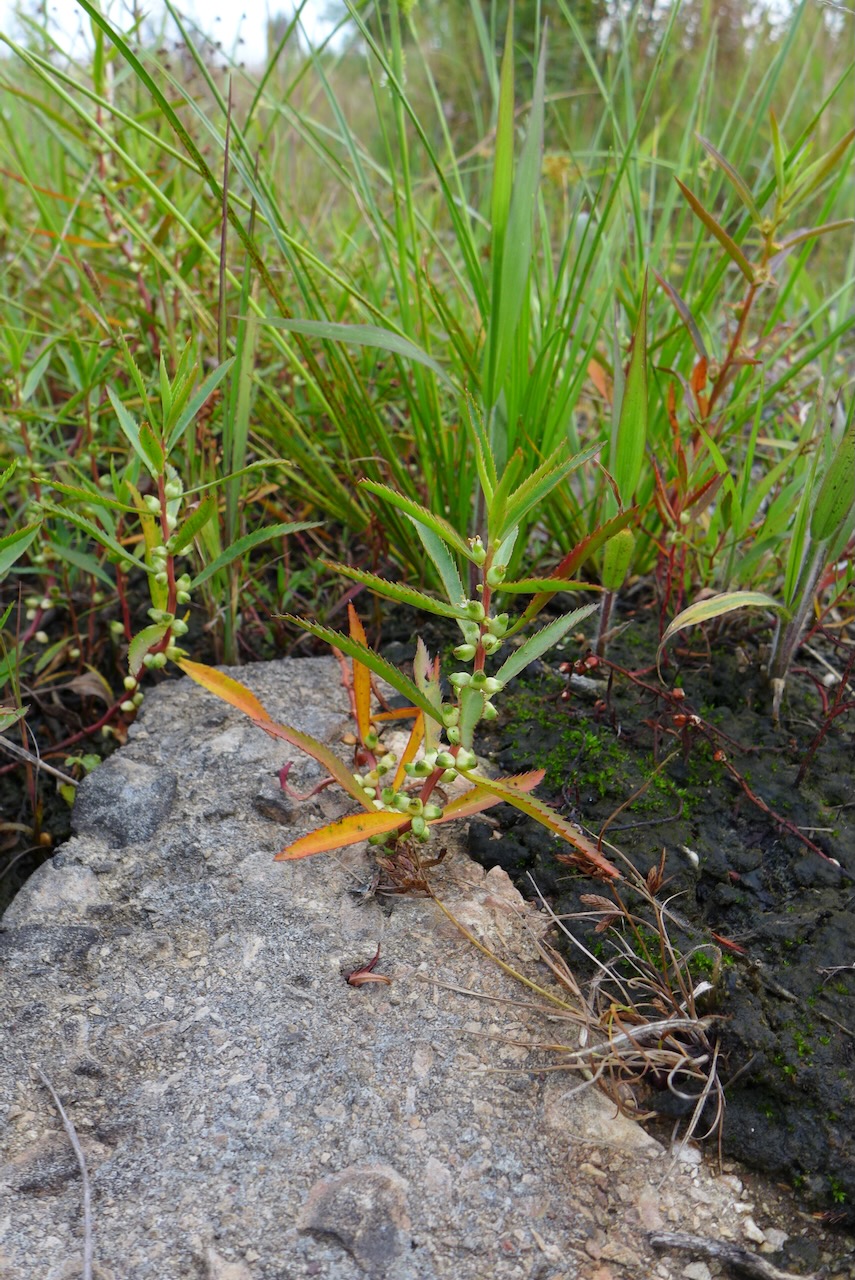
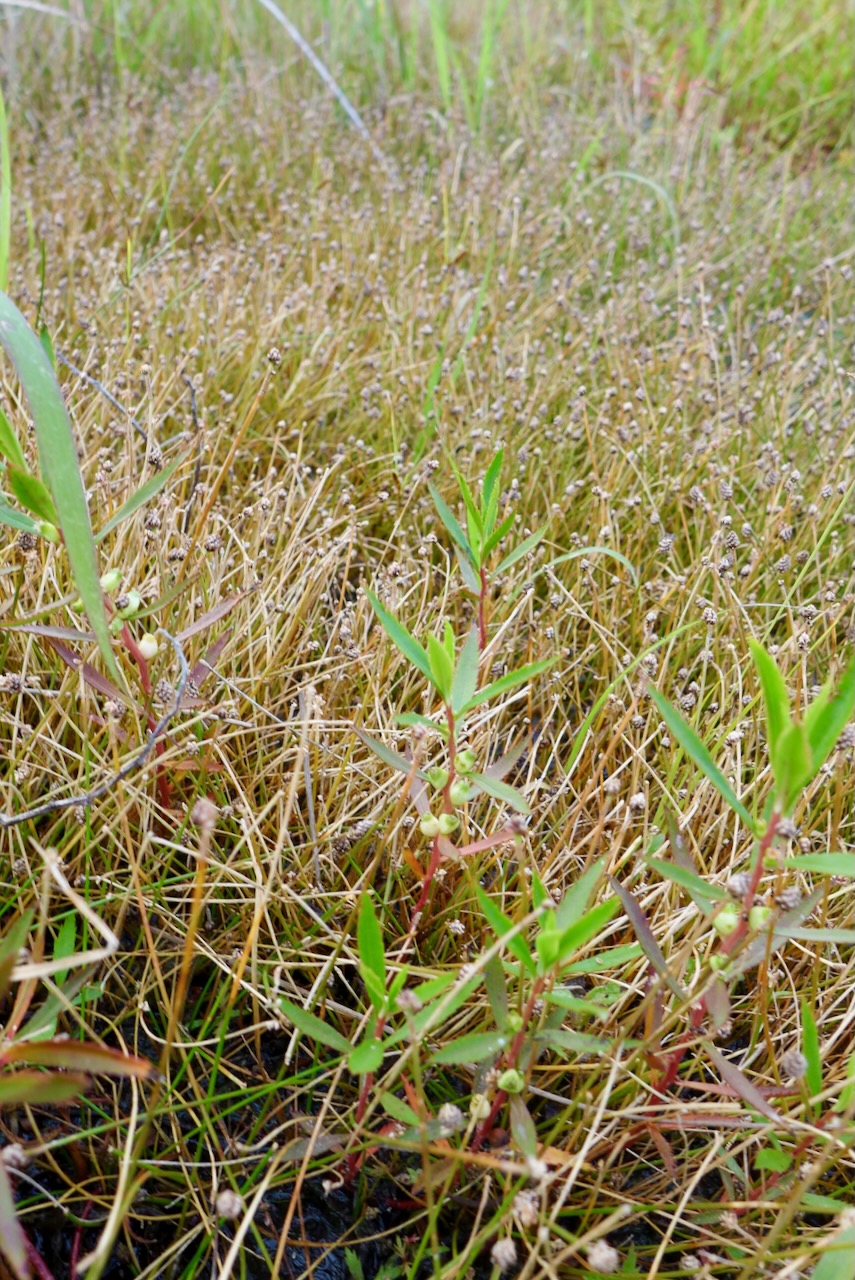
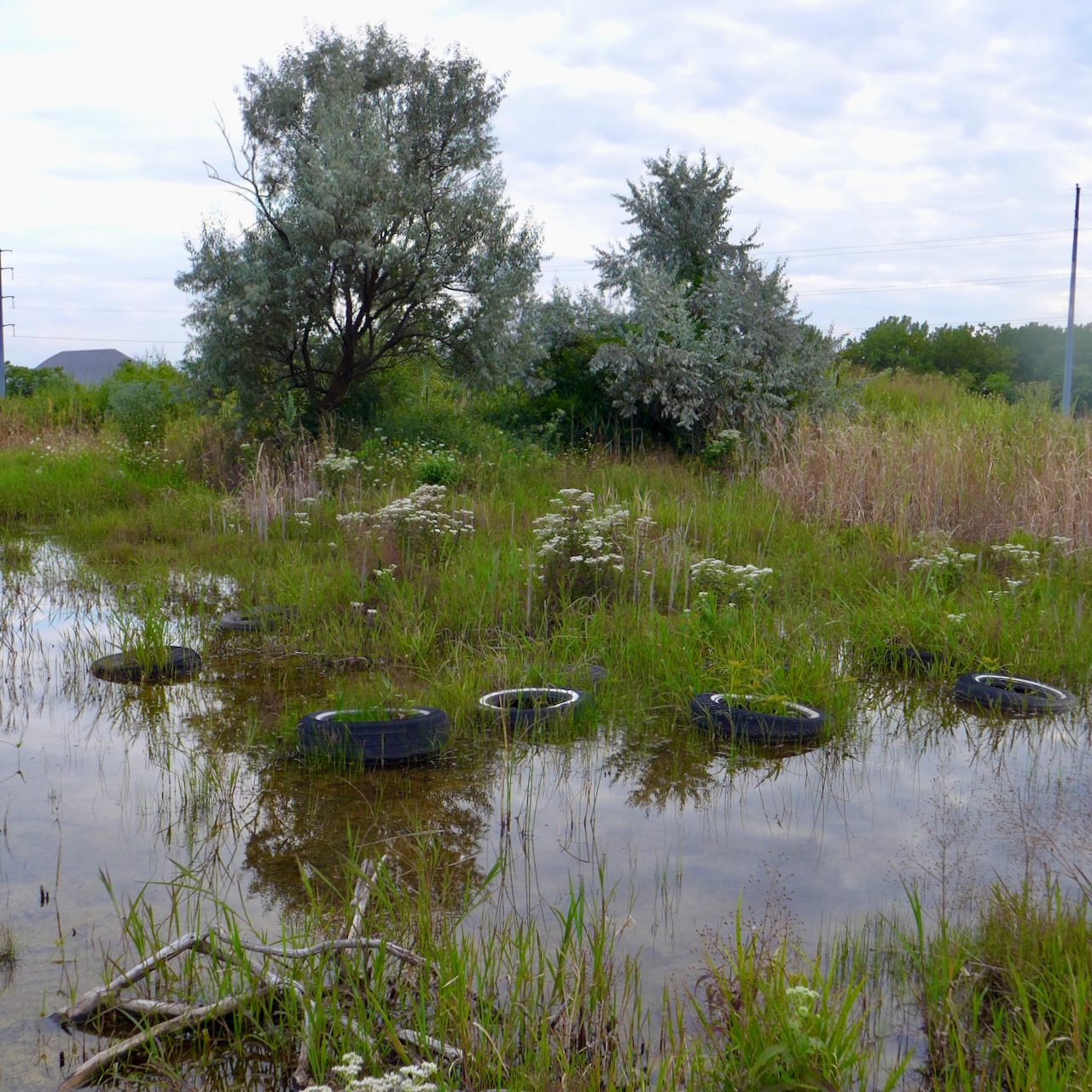
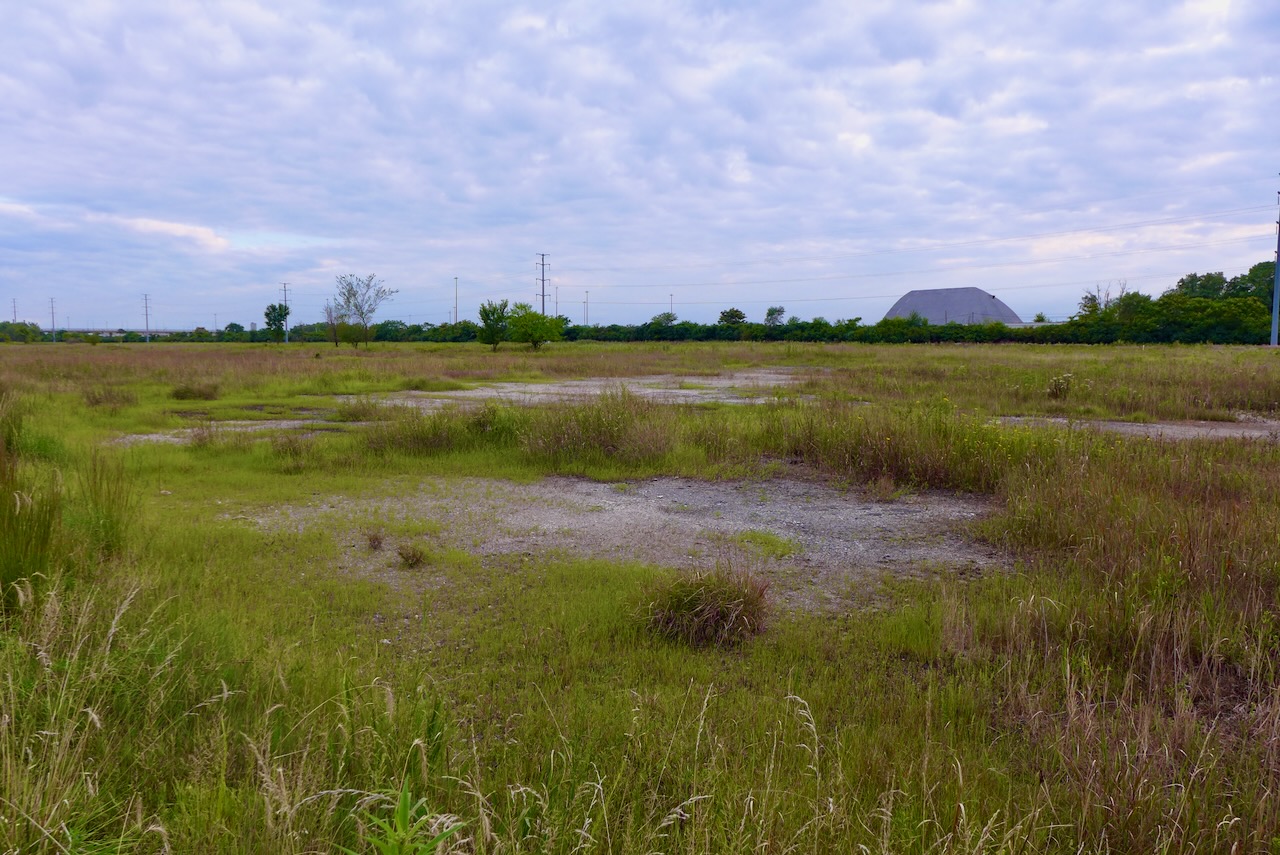
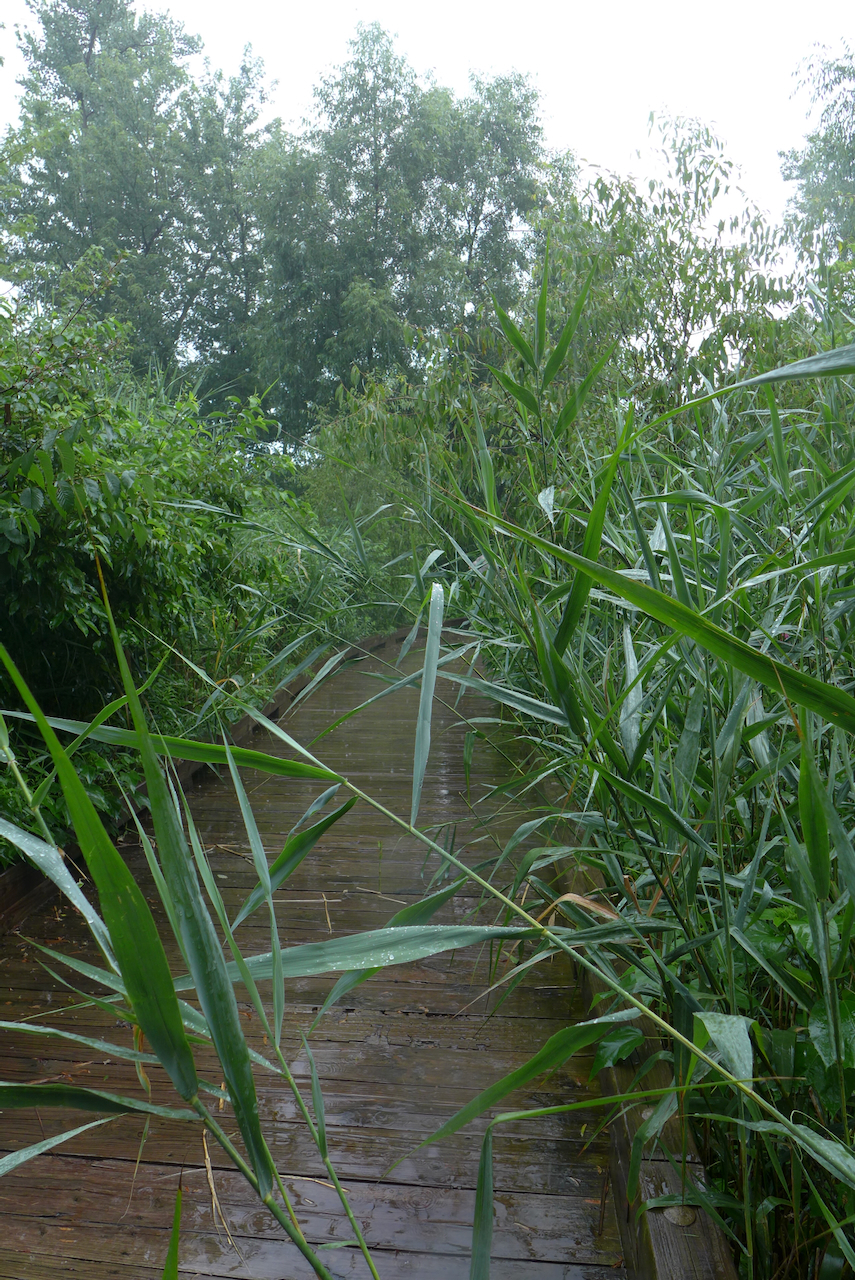
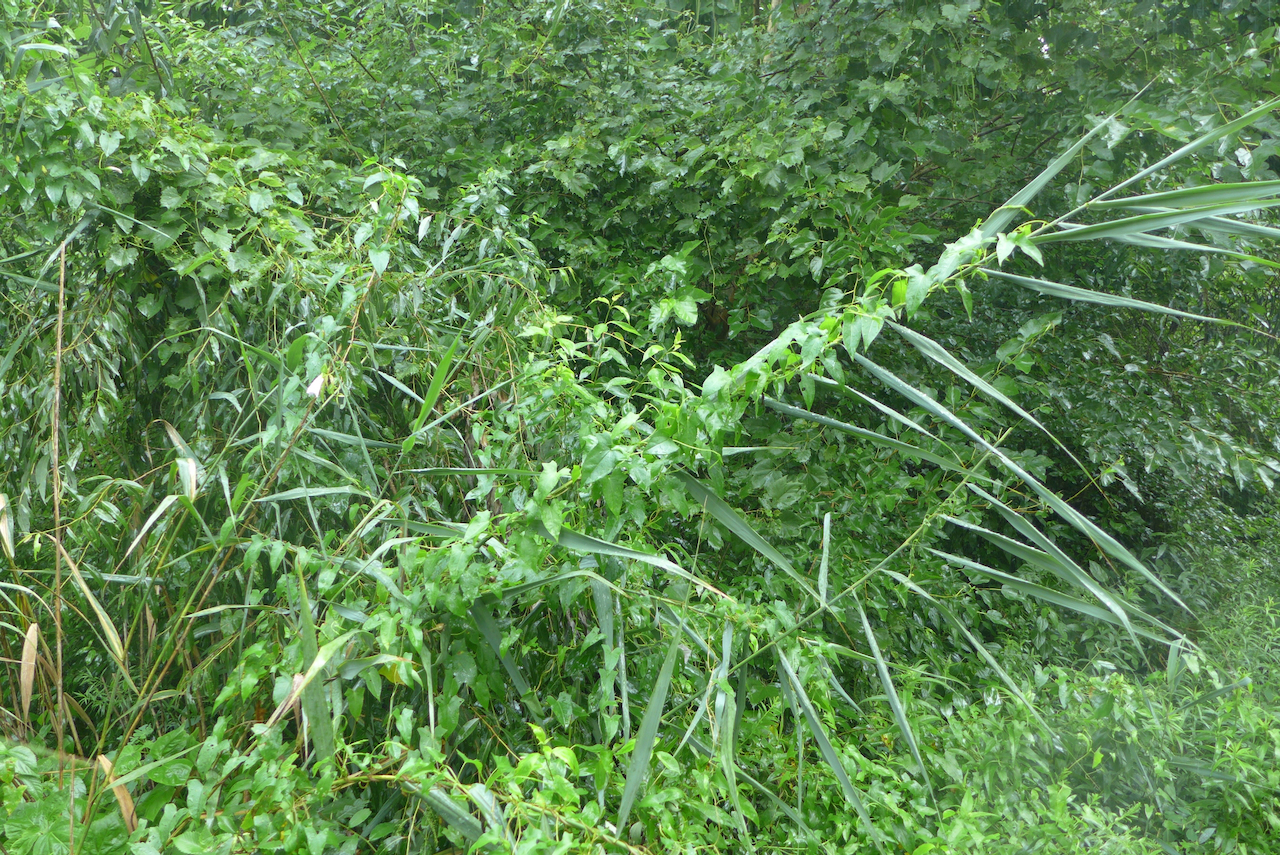
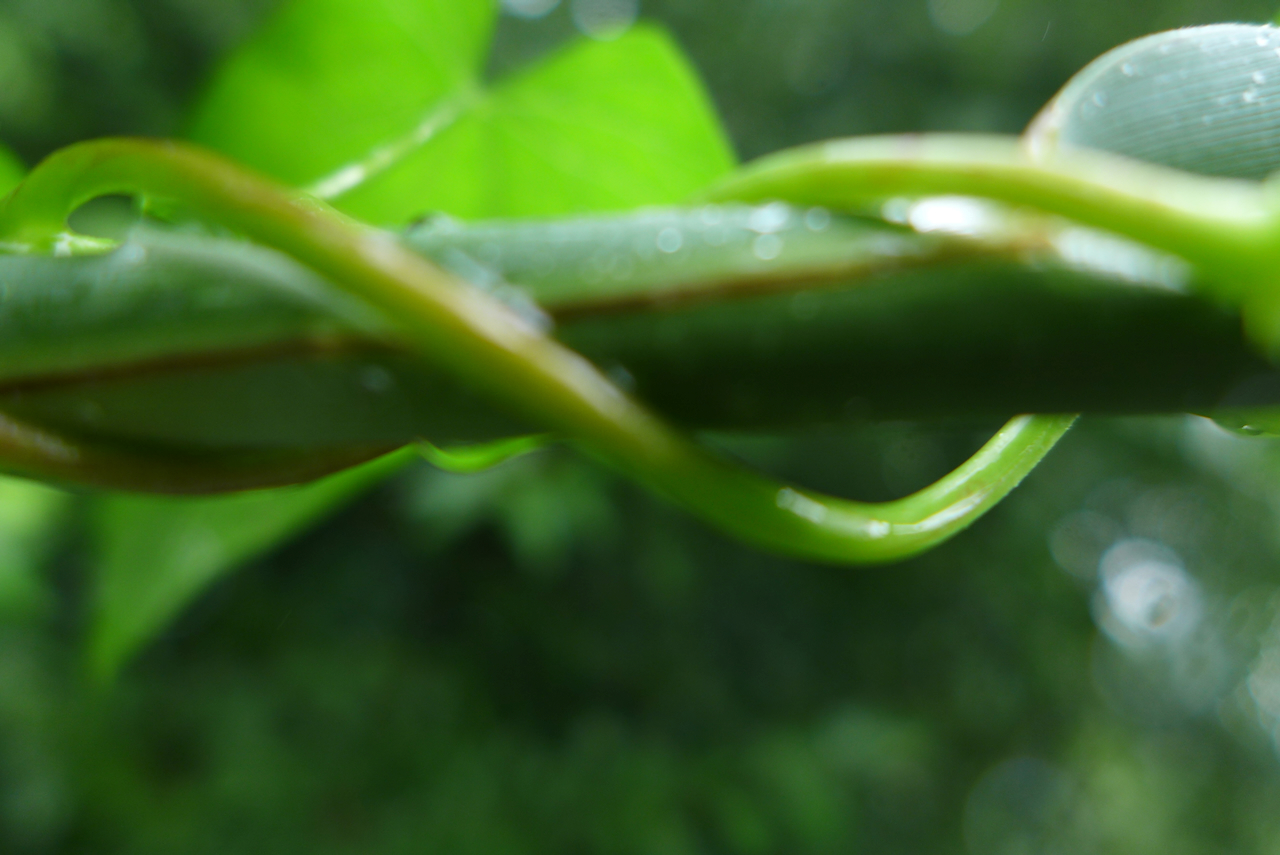
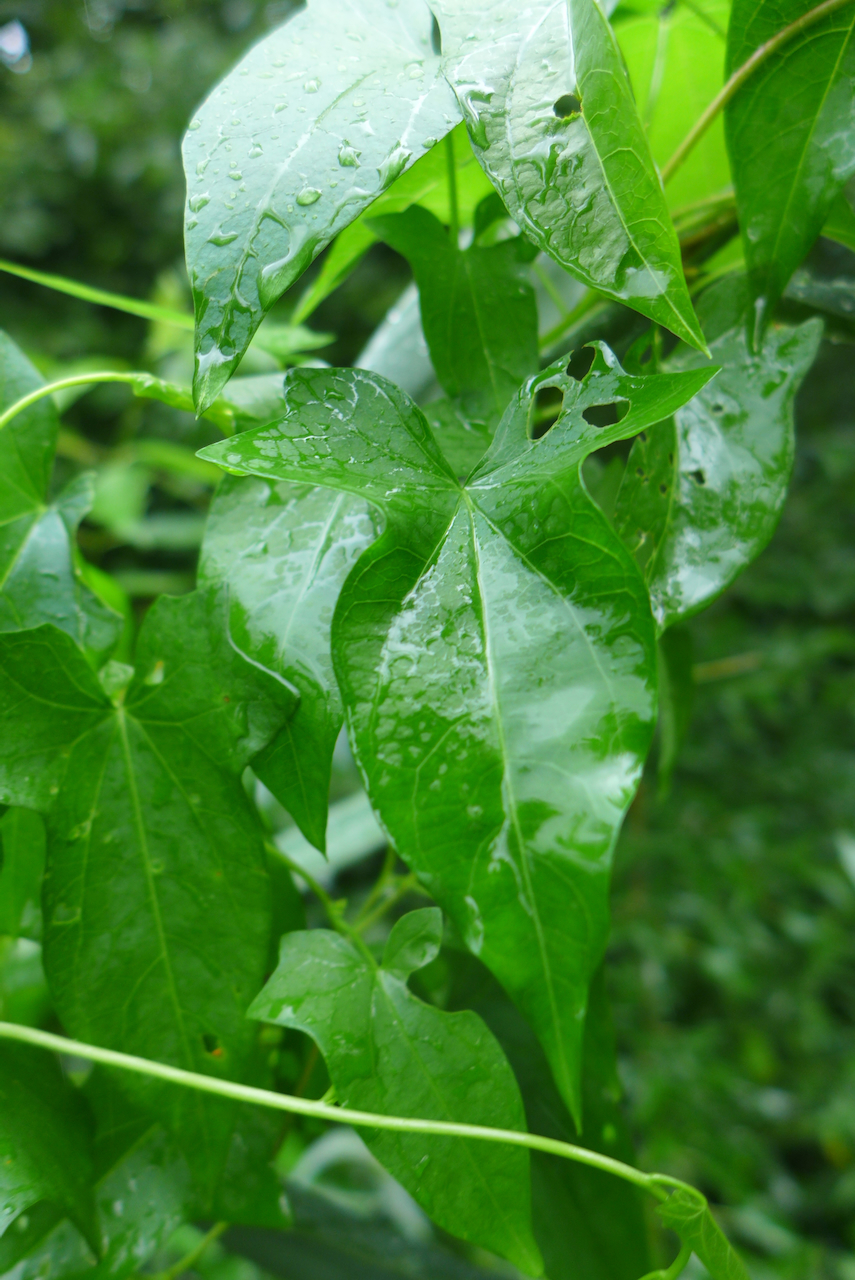
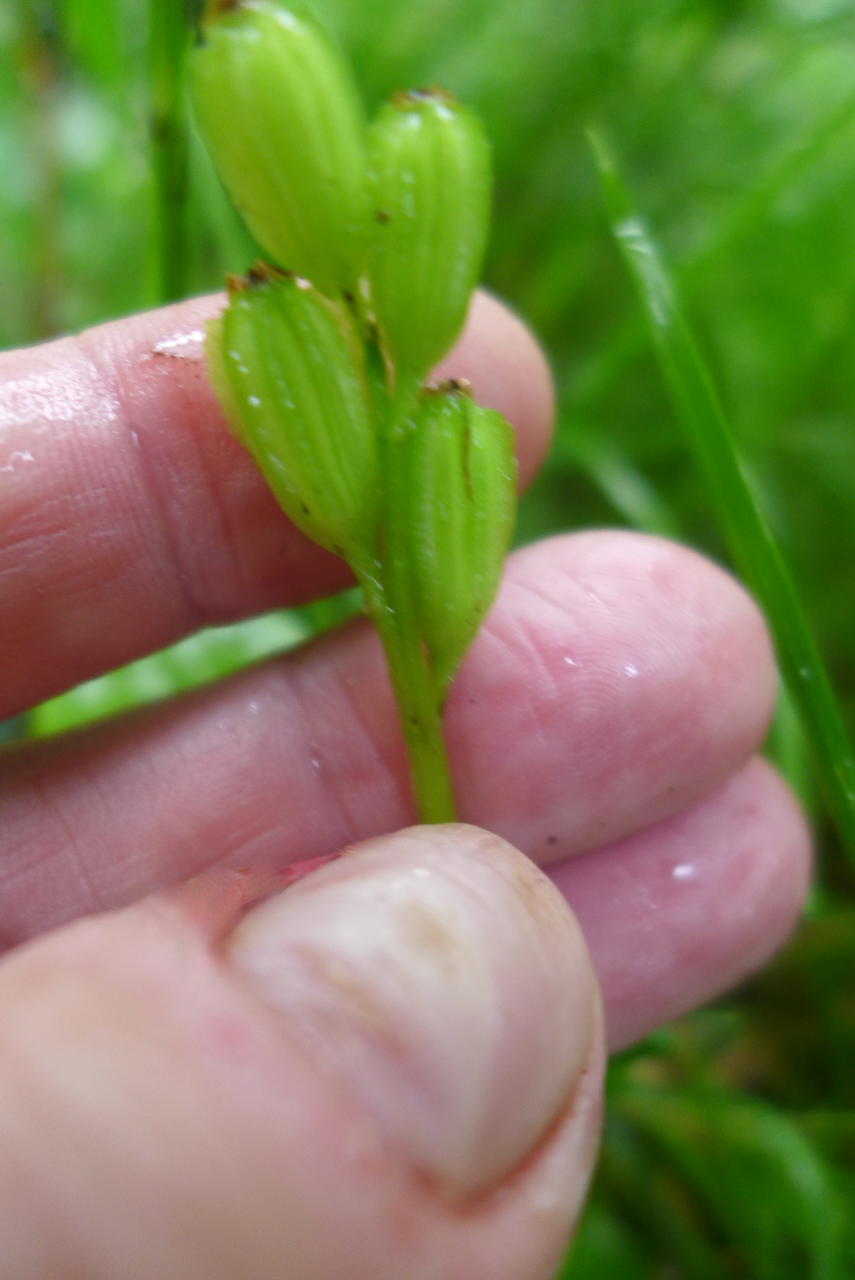
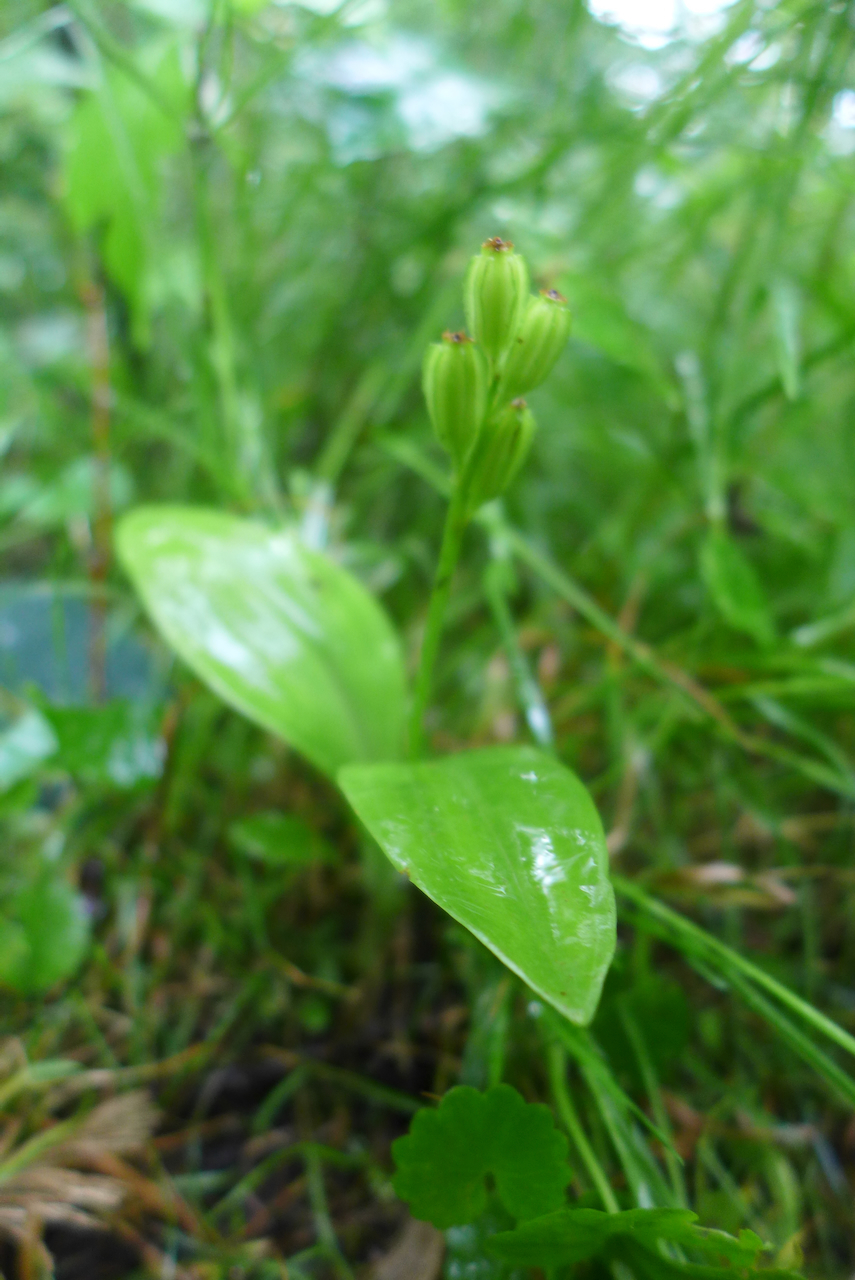
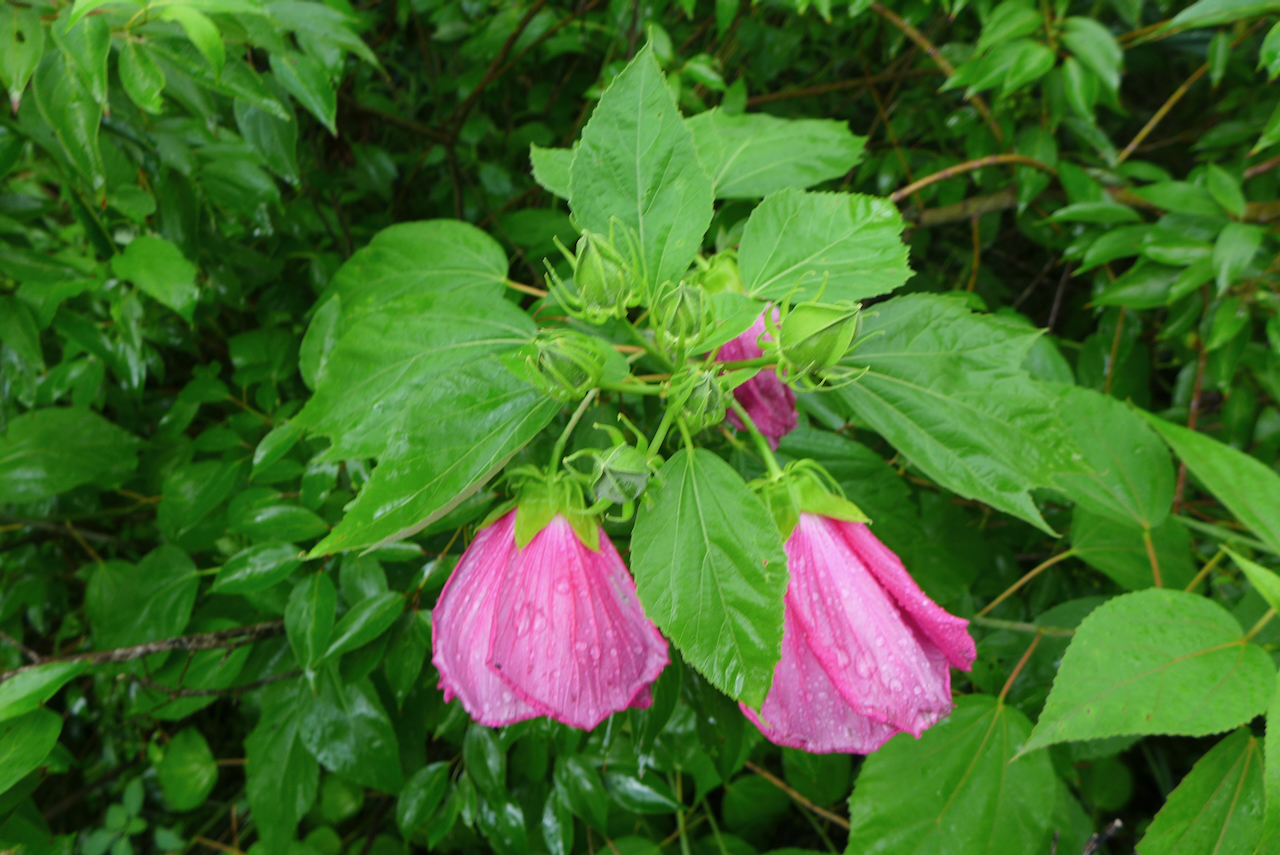
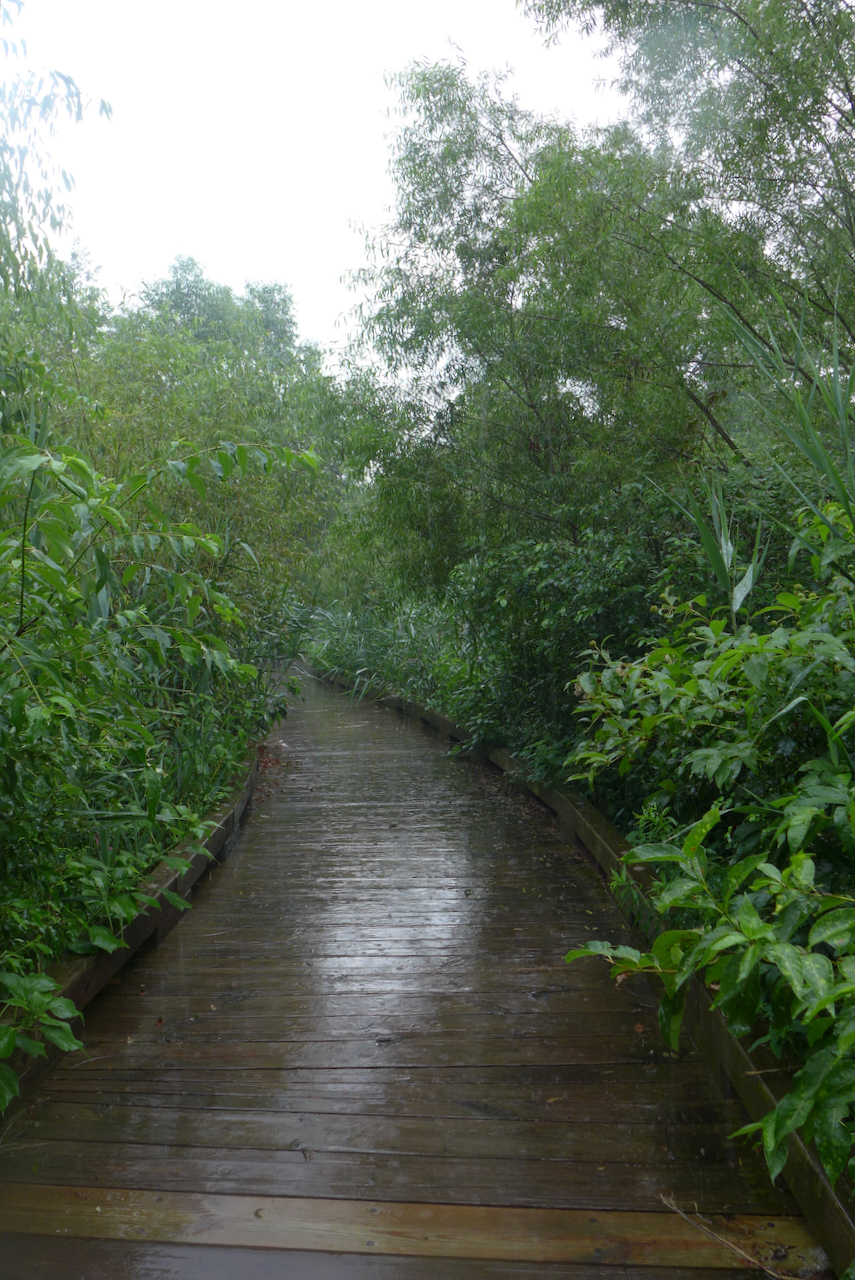
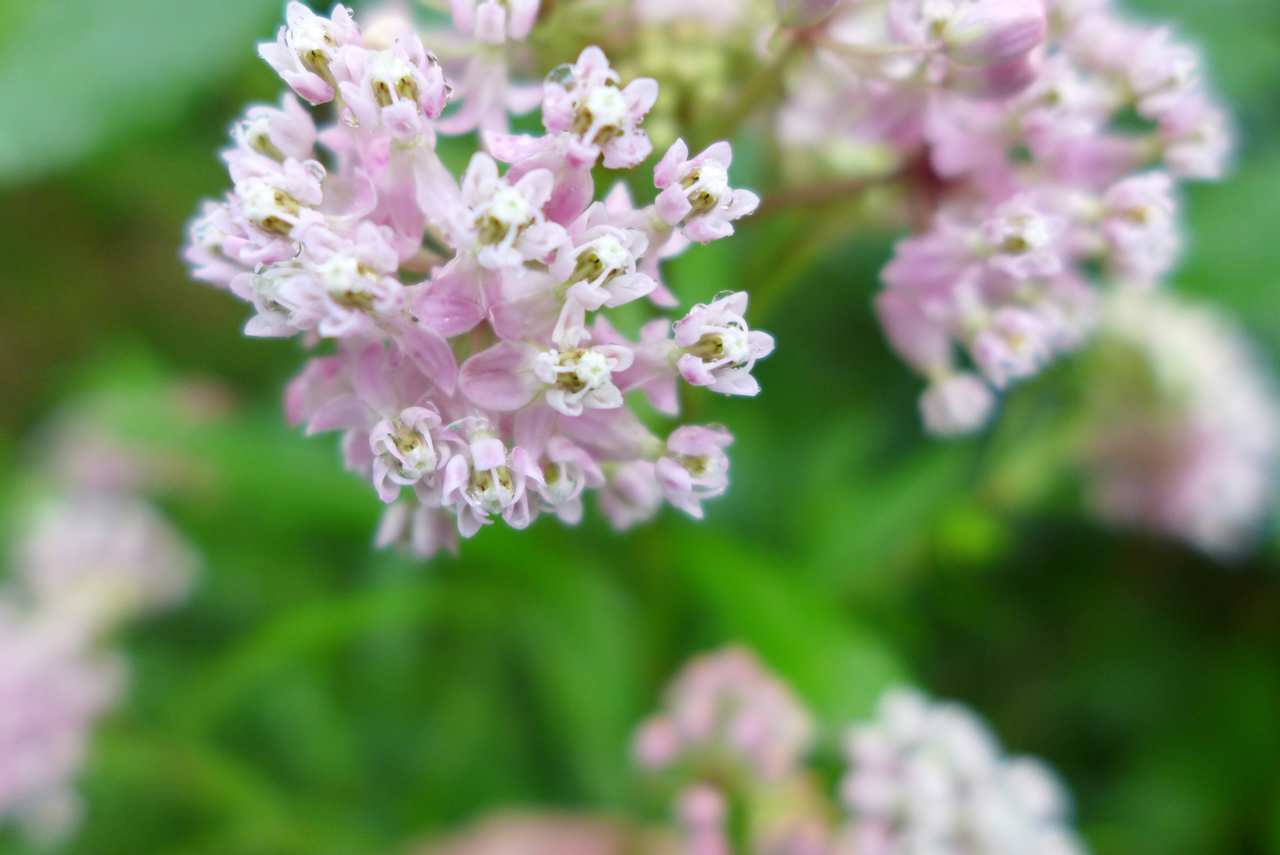
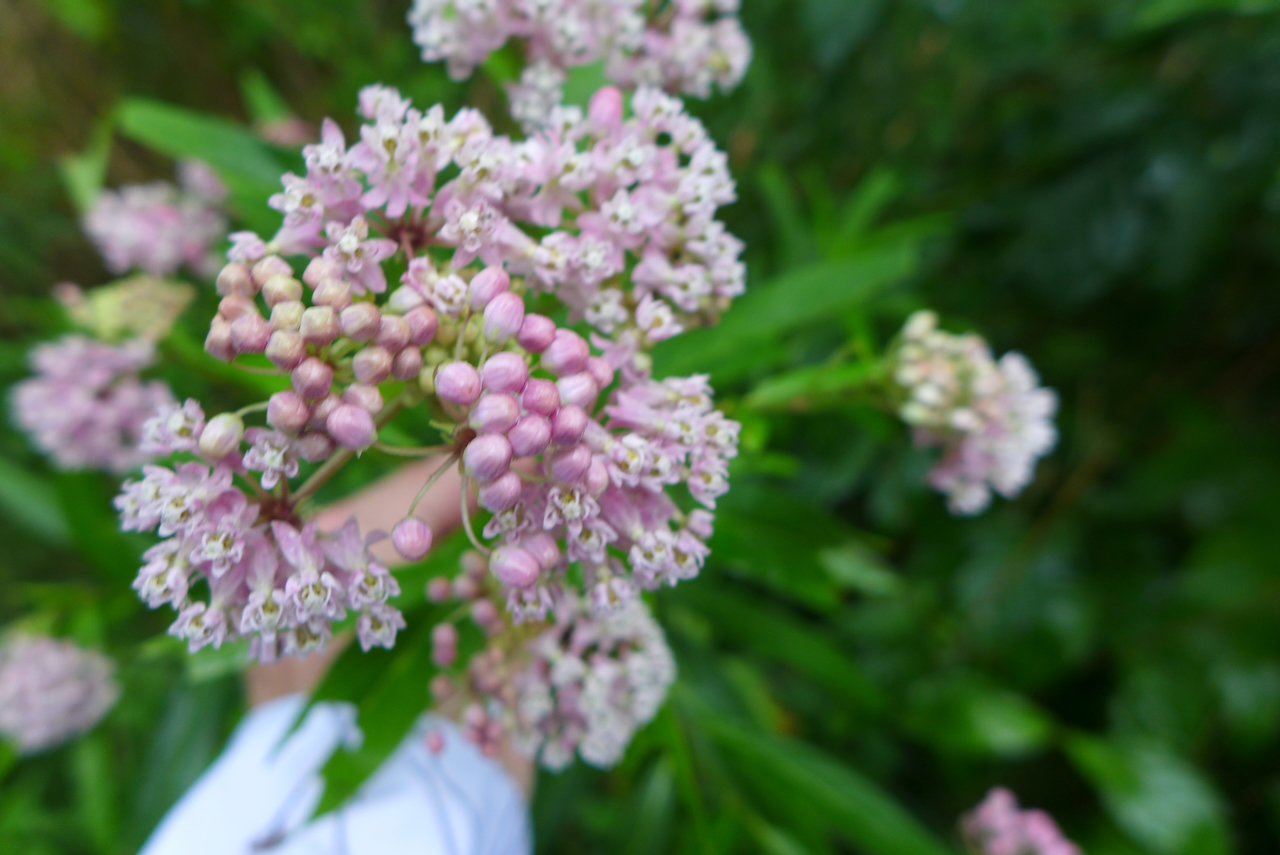
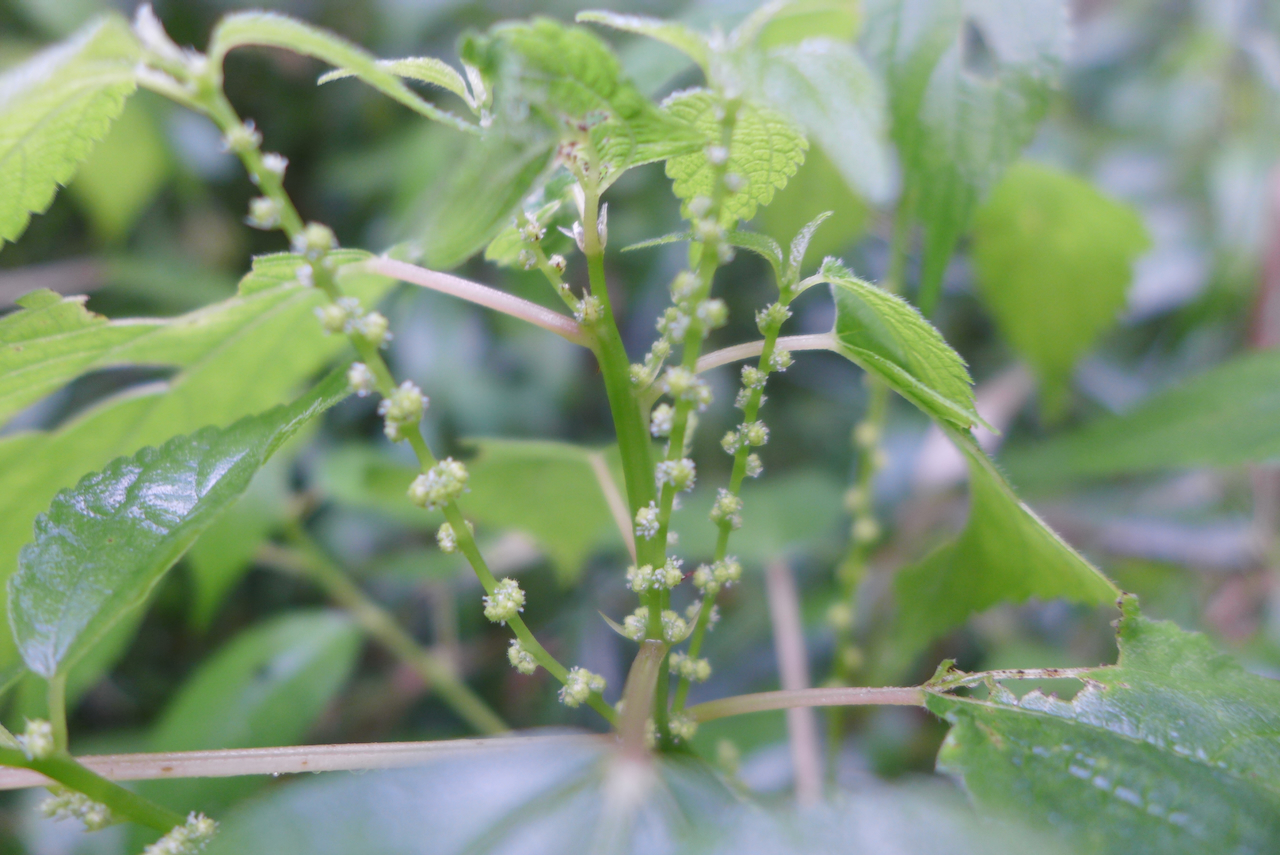
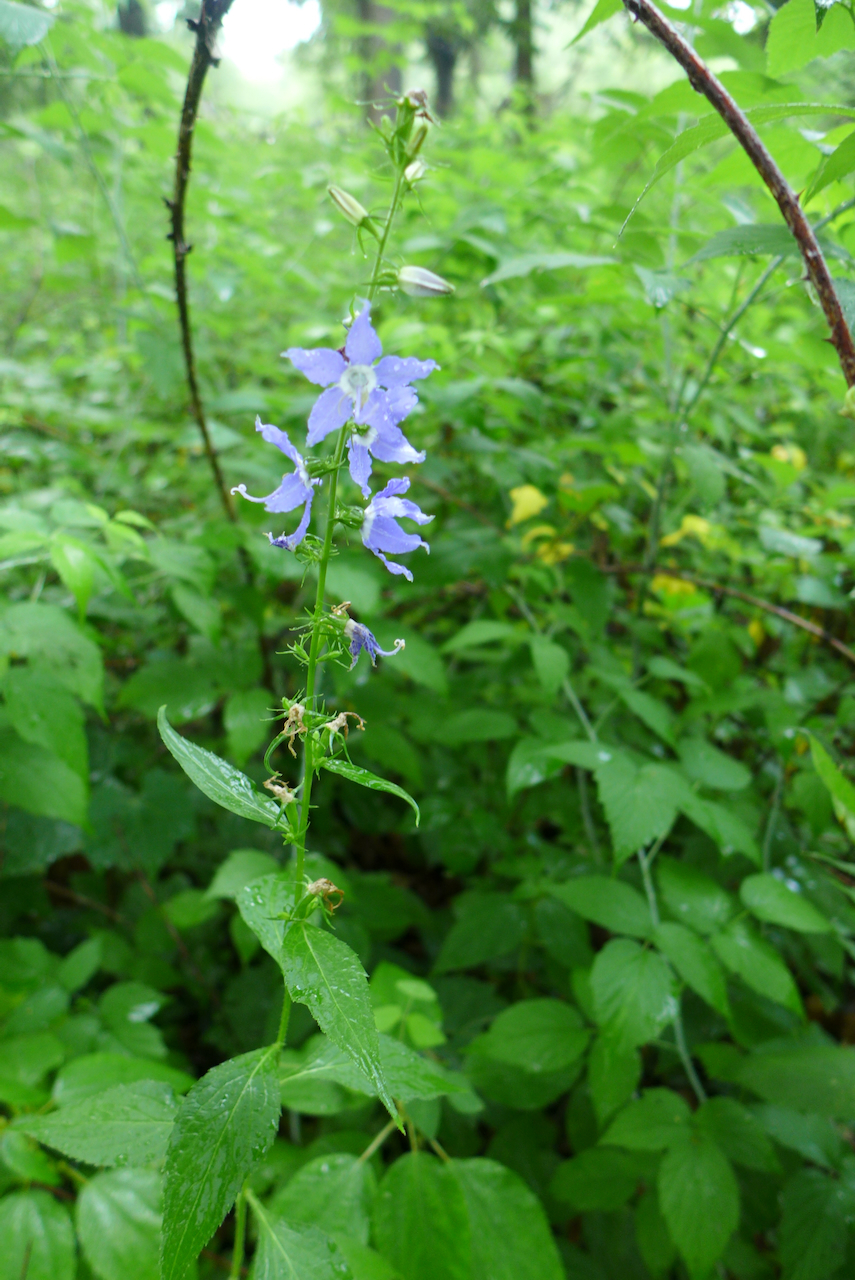
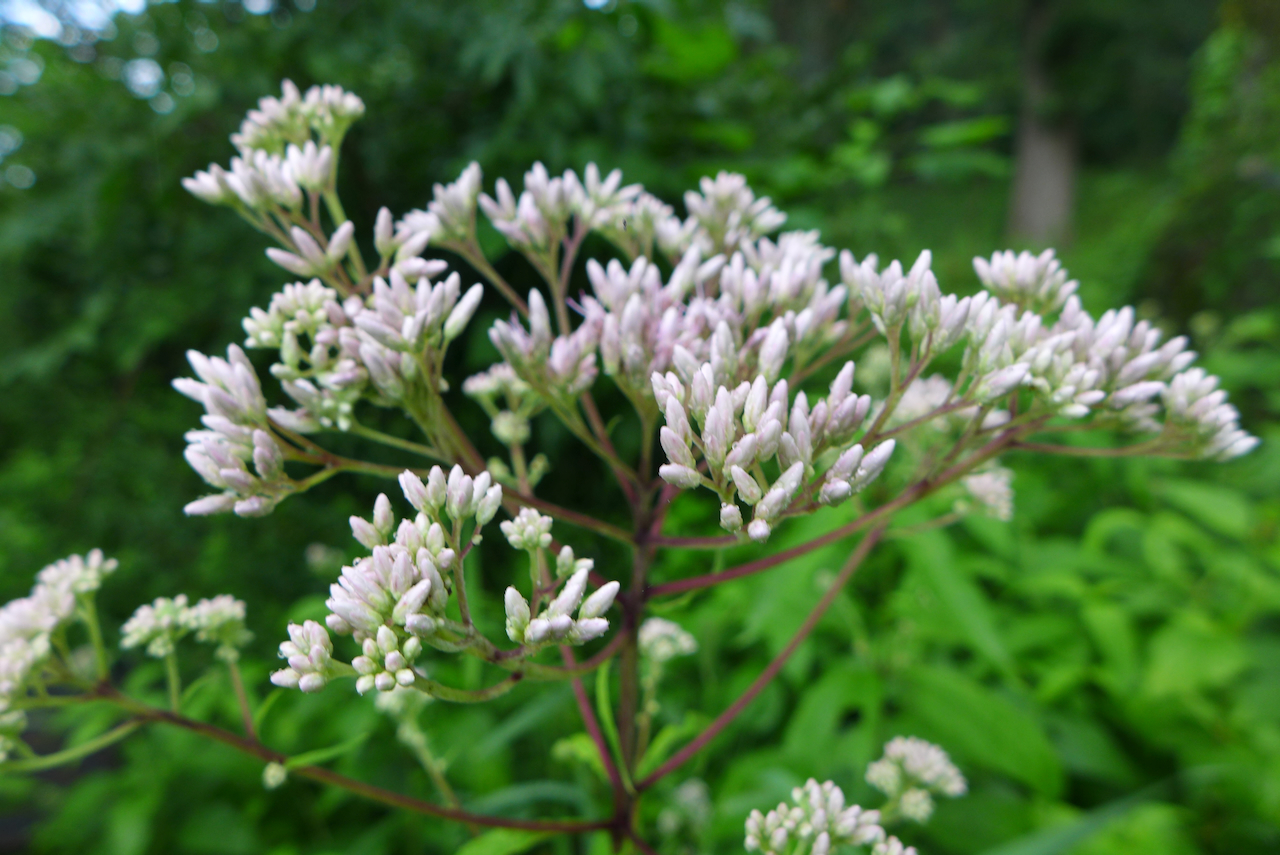
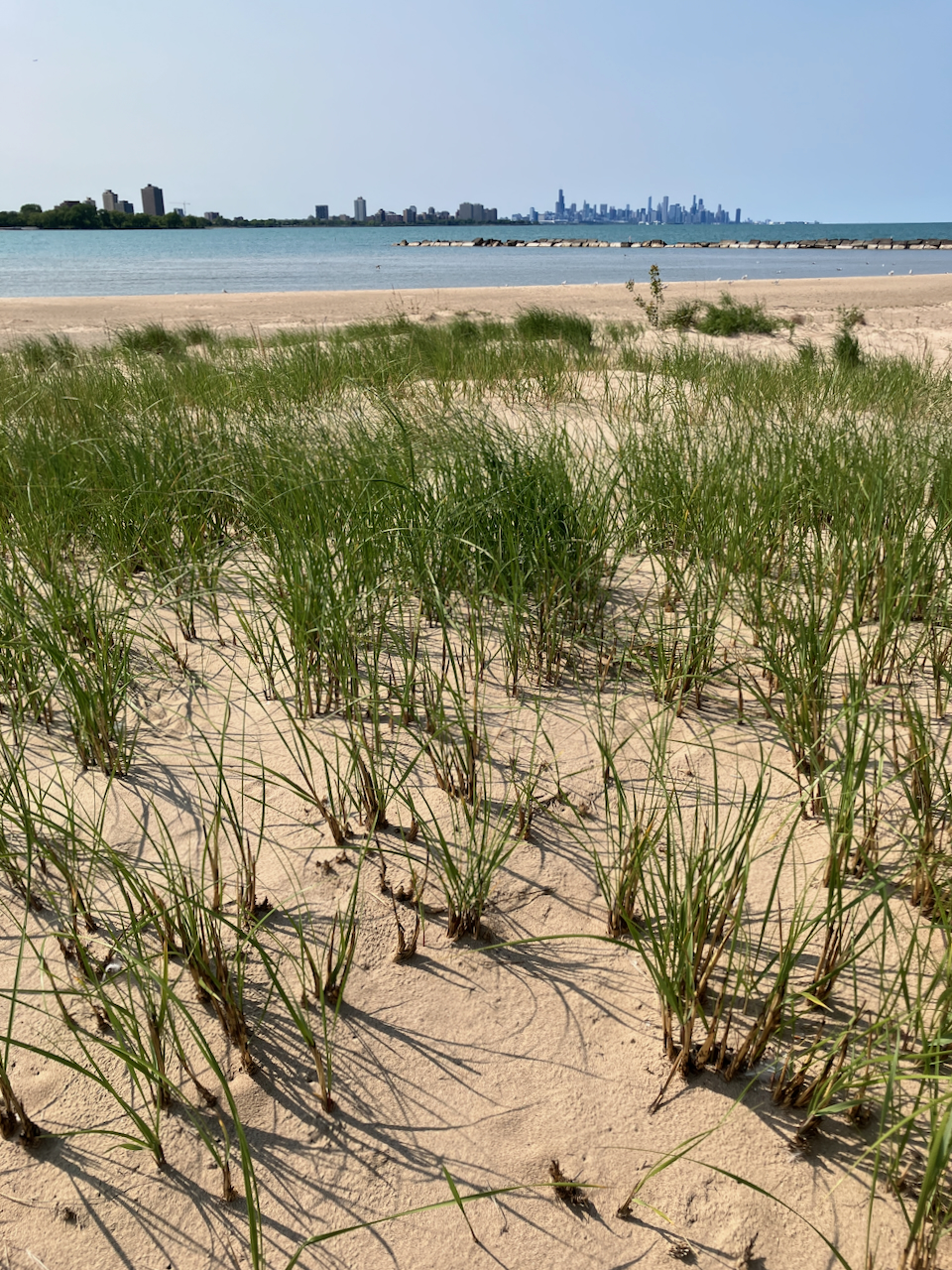
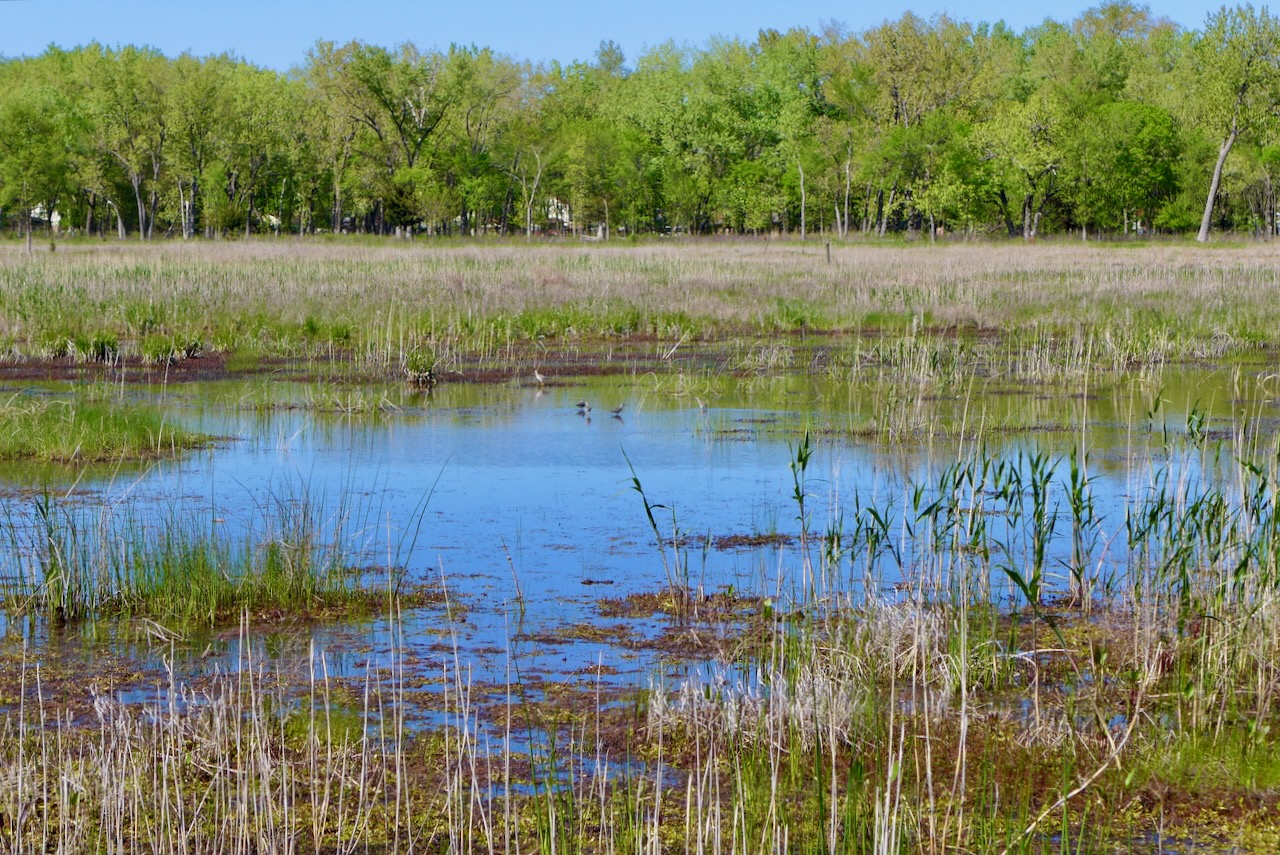
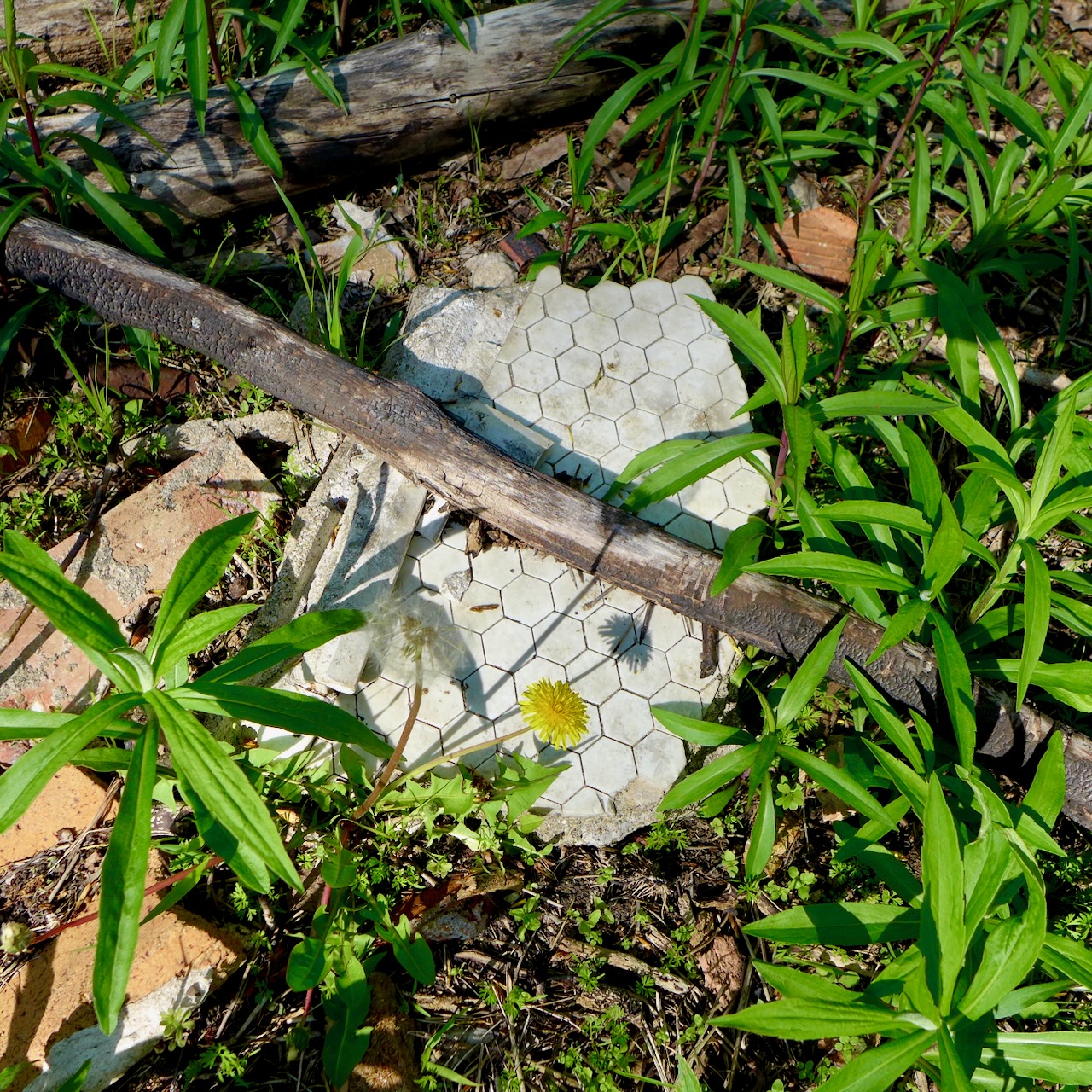
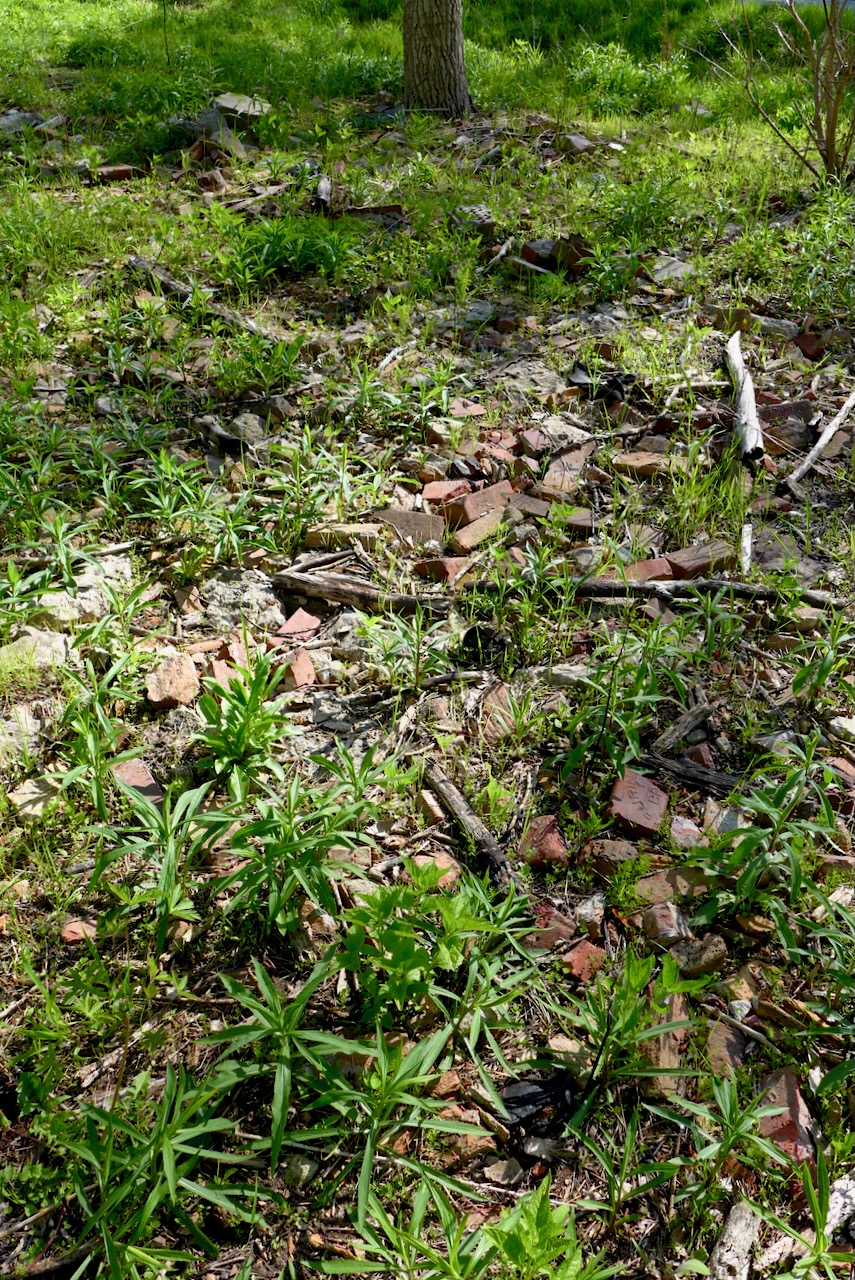
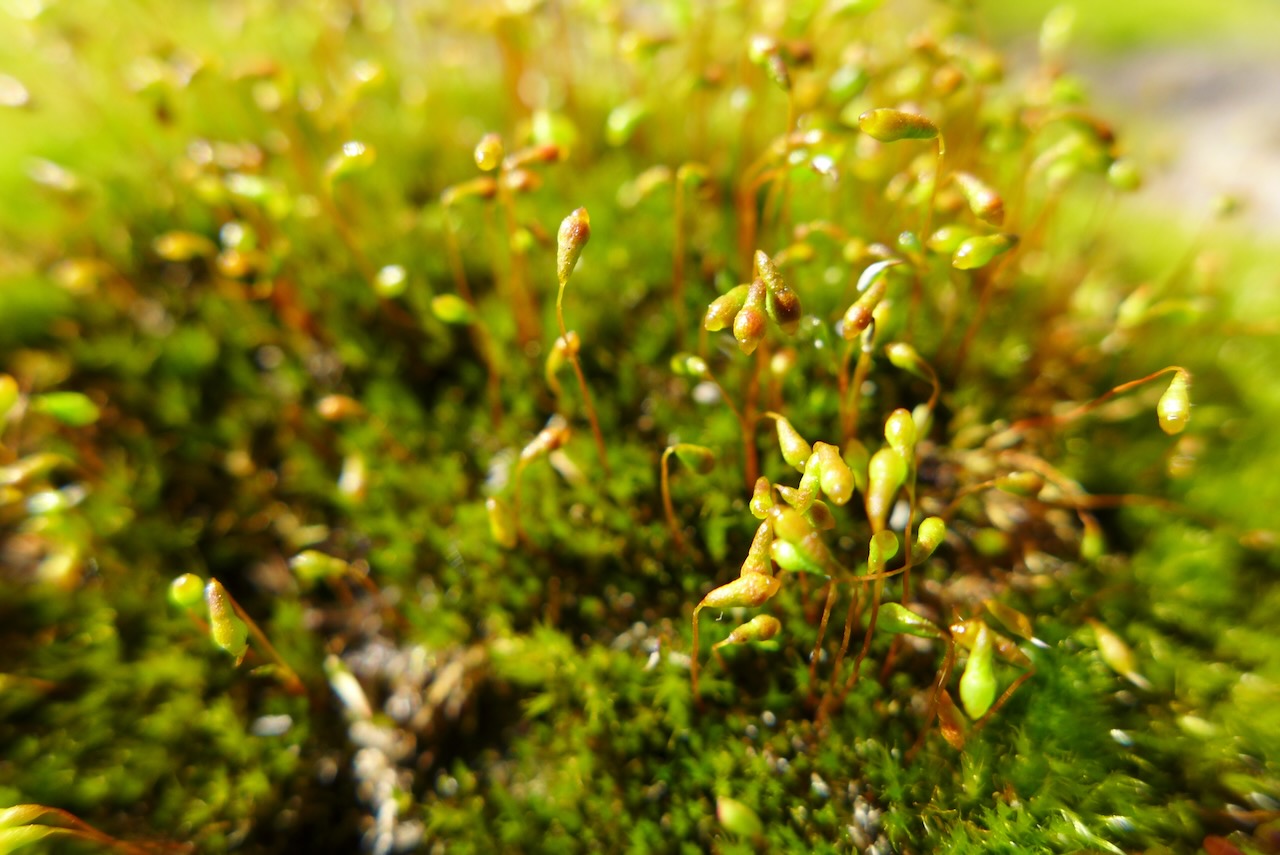
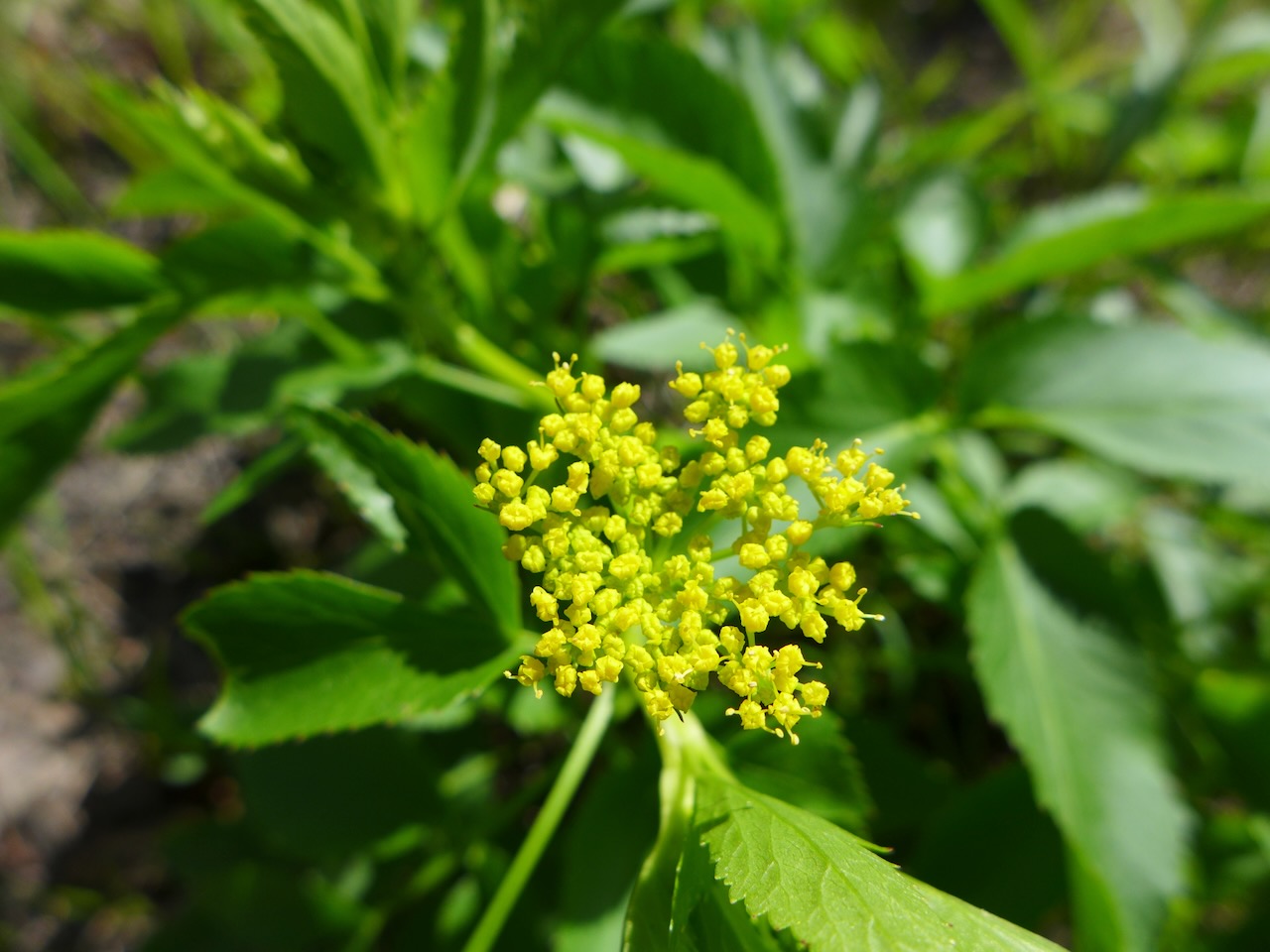
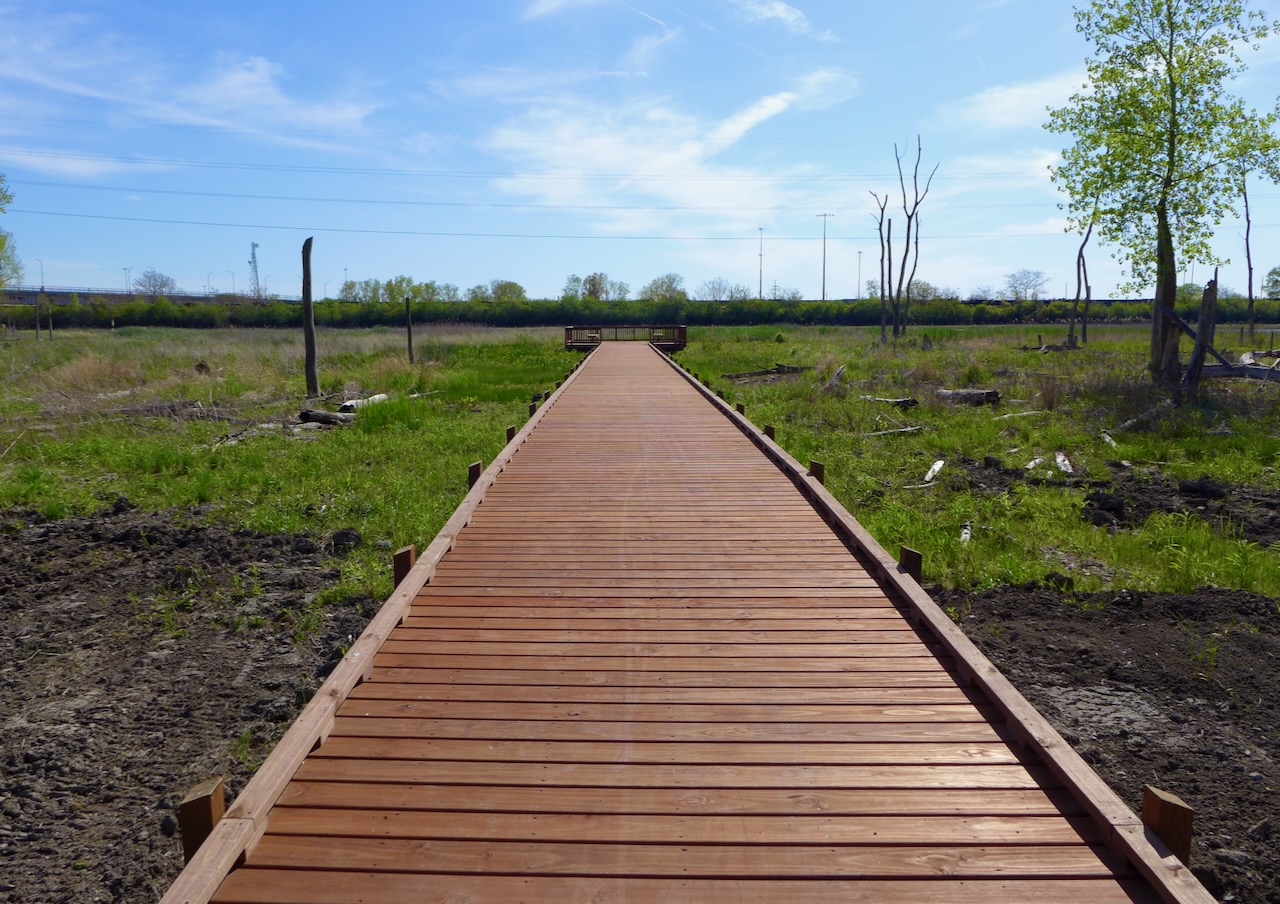
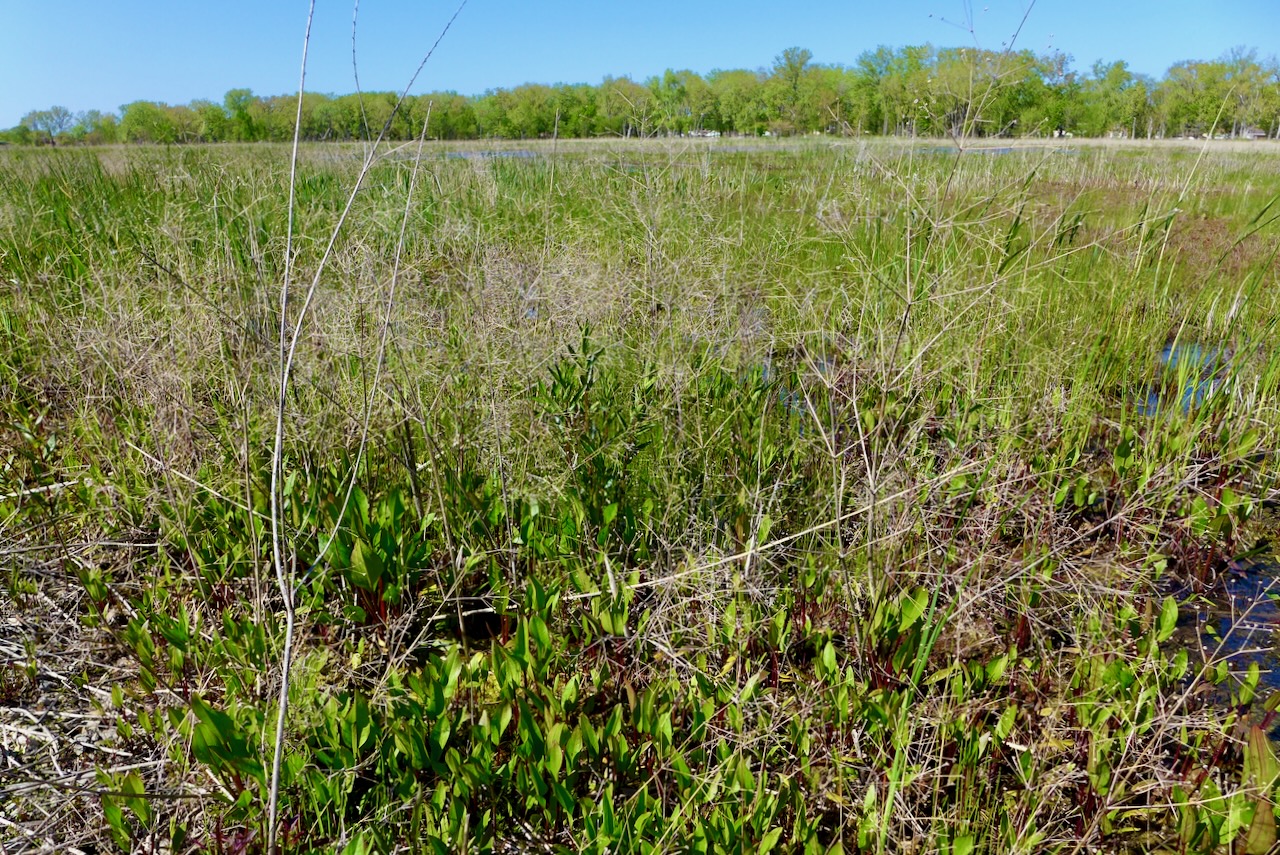
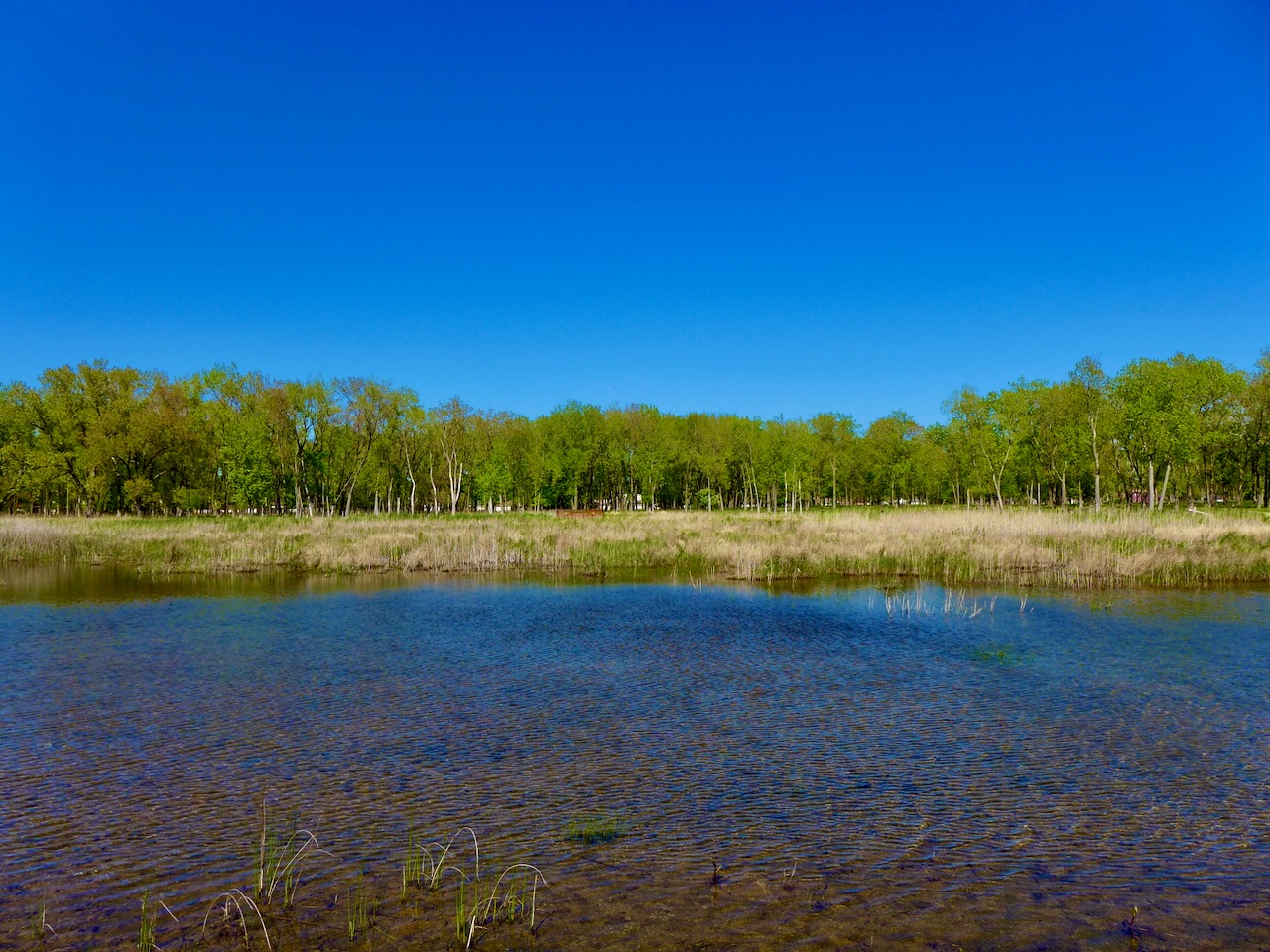
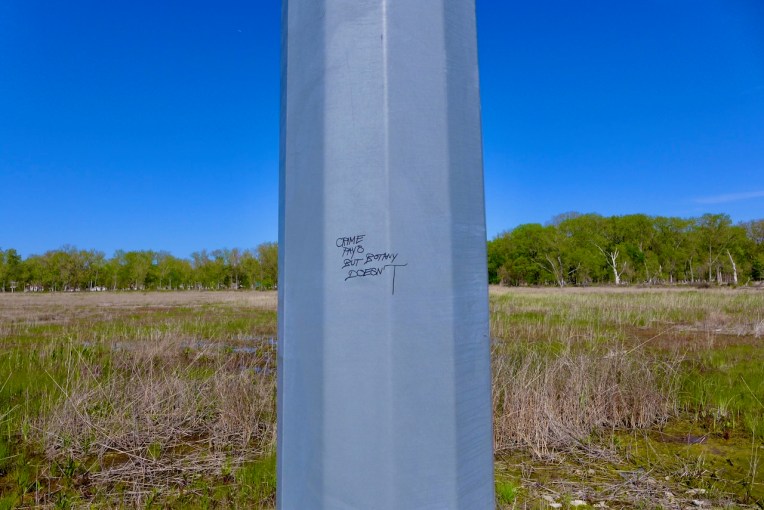
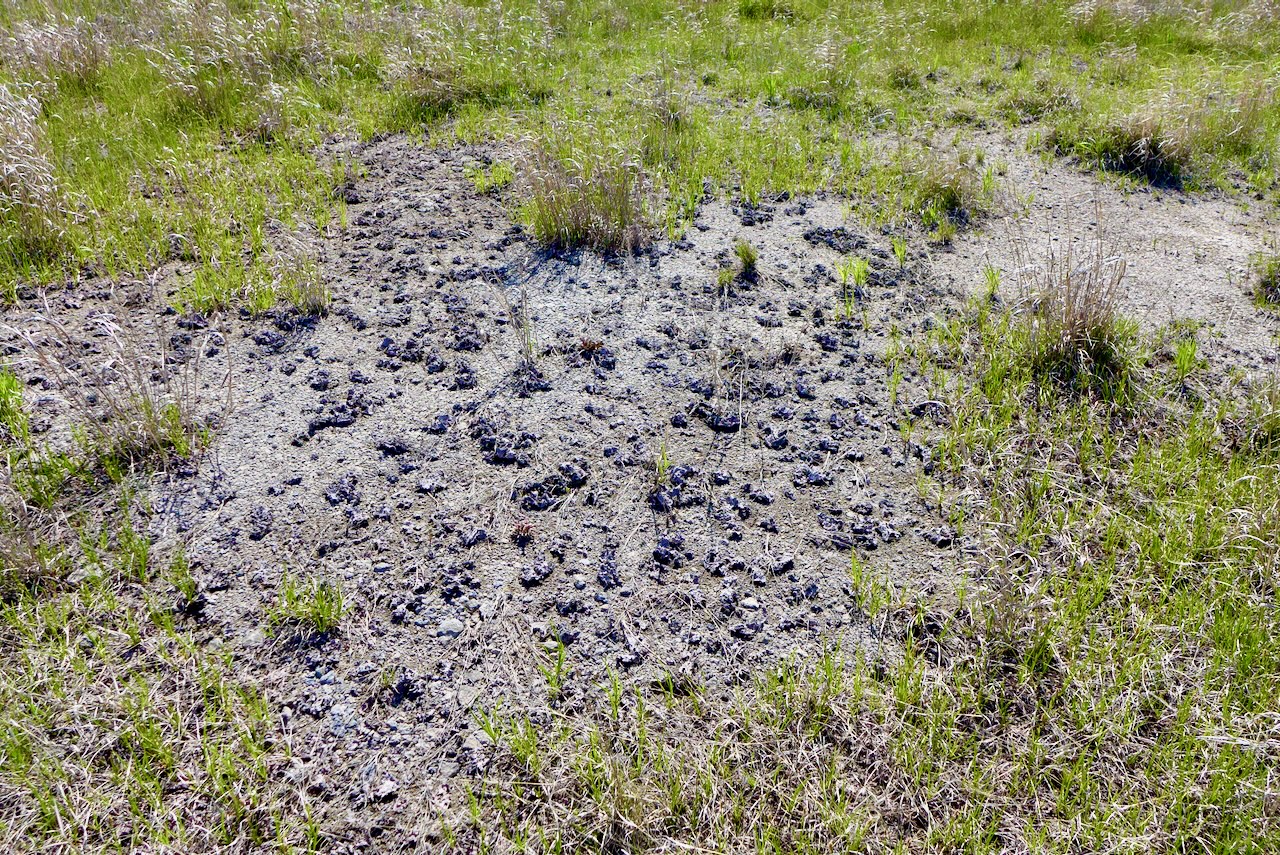
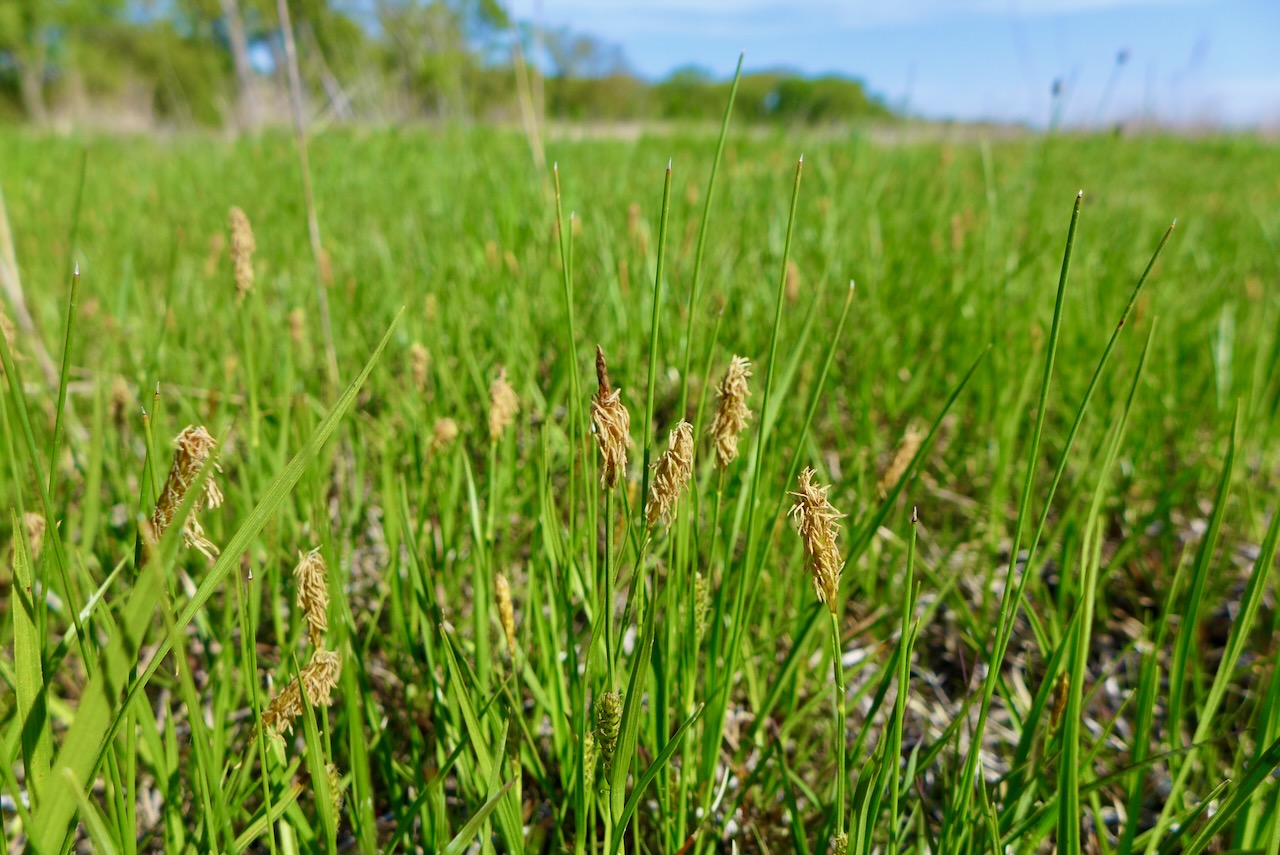
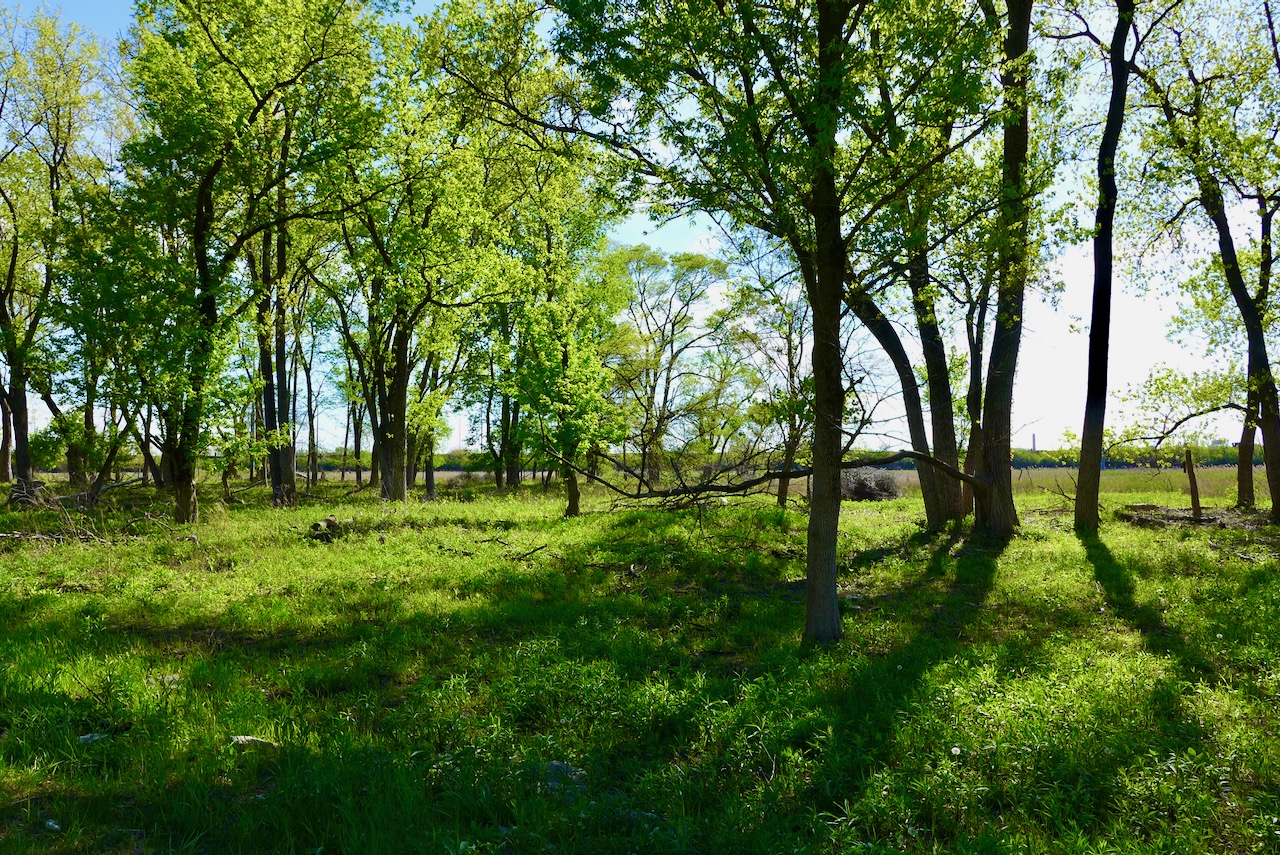
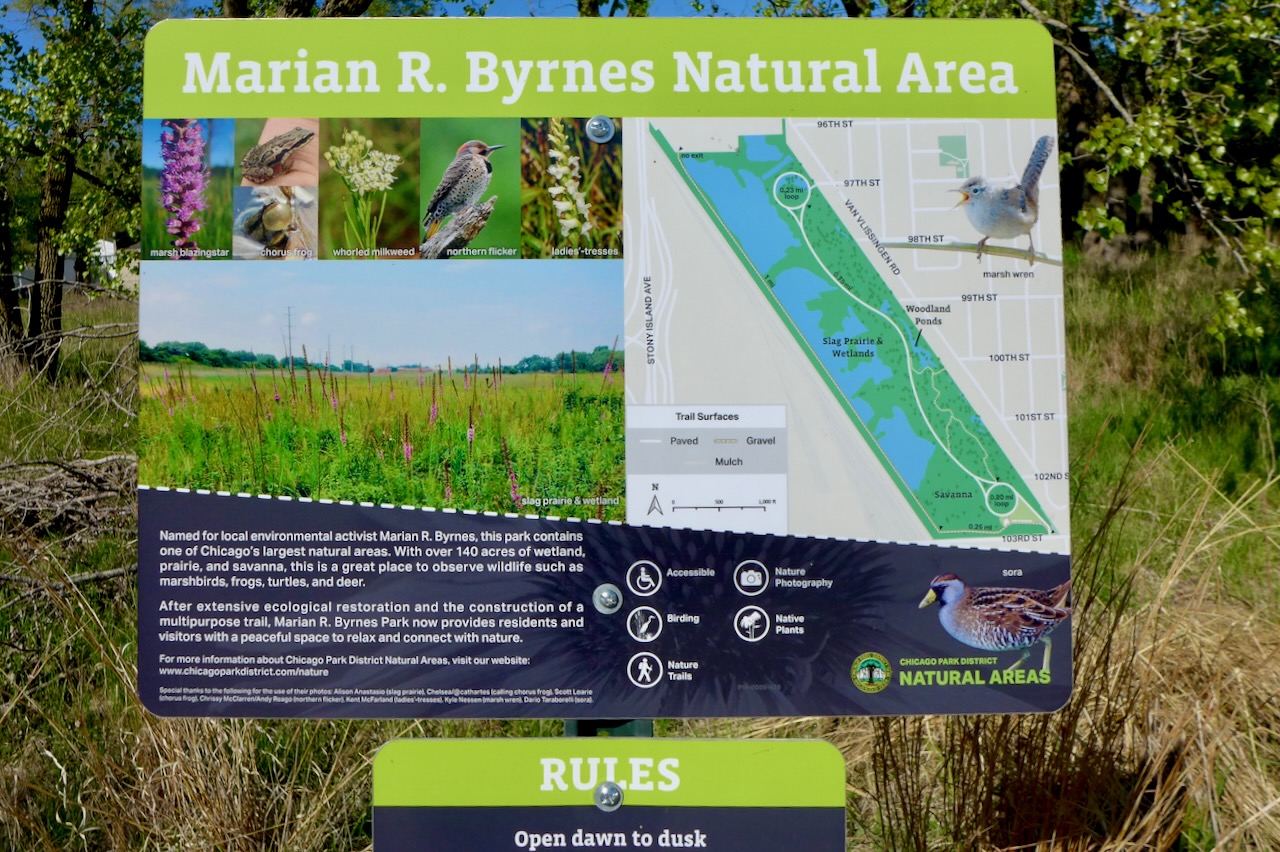
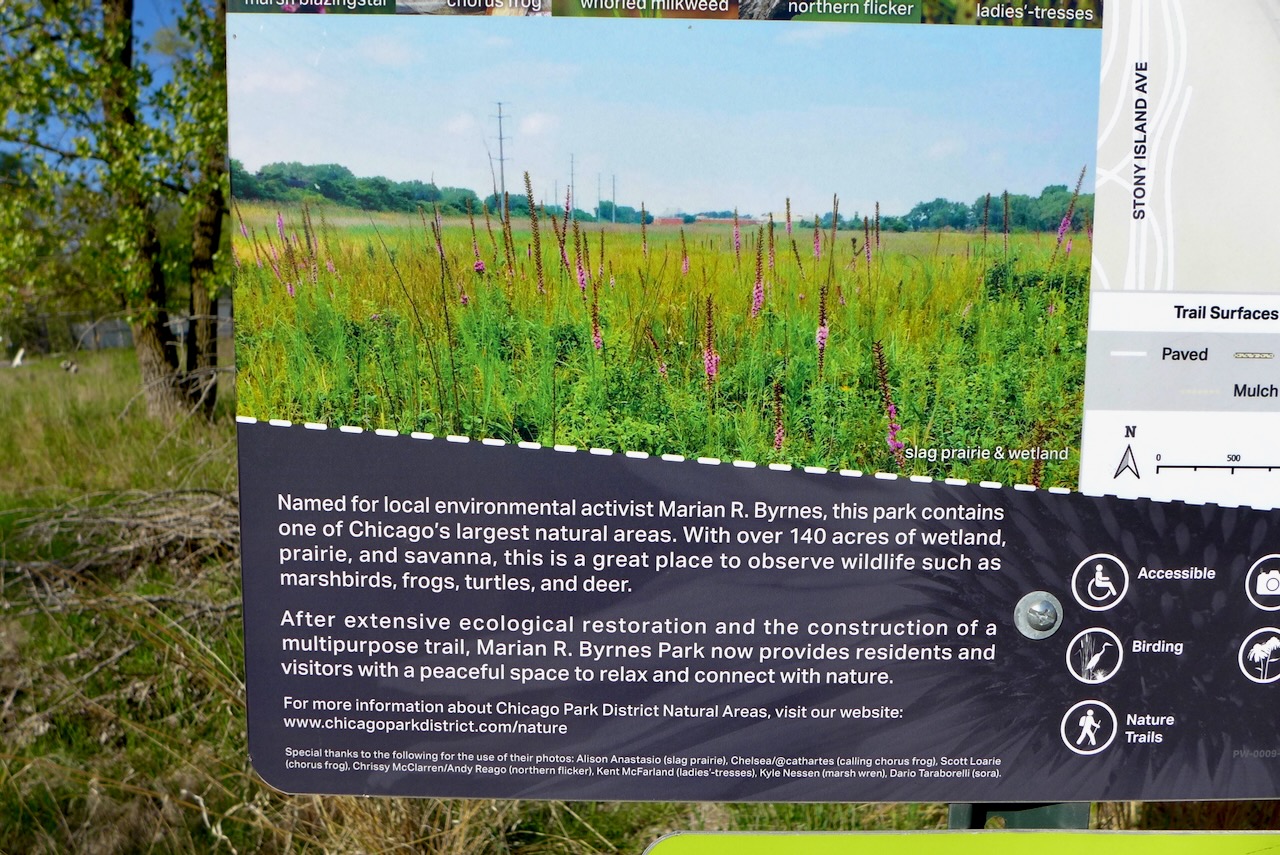


_Figure_2.jpg)